

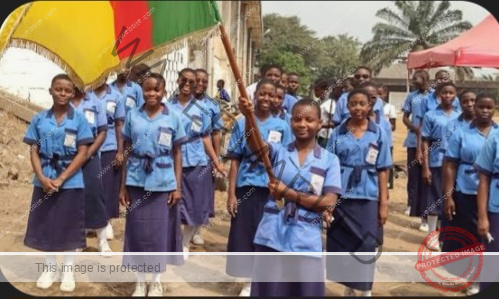


Local reports from cities such as Bamend, Kumba and Nkambe suggest that participation in parades can sometimes occur under strong administrative encouragement, with school authorities under pressure to ensure attendance. Officials argue that such mobilization is necessary to preserve civic life and prevent armed groups from dictating public activity.
By Timothy Engonene
Guest Editor-in-Chief, The Independentistnews
NKAMBE February 10, 2026 – As Cameroon prepares to commemorate National Youth Day on February 11, official messaging once again emphasizes unity, patriotism, and the promise of a shared national future. Across much of the country, preparations for parades and ceremonies proceed as routine civic events.
In the conflict-affected Northwest and Southwest regions, however, the celebrations carry a more complicated meaning. For many residents, the annual parades unfold amid ongoing insecurity, displacement, and deep political grievances that remain unresolved after nearly a decade of crisis.
Manufacturing Normalcy in a Time of Conflict
Since violence escalated in late 2016 following protests over perceived marginalization in Cameroon’s English-speaking regions, both state authorities and separatist groups have struggled to assert control over territory and public life.
In this environment, state-organized events such as Youth Day parades have taken on heightened political significance. For government officials, successful celebrations signal stability and the restoration of public order. For critics, these events risk presenting an image of normalcy that does not fully reflect realities faced by communities still living with insecurity.
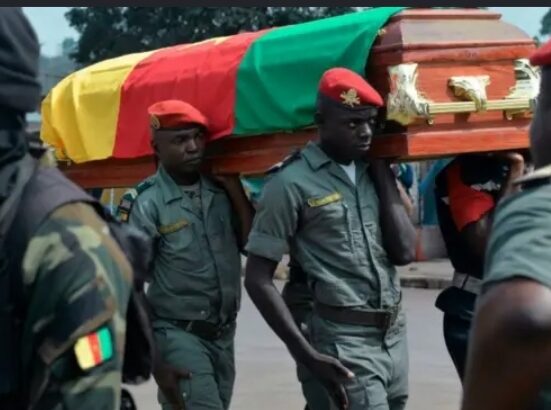
Local reports from cities such as Bamend, Kumba and Nkambe suggest that participation in parades can sometimes occur under strong administrative encouragement, with school authorities under pressure to ensure attendance. Officials argue that such mobilization is necessary to preserve civic life and prevent armed groups from dictating public activity.
Yet many parents and community members remain uneasy about sending children into public gatherings in areas where sporadic violence and uncertainty persist.
Youth at the Center of Competing Narratives
The symbolism is striking. Youth Day celebrations are intended to honor young people as the future of the nation. At the same time, young citizens in the conflict zones have borne some of the crisis’s heaviest consequences.
School closures, disrupted education, economic stagnation, and displacement have affected hundreds of thousands of young people. Many have lost years of schooling. Others have migrated internally or abroad in search of safety or opportunity. Some have been drawn into armed groups or security operations, perpetuating cycles of violence that continue to destabilize communities.
In such a context, parades meant to celebrate youth can appear disconnected from the lived experiences of many young people whose futures remain uncertain.
Information Wars and Polarization
The conflict is also fought through narratives. Government supporters, separatist activists, diaspora commentators, and independent observers all compete to shape public perception of events.
Those advocating participation in civic events are sometimes accused of legitimizing state control. Conversely, those calling for boycotts or protests are portrayed by officials as undermining social stability and educational recovery.
This environment of mutual suspicion deepens polarization within communities already strained by conflict. The result is an information landscape where trust is scarce and reconciliation becomes more difficult.
The Limits of Symbolism
Ceremonial displays can reinforce national identity, but they cannot substitute for political solutions. Durable stability depends less on symbolic demonstrations of unity than on credible dialogue addressing governance, representation, decentralization, and accountability.
Many analysts argue that the crisis persists precisely because competing historical and political narratives remain unresolved. Without addressing these structural issues, annual commemorations risk becoming recurring reminders of division rather than occasions for national cohesion.
Beyond the Parade Grounds
For Cameroon, the challenge extends beyond staging successful public ceremonies. It lies in ensuring that young citizens in all regions see tangible prospects for peace, education, and economic opportunity.
Youth Day, ideally, should celebrate not only patriotic symbolism but also measurable progress toward inclusion and stability.
Until conditions in the conflict-affected regions improve, celebrations will continue to carry different meanings depending on where one stands.
In the end, peace will not be secured through parades alone, but through political solutions capable of restoring trust between citizens and the state—and offering young Cameroonians a future that no longer marches in step with conflict.
Timothy Engonene
Guest Editor-in-Chief, The Independentistnews