








News commentary

We are home to news on Cameroon and the CEMAC region. We are dedicated to honest and reliable reporting. We are the voice of the Cameroonian people and their fight for freedom and democracy at a time when the Yaoundé government is silencing dissent and suppressing democratic voices.

Konye must therefore become a turning point—not because the incident has already established a wider conspiracy, but because it demonstrates why automatic blame is dangerous and why transparent investigation is indispensable. The ASA must not become the convenient explanation for every kidnapping merely because the accusation serves Yaoundé’s political narrative.
By Timothy Enongene
Associate Editor-in-Chief
The Independentist News
As Amazon associate this site earns from qualifying purchases
Buy your copies of books on the Ambazonian revolution By Martin Mungwa on Amazon
https://www.amazon.com/s?k=Martin+mungwa&crid=OGWVBDZ2JM72&sprefix=martin+mungwa%2Caps%2C1437&linkCode=ll2&tag=njokings-20&linkId=7bdd326f569f80806642a70d8a1221b4&language=en_US&ref_=as_li_ss_tl
BUEA – 24 October 2026 – For years, the script has been disturbingly familiar. A civilian is kidnapped. A ransom is demanded. A family is plunged into fear and desperation. And before any credible investigation has established who committed the crime, fingers are pointed at the Ambazonia State Army (ASA).
The accusation spreads. Public confidence is shaken. The independence struggle suffers another reputational blow. Meanwhile, the actual perpetrators may remain unidentified, unpunished and free to strike again. But recent reports from Konye, Meme County, have introduced a troubling question into this familiar narrative: What if some of those responsible for kidnapping civilians are operating within, or alongside, the very security establishment that claims to be protecting the population?
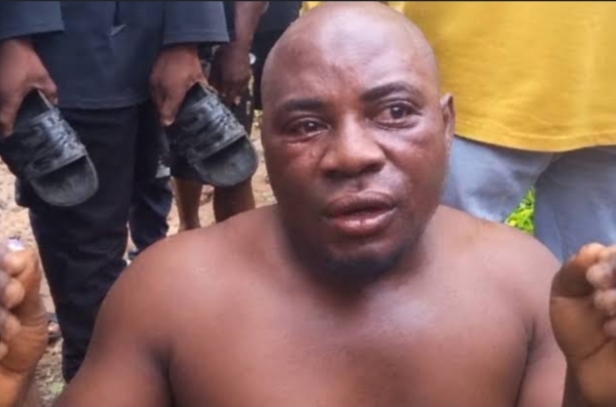
According to a report published by BaretaNews on 22 October 2026, two alleged gendarmes and three civilians were reportedly apprehended in Konye in connection with a ransom transaction involving FCFA 17 million. Video footage circulating publicly has intensified questions about the identities of the suspects and the circumstances surrounding the incident.
These reports require independent verification. The footage must be authenticated, the identities and affiliations of the individuals established, and the circumstances of the alleged ransom transaction investigated. Nevertheless, the implications could be profound. If credible evidence establishes that serving gendarmes participated in kidnapping civilians for ransom, the longstanding practice of automatically assigning responsibility to the ASA whenever such crimes occur would become even more difficult to justify.
The Konye allegations should therefore trigger more than public outrage. They should trigger a serious examination of kidnapping, criminal infiltration, political manipulation and accountability throughout the conflict.
THE PERFECT CRIME: COLLECT THE RANSOM, THEN BLAME THE ASA?
Consider the consequences of kidnapping in a conflict zone. A civilian disappears. A frightened family receives instructions to pay. Money changes hands. The community becomes more fearful. Then comes the accusation that the ASA committed the crime. Whether that accusation is true or false, the political consequences can be immediate. Families begin questioning the independence movement. Communities become suspicious of armed groups. Individuals who previously sympathised with the struggle withdraw their support. Public confidence deteriorates.
If the perpetrators are criminals unaffiliated with the ASA, they may gain financially while the reputational damage falls on an organisation that did not commit the particular crime. If such misattribution is deliberate, the consequences become even more serious.
For years, allegations have circulated within Ambazonian communities that criminal networks, infiltrators and politically connected intermediaries exploit the conflict for financial gain. Some commentators have alleged that individuals associated with the LRC security establishment or its Disarmament, Demobilisation and Reintegration (DDR) programme participate in activities subsequently attributed to independence fighters.
These allegations remain allegations unless supported by credible evidence. But Konye gives renewed urgency to the demand that they be investigated rather than dismissed or accepted uncritically. Who actually organises these kidnappings? Who negotiates and collects the ransom? Where does the money go? Who provides protection, transportation, intelligence or logistical support?
And who benefits politically when responsibility is assigned before the perpetrators have been properly identified? These are not merely questions about crime. They are questions about power, public trust and the manipulation of a population already traumatised by conflict.
YAOUNDÉ’S WAR IS NOT ONLY FOUGHT WITH GUNS
The conflict between Ambazonia and La République du Cameroun (LRC) is not conducted through military operations alone. It is also fought in the arena of public perception. The legitimacy of political movements, the confidence of communities and the credibility of institutions can be damaged without a single shot being fired.
A kidnapping accusation, repeated often enough, can become accepted as fact even when the evidence remains uncertain. This is precisely why the distinction between criminal responsibility and political attribution matters. An armed conflict creates opportunities for multiple actors: organised criminals, corrupt officials, opportunists, infiltrators and members of armed organisations acting outside established command structures.
Some may be motivated by money. Others may seek political advantage. Still others may exploit weak institutions and the absence of accountability. The allegation that individuals associated with Yaoundé’s security apparatus or demobilisation structures have participated in kidnapping operations deserves credible and impartial investigation. If the reported Konye suspects are indeed serving LRC gendarmes, the colonial authorities must answer important questions.
– Were the suspects acting independently? – Were official weapons, vehicles, intelligence or other resources used? – Did superiors know about their activities? – Were they connected to a wider criminal network? – Was there any attempt to conceal their involvement? – And, crucially, was the alleged crime purely financial, or was there evidence of an additional political objective? These possibilities must be examined rather than presumed.
A connection between individual gendarmes and kidnapping would not automatically establish an operation directed by Yaoundé. But neither should official status shield suspects from investigation. No institution should be allowed to manufacture accusations against its opponents, conceal criminal activity within its own ranks or manipulate civilian suffering for political advantage. If such conduct occurred, the evidence must expose it.
AMBAZONIANS: DO NOT LET PROPAGANDA DO YOUR THINKING
The greatest danger in a conflict saturated with competing narratives is the abandonment of independent judgment. Ambazonians must learn to distinguish between an accusation and proof, between an individual’s alleged conduct and an organisation’s responsibility, and between an actual criminal event and the political explanation attached to it.
When someone claims that the ASA kidnapped a civilian, the public should demand answers. Who witnessed the incident? Have the perpetrators been identified? What evidence connects them to the ASA? Has the account been independently corroborated? Has a credible investigation established responsibility? The same questions must be asked when allegations implicate LRC gendarmes, DDR-associated individuals or other groups.
The Konye incident must not become an excuse to replace one unverified accusation with another. If the suspects are found guilty, they must be held accountable. If investigators uncover a wider criminal network, its members and financial connections must be exposed. If credible evidence establishes political direction, those who authorised or facilitated the operation must also be identified. And if the evidence does not establish such connections, that conclusion must be acknowledged.
The standard must be consistent: neither the ASA nor the LRC security establishment should be convicted in the court of public opinion without convincing evidence. This does not mean ignoring suspicious circumstances. It means refusing to let propaganda substitute for investigation. It also means recognising that civilians are entitled to protection regardless of their political sympathies.
A kidnapping does not become acceptable because the victim supports Yaoundé. Nor does it become acceptable because the perpetrator claims to support Ambazonian independence. Criminal conduct must be condemned wherever it occurs and whoever commits it.
THE DDR QUESTION CANNOT BE IGNORED
The DDR system was presented as a mechanism for encouraging disengagement from armed conflict and supporting reintegration into civilian life. Any credible allegation that individuals associated with such a programme are involved in kidnapping or ransom-taking therefore raises serious questions about oversight, screening, supervision and accountability. But association with DDR is not evidence of criminal responsibility.
Investigators must establish whether any individual involved in the Konye allegations actually participated in a DDR programme, what that person’s status was, and whether any institutional resources or relationships facilitated the alleged crime. If links exist, they should be documented. If they do not, the public must not be misled into assuming otherwise.
The central concern is whether structures presented as instruments of security or reconciliation are being adequately monitored to prevent exploitation by criminal actors. That is a legitimate question requiring transparent answers. The people of Konye deserve facts, not political theatre.
KONYE MUST BECOME A TURNING POINT
The reported incident in Konye should not disappear into the endless cycle of social-media outrage, accusation and counter-accusation. The public deserves a credible investigation capable of establishing the identities of the suspects, their actual institutional affiliations, the circumstances of the reported FCFA 17 million ransom transaction and whether additional individuals were involved.
The available video evidence should be preserved and independently examined. Witnesses should be protected. Financial transactions should be traced through lawful investigative procedures. Any resulting findings should be made public without compromising victims’ safety or legitimate legal proceedings. If evidence implicates serving LRC security personnel, accountability must follow.
If it exposes criminal intermediaries or individuals connected to DDR structures, those relationships must be investigated. If it establishes that kidnappings were deliberately attributed to the ASA to damage the independence movement, the public must be told who organised the deception and who benefited. Equally, if the evidence implicates ASA members or other armed actors, that responsibility must not be concealed.
The truth cannot be conditional upon whose political interests it serves. For too long, the people of Ambazonia have endured kidnapping, extortion, insecurity and the destruction of community trust. Their suffering must never become a political instrument. The ultimate victims are not the organisations trading accusations. They are the parents forced to surrender their savings, the traders who fear travelling, the families living under threats and the civilians who lose their liberty, livelihoods or lives. Their demand is straightforward: identify the criminals, establish responsibility and deliver justice.
Konye must therefore become a turning point—not because the incident has already established a wider conspiracy, but because it demonstrates why automatic blame is dangerous and why transparent investigation is indispensable. The ASA must not become the convenient explanation for every kidnapping merely because the accusation serves a particular political narrative. Likewise, alleged wrongdoing by individual LRC personnel must not be inflated into proof of an organised state operation without sufficient evidence. Those distinctions matter.
If anyone within or connected to Yaoundé’s security establishment has exploited kidnappings to enrich themselves, terrorise civilians or discredit the independence struggle, they must be exposed through evidence and held accountable. If criminal networks have infiltrated either side of the conflict, they must be investigated. And if accusations have been deliberately manufactured to manipulate public opinion, those responsible must answer for their actions.
The message from Konye should be unmistakable: Stop blaming first and investigating later. Identify the kidnappers. Follow the money. Establish the affiliations. Investigate the networks. Expose the perpetrators. Let the evidence speak.
Because when accusations replace investigations, criminals gain an advantage, truth becomes another casualty of war, and ordinary Ambazonians are left to pay the price. The people deserve something better than propaganda. They deserve the truth.
As Amazon associate this site earns from qualifying purchases
Buy your copies of books on the Ambazonian revolution By Martin Mungwa on Amazon
https://www.amazon.com/s?k=Martin+mungwa&crid=OGWVBDZ2JM72&sprefix=martin+mungwa%2Caps%2C1437&linkCode=ll2&tag=njokings-20&linkId=7bdd326f569f80806642a70d8a1221b4&language=en_US&ref_=as_li_ss_tl
Timothy Enongene
Associate Editor-in-Chief
The Independentist News
Share This Post:
NKONDA TITUS, TAMBE TIKU AND THE YAOUNDÉ CONNECTION: IS LRC USING ITS OWN COLLABORATORS TO TARNISH THE AMBAZONIA STRUGGLE?
AMBAZONIA THE PROPHECY THAT WAS MADE WHOLE: AN EPIC MESSAGE FROM DEACON TASSANG WILFRED
Related Post
NKONDA TITUS, TAMBE TIKU AND THE YAOUNDÉ CONNECTION: IS
AMBAZONIA THE PROPHECY THAT WAS MADE WHOLE: AN EPIC
LIFE INSURANCE EDUCATION HANDBOOK FOR IMMIGRANTS IN AMERICA –
SMEARING THE VULNERABLE WILL NEVER HELP LRC AGAINST AMBAZONIA:
AVAILABLE ON AMAZON NOW !!!!!!! A BRIEF HISTORY OF
ALBERTA, QUEBEC AND AMBAZONIA: OUR HISTORY IS A DIFFERENT