







Commentary

We are home to news on Cameroon and the CEMAC region. We are dedicated to honest and reliable reporting. We are the voice of the Cameroonian people and their fight for freedom and democracy at a time when the Yaoundé government is silencing dissent and suppressing democratic voices.

Dr. Samuel Sako’s reported diplomatic engagements should be assessed not solely by their geographical reach, but by their documented outcomes and contribution to addressing the underlying dispute. For the families enduring displacement, insecurity, interrupted education and economic hardship, the ultimate measure of diplomatic progress will be whether it brings them closer to safety, justice and a sustainable political resolution.
By Ali Dan Ismael
Senior Editor, The Independentist News November 26, 2026
A Diplomatic Offensive Across the Atlantic
Dr. Samuel Sako’s reported diplomatic engagements in Brazil and the Caribbean raise a fundamental question: can international visibility finally translate into meaningful political negotiations and an end to the suffering?
For almost a decade, the Southern Cameroons–Ambazonia struggle has largely been discussed through the language of armed resistance, military confrontation, territorial control and humanitarian catastrophe. However, recent diplomatic engagements by Dr. Samuel Ikome Sako, who leads one of the Ambazonian government-in-exile structures, suggest an attempt to expand the struggle’s international dimension beyond its traditional diplomatic and advocacy circles.
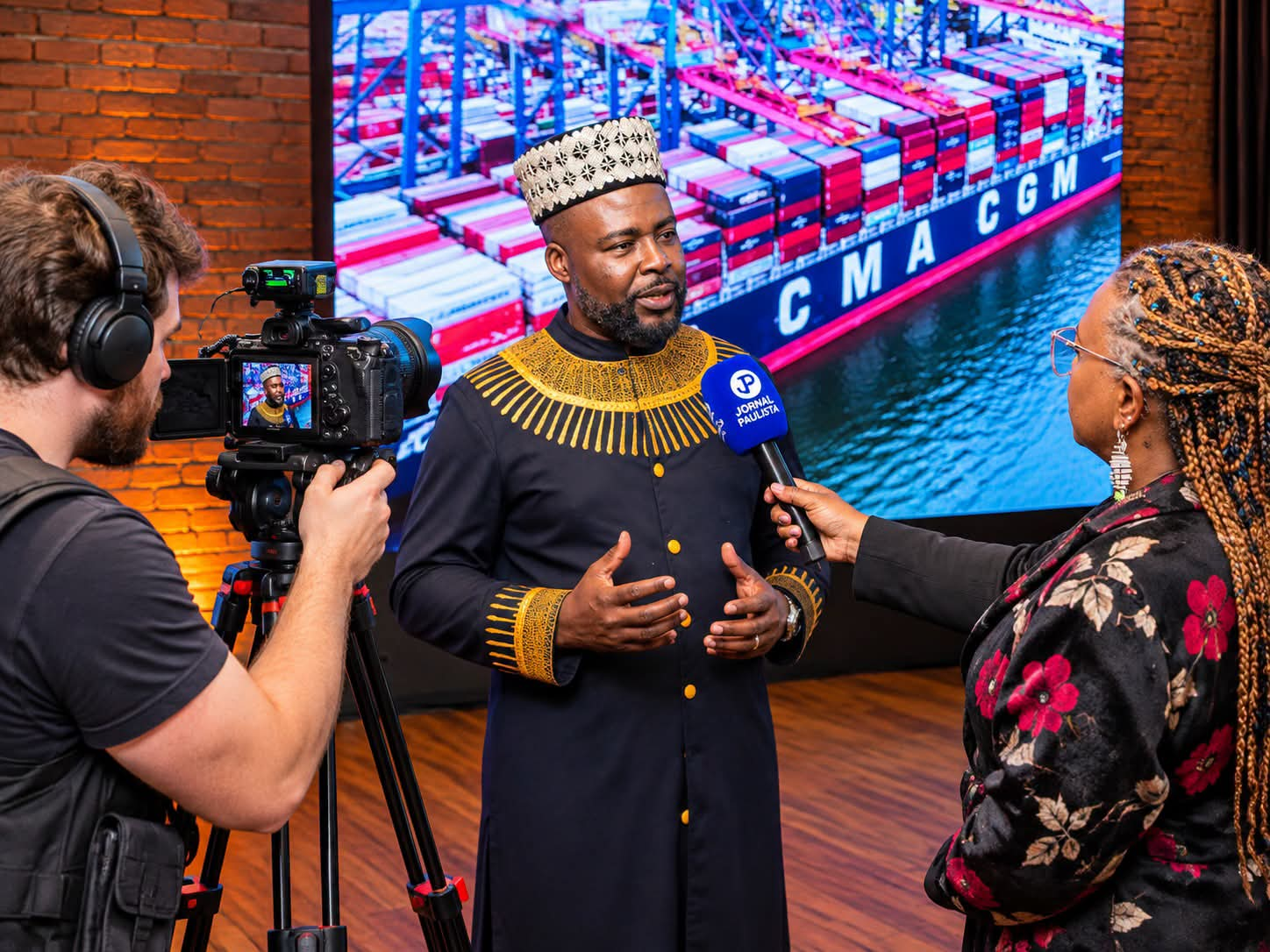
His reported engagements in Brazil, followed by outreach to political advocacy organisations, government representatives, business executives, religious leaders and civil society networks spanning 13 Caribbean countries, represent a development worthy of examination.
Seven years after the Municipal Council of Barueri adopted Motion No. 25/2019 in support of the Ambazonian people’s independence aspirations, Sako has reportedly returned to Brazil with a broader diplomatic agenda. The distinction is important. The 2019 municipal motion was an expression of institutional political solidarity, not formal recognition of Ambazonia as an independent state by the Brazilian government. Nevertheless, it provided a platform from which subsequent advocacy could develop.
This latest mission reportedly extended those engagements into influential political, economic and civil society networks across South America and the Caribbean. His reported participation in Brazil’s 2026 Black Consciousness Day commemorations is particularly noteworthy. The occasion, rooted in the history of African resistance, emancipation and racial equality, offered an opportunity to place the Southern Cameroons question within a wider conversation about historical injustice, freedom and self-determination.
According to Sako’s account to ABC Networks 24, the mission also involved discussions with business interests in banking, petroleum, artificial intelligence, engineering, logistics and manufacturing. These engagements remain preliminary. No independently verified investment agreements or formal diplomatic recognition resulting from the latest mission have been established through the information available for this article.
The broader objective, however, appears to be expanding international awareness of the Southern Cameroons question across more diverse political, economic and institutional networks.
Understanding the Historical Foundations of the Conflict
Any serious examination of the Southern Cameroons question must distinguish the contemporary armed conflict from the historical and constitutional dispute that preceded it. The political controversy did not originate in 2016 or 2017.
Southern Cameroons was formerly administered by Britain under the United Nations international trusteeship system. Following the plebiscite of February 11, 1961, the United Nations General Assembly adopted Resolution 1608 (XV) on April 21, 1961, endorsing the plebiscite results and providing for the termination of the trusteeship arrangements.
The subsequent establishment of a federal constitutional structure in 1961, its replacement by a unitary state in 1972, and the restoration of the name Republic of Cameroon in 1984 remain central to competing interpretations of the territory’s political and constitutional history.
For advocates of Ambazonian independence, these developments represent the progressive dismantling of the political arrangements under which the two territories came together. The authorities in Yaoundé, by contrast, maintain that Cameroon constitutes a sovereign and territorially unified state.
These competing positions cannot be understood exclusively through the events of the past decade. They require serious historical, constitutional and international legal examination. An informed diplomatic process must therefore engage not only with the immediate consequences of the conflict but also with the underlying historical grievances.
The Significance of the Caribbean Connection
The Caribbean is not an arbitrary diplomatic destination. Its historical relationship with Africa, colonialism, slavery, emancipation and independence provides a meaningful setting for discussions about the political history of Southern Cameroons. The reported participation of representatives from 13 Caribbean countries could create opportunities for sustained academic exchanges, parliamentary conversations, media exposure and engagement with regional civil society institutions.
However, international diplomacy must be evaluated through measurable outcomes rather than ceremonial appearances. The real diplomatic test is whether these relationships produce documented resolutions, formal hearings, institutional partnerships, sustained international engagement and meaningful opportunities for political dialogue.
International recognition cannot be measured simply by how many people attend a meeting, receive an award or watch an online broadcast. Political solidarity, diplomatic engagement and formal recognition are distinct developments. Each must be accurately described and supported by appropriate evidence.
Economic Diplomacy and the Question of Future Governance
An additional dimension of the reported Brazilian mission deserves examination: the relationship between political diplomacy and economic development. Discussions involving banking, petroleum, artificial intelligence, engineering, logistics and manufacturing potentially introduce economic considerations into conversations traditionally dominated by political status and armed confrontation.
Nevertheless, preliminary business discussions should not be presented as secured investments. Any future economic engagement would require legal clarity, institutional accountability, financial transparency, investment protection and credible governance arrangements.
The development of functioning institutions is particularly important in any discussion concerning the territory’s political future. Economic reconstruction, infrastructure rehabilitation, education, healthcare, energy security and the restoration of livelihoods will remain essential responsibilities under any eventual political settlement. The significance of economic diplomacy will therefore depend on its ability to produce sustainable and publicly accountable outcomes.
The Bigger Question: Can 2027 Bring an End to the War?
This is arguably the most important question confronting the political leadership and the people of Southern Cameroons. Can 2027 become the final year of the bloody conflict that began escalating in 2016 and 2017? Nobody can responsibly guarantee that outcome today. Nevertheless, the possibility of a negotiated end should not be dismissed.
Nearly a decade of confrontation has demonstrated the persistence of the underlying political disagreement and the enormous human cost of its continuation. On October 29, 2026, Chatham House released an episode of its Africa Aware podcast examining ten years of Cameroon’s Anglophone crisis. The discussion addressed a conflict that evolved from protests over political and institutional marginalisation into an entrenched confrontation with severe consequences for civilians.
The humanitarian situation remains deeply troubling. United Nations High Commissioner for Refugees data continue to document extensive internal displacement, disrupted livelihoods and humanitarian needs associated with Cameroon’s overlapping security crises. Furthermore, the Famine Early Warning Systems Network, in its October 2026 food security outlook, projects widespread Crisis-level food insecurity across the North-West and South-West regions through at least May 2027.
These conditions demonstrate that the consequences of the conflict are not merely political. They are economic, educational, psychological and generational. Children have lost opportunities for education. Families have been separated. Communities have experienced displacement. Agricultural production, commerce and other productive activities have been severely disrupted. Behind every humanitarian statistic is a human being whose future has been altered by the conflict.
Four Possible Developments in 2027
Several broad scenarios deserve consideration as the conflict approaches another year.
Direct Political Negotiations :
One possibility is the emergence of direct political engagement between representatives of the opposing positions. Such negotiations would require willingness on the part of the authorities in Yaoundé to address the underlying grievances, alongside a sufficiently inclusive and credible framework for Southern Cameroonian representation.
Confidence-building measures could include consideration of the circumstances of detained political leaders, humanitarian guarantees, protection of civilians and agreement on the procedural foundations of negotiations. The scope, legitimacy and objectives of such discussions would require clarification by the participating parties.
Continuation of the Armed Conflict:
If the political positions remain irreconcilable and credible negotiations fail to materialise, armed confrontation could continue throughout 2027. The existence of multiple armed factions, competing political structures and disagreements over negotiating authority presents significant challenges to a comprehensive settlement.
International visibility alone cannot automatically overcome these divisions. Continued confrontation would also risk further displacement, economic deterioration, educational disruption and humanitarian suffering.
Localised Humanitarian and Security De-escalation
Another possibility is that the conflict continues but with varying levels of intensity across different communities. Local arrangements, improved humanitarian access and reduced hostilities could provide temporary relief in some areas while insecurity persists elsewhere.
Such developments would not constitute a comprehensive political settlement, but they could reduce civilian suffering and create opportunities for rebuilding community trust. Humanitarian protection must remain a responsibility independent of disagreements over the territory’s ultimate political status.
An Internationally Facilitated Peace Process
A more structured process involving African regional institutions, the United Nations or other mutually acceptable international partners could provide a framework for comprehensive negotiations. Such a process would differ from isolated diplomatic meetings because it would require defined procedures, recognised participants, an agreed mandate and mechanisms for evaluating progress.
Questions concerning political status, constitutional arrangements, security guarantees, accountability, human rights and future governance would remain central. The effectiveness of international facilitation would depend on the willingness of the parties to participate in good faith and the credibility of the mediation framework. These four scenarios are analytical possibilities rather than predictions. Some may overlap or develop simultaneously.
The Challenge of Credible Political Representation
One of the most difficult questions confronting Southern Cameroonian diplomacy concerns political representation. The existence of multiple leadership structures and differing political strategies raises legitimate questions about who possesses the authority to negotiate, how representatives derive their mandates and how the interests of the affected population would be protected.
Diplomatic engagements by individual leaders may expand international awareness, but they do not automatically resolve questions of collective representation. Any comprehensive political process would need to examine how competing political organisations, civil society institutions, traditional authorities, affected communities, women, young people, displaced persons and other stakeholders can be meaningfully represented.
The credibility of a negotiating process will depend partly on whether its participants possess legitimate and demonstrable mandates. International partners will also require clarity concerning the commitments that participating representatives can make and implement. These are institutional questions rather than merely personal disagreements between political leaders.
How Should Diplomatic Progress Be Measured?
The significance of the Brazilian and Caribbean engagements should ultimately be evaluated against identifiable outcomes. `Relevant indicators include: – Documented institutional resolutions and parliamentary engagements. – Sustained communication with international organisations. – Independent confirmation of diplomatic meetings and their outcomes. – Credible commitments to humanitarian protection. – Evidence of progress towards a recognised mediation framework. – Transparent economic and institutional partnerships. – Increased opportunities for inclusive political dialogue.– Measurable improvements in civilian security and humanitarian conditions.
These indicators provide a more reliable basis for evaluating diplomatic progress than public appearances or unverified announcements alone.
Conclusion: Beyond Diplomatic Visibility
The expansion of reported Ambazonian diplomatic engagements from North America into South America and the Caribbean introduces another dimension to the international discussion surrounding Southern Cameroons.
The Barueri experience of 2019 demonstrates that international institutional solidarity can be documented. The reported engagements of 2026 raise questions about whether such relationships can develop into sustained political, economic and diplomatic processes.
However, solidarity is not recognition. Recognition is not negotiation. Negotiation is not necessarily settlement. And a settlement cannot be considered successful without meaningful improvements in the lives of the affected population.
Can 2027 become the final year of the bloody war?
The answer will depend on developments that cannot yet be guaranteed: political willingness, credible representation, institutional accountability, humanitarian protection and the emergence of an effective negotiating process.
Dr. Samuel Sako’s reported diplomatic engagements should therefore be assessed not solely by their geographical reach, but by their documented outcomes and contribution to addressing the underlying dispute. For the families enduring displacement, insecurity, interrupted education and economic hardship, the ultimate measure of diplomatic progress will be whether it brings them closer to safety, justice and a sustainable political resolution. After nearly a decade of suffering, that remains the fundamental question.
Ali Dan Ismael
Senior Editor
The Independentist News
Share This Post:
MBENGWI KIDNAPPING INCIDENT: HOW LONG WILL THE BLAME GAME CONTINUE?
Related Post
MBENGWI KIDNAPPING INCIDENT: HOW LONG WILL THE BLAME GAME
THE SYSTEMATIC DISMANTLING OF SOUTHERN CAMEROONS: HOW AHIDJO’S CENTRALISATION
NORWAY AND THE TEST OF JUSTICE: THE AYABA TRIAL
FOUR HUNDRED YEARS OF PLUNDER: CAN AN APOLOGY REBUILD
STRATEGIC SILENCE IS NOT WEAKNESS: WHO BENEFITS FROM THE
OSLO TRIAL OF LUCAS CHO AYABA (II) HE PLEADS