











History will judge political leadership not by the number of ghost towns declared, the intensity of public rhetoric or the prominence of individual personalities, but by its ability to protect the people, preserve political integrity and advance a credible resolution of the conflict. The struggle belongs to the people. Their lives, dignity and future must remain at the centre of every political decision.
An Editorial of The Independentist News, 25 November 2026
Ali Dan Ismael, Senior Editor-in-chief The Independentist News
The recent declarations of ghost towns by elements associated with the leaderships of Sisiku Julius Ayuk Tabe and Dr Lucas Cho Ayaba have raised important questions about the direction of the Ambazonian struggle. Their timing, coinciding with significant judicial proceedings involving both imprisoned leaders, has created an opportunity for competing political narratives.
The central question is not simply who called the lockdowns, but whose interests are served by the divisions, competing declarations and confusion surrounding them.
There is a legitimate concern that Yaoundé may find it easier to deal with a fragmented Ambazonian political landscape than with a united and clearly mandated representation. When different factions issue competing instructions, claim exclusive authority or pursue separate channels of engagement, the people are left to navigate conflicting messages while the fundamental political dispute remains unresolved.
That concern deserves serious examination. It should not, however, be confused with proof that Yaoundé organised or directed the recent ghost towns. Political analysis must distinguish between established facts, reasonable deductions and unsubstantiated allegations.
THE CANADIAN TALKS: A WARNING ABOUT REPRESENTATION
Ambazonia has encountered this challenge before. The Canadian exploratory engagements of 2022 and the peace-process announcement of January 2023 exposed serious disagreements over representation, legitimacy and the framework for negotiations.
On 20 January 2023, the Government of Canada announced that it had accepted a facilitation mandate towards a comprehensive, peaceful and political resolution of the conflict. Its announcement identified several Ambazonian organisations among the participating parties.
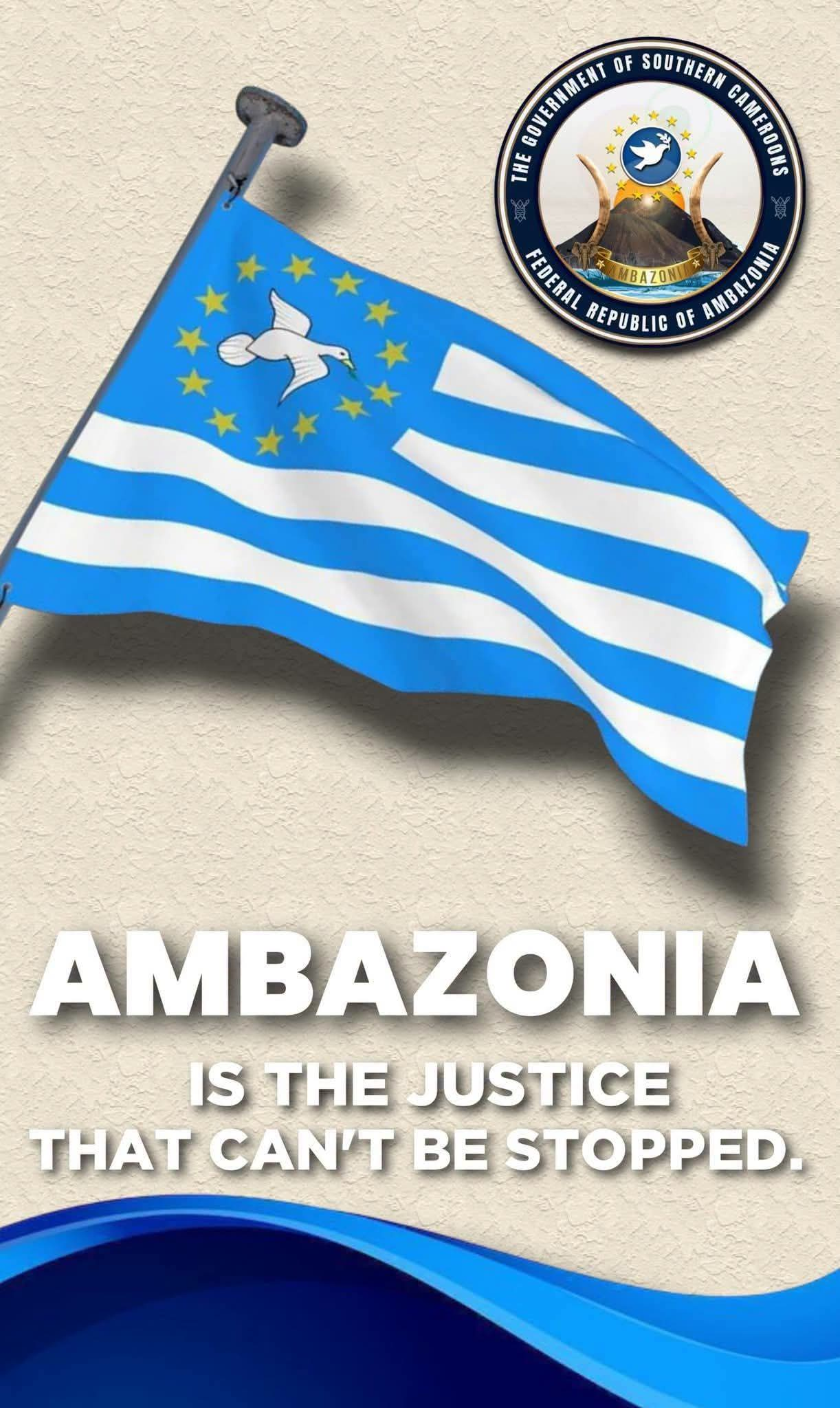
The Government of the Federal Republic of Ambazonia (GRA) rejected the process as announced. According to its stated position of 21 January 2023, the GRA questioned the inclusiveness, fairness and transparency of the process, objected to aspects of its framework and terminology, and maintained that its delegates had not been invited to the third pre-talk session.
The GRA’s position was that meaningful negotiations required appropriate recognition of the parties to the conflict and a credible framework consistent with the principles it had pursued through the Swiss-led initiative.
Yaoundé, for its part, publicly denied having mandated any foreign country or external entity to mediate or facilitate the conflict. In a statement issued on 23 January 2023 and signed by Government Spokesperson René Emmanuel Sadi, the Cameroon government disavowed the mediation mandate, despite Canada’s announcement and the reported participation of Cameroon government representatives in preliminary engagements.
This contradiction seriously undermined the credibility and prospects of the Canadian initiative. The experience raises enduring questions:– Who possesses a legitimate mandate to represent the Ambazonian people? – Who determines the framework and terminology of negotiations? – What guarantees exist that participants are acting with appropriate authority? – How can a negotiated process address the fundamental political dispute rather than merely its consequences? – What mechanisms exist to prevent competing political organisations from undermining an agreed process?
The organisation currently identified in public reporting as the Ambazonia People’s Liberation Authority (APLA) must also be distinguished from the Government of the Federal Republic of Ambazonia. Institutional identities, historical affiliations and political mandates should not be treated as interchangeable.
The Canadian experience demonstrated the risks of entering a political process without sufficient agreement on representation, objectives and the authority of those undertaking negotiations.
THE POLITICS OF GHOST TOWNS AND COURT APPEARANCES
Recent developments involving Sisiku Julius Ayuk Tabe and Dr Lucas Cho Ayaba deserve careful examination. On 19 November 2026, the anticipated appeal hearing involving Ayuk Tabe and nine other imprisoned leaders in Yaoundé was reportedly adjourned until 17 December 2026. APLA had previously endorsed a lockdown in solidarity with the prisoners.
Separately, on 24 November 2026, the trial of Dr Lucas Cho Ayaba opened in Oslo, Norway, where he faces allegations involving war crimes and terrorism. He has pleaded not guilty and is entitled to the presumption of innocence and appropriate legal protections.
These are distinct judicial proceedings in different jurisdictions. They must not be presented as a single coordinated political or judicial event without supporting evidence. Nevertheless, the coincidence of political mobilisation and judicial proceedings raises questions about how such developments may be interpreted or exploited by competing political actors.
– Will Yaoundé attempt to portray demonstrations of support for the imprisoned leaders as evidence that they constitute the principal interlocutors in the conflict? – Will competing organisations use these developments to establish claims of political legitimacy or exclusive representation? – Could the resulting fragmentation make it more difficult to establish a comprehensive and credible framework for resolving the conflict? These are legitimate questions for political examination. They are not conclusions that can be declared established without evidence.
STRATEGIC SILENCE IS NOT POLITICAL WEAKNESS
According to the position presented by the GRA, it neither encouraged nor publicly condemned the recent lockdown declarations. That restraint should not automatically be interpreted as weakness, indifference, political irrelevance or tacit approval.
A public condemnation could have been misrepresented as hostility towards imprisoned leaders or an attempt to diminish their standing. Equally, an endorsement could have created the misleading impression that the GRA had participated in decisions over which it exercised no demonstrated authority.
If violence or casualties followed the lockdowns, competing political actors could also attempt to shift responsibility or exploit the consequences for factional advantage. In such circumstances, restraint may serve to prevent unnecessary confrontation and preserve institutional independence. However, strategic silence must not become an absence of leadership.
The people deserve clear explanations, responsible public communication, political education and transparency regarding decisions that affect their daily lives. Political institutions must be prepared to explain their positions without descending into personal attacks or unnecessary factional confrontations.
The effectiveness of strategic silence should ultimately be measured by whether it reduces tensions, protects civilians and preserves opportunities for a credible political resolution.
WHO PAYS THE PRICE OF POLITICAL FRAGMENTATION?
Behind every ghost town declaration are ordinary people whose livelihoods depend upon their ability to work, trade, travel and provide for their families. There are schoolchildren whose education has already suffered years of disruption, farmers who must transport their produce, patients who require medical attention and families struggling to survive under exceptionally difficult circumstances. Their welfare must remain central to every political decision.
No organisation should regard the suffering of civilians as a measure of its political relevance. No leader should consider the disruption of ordinary economic activity sufficient evidence of popular legitimacy. Peaceful political expression must be distinguished from coercion. Civilians should never be threatened, intimidated or punished for attempting to meet their basic needs.
Political responsibility extends to protecting the people whose interests an organisation claims to represent. A struggle that loses sight of human dignity risks undermining the very principles upon which its political aspirations are founded.
PERSONALITIES MUST NOT REPLACE INSTITUTIONS
The Ambazonian question is bigger than any individual leader, organisation or political faction. Sisiku Julius Ayuk Tabe and Dr Lucas Cho Ayaba have their respective political histories, constituencies and legal circumstances. Their cases deserve accurate reporting, humane consideration and respect for due process.
However, imprisonment does not automatically confer exclusive political authority. Neither does international visibility, organisational influence or the ability to mobilise public demonstrations. Political legitimacy requires accountability, credible representation and a demonstrable commitment to the interests of the people.
The elevation of personalities above institutions creates uncertainty over leadership succession, political responsibility and the continuity of national objectives. Any sustainable political settlement must be capable of surviving changes in leadership and disagreements among individuals. The central challenge is therefore institutional rather than personal.
WHO BENEFITS FROM A DIVIDED AMBAZONIA?
A fragmented political landscape can create opportunities for opposing parties to exploit disagreements, question representative mandates or engage selectively with organisations whose positions may be more convenient. That possibility is not unique to Ambazonia. It is a recurring challenge in divided political movements and complex international negotiations.
The Canadian experience, the Swiss-led initiative and the present disagreements underscore the importance of institutional clarity, transparent mandates and credible diplomatic engagement.
The fundamental question remains: what kind of political framework can genuinely address the conflict between Ambazonia and La République du Cameroun? The answer cannot be found exclusively in competing lockdown declarations, fragmented representation or the elevation of selected personalities.
It requires a serious examination of the historical, legal and political foundations of the dispute, together with a credible process capable of addressing its underlying causes.
CONCLUSION: HISTORY WILL JUDGE LEADERSHIP BY ITS RESULTS
Strategic silence is not surrender. Political restraint is not institutional paralysis. But neither silence nor restraint can substitute for a coherent political vision, responsible leadership and accountability to the people.
The dangers confronting Ambazonia arise not only from the continuing conflict with Yaoundé, but also from unresolved internal disagreements over representation, authority and political direction. When competing factions claim authority over the same people, issue conflicting instructions and elevate personalities above institutions, fragmentation becomes a political liability.
The fundamental question, therefore, remains: Who benefits from a divided Ambazonia, and who ultimately pays the price? The people must not become collateral victims of political competition.
History will judge political leadership not by the number of ghost towns declared, the intensity of public rhetoric or the prominence of individual personalities, but by its ability to protect the people, preserve political integrity and advance a credible resolution of the conflict. The struggle belongs to the people. Their lives, dignity and future must remain at the centre of every political decision.
Ali Dan Ismael, Senior Editor-in-chief The Independentist News


Leave feedback about this