







Editorial commentary

We are home to news on Cameroon and the CEMAC region. We are dedicated to honest and reliable reporting. We are the voice of the Cameroonian people and their fight for freedom and democracy at a time when the Yaoundé government is silencing dissent and suppressing democratic voices.

A shepherd may speak with political authorities. He may negotiate with those who exercise power. He may seek compromises that save lives. But the lasting test of prophetic leadership is whether he can preserve his moral independence while doing so. The question is not whether Archbishop Nkea still speaks. It is whether the peace he advocates makes adequate room for the political truths that the parties find most difficult to confront. That is the question his public leadership must continue to answer.
By Timothy Enongene
Editor-in-Chief, Independentist News
29 October 2026
As Amazon associate this site earns from qualifying purchases
Buy your copies of books on the Ambazonian revolution By Martin Mungwa on Amazon
https://www.amazon.com/s?k=martin+mungwa&crid=374C0JP35IX74&sprefix=southmartin+mungwa%2Caps%2C1306&linkCode=ll2&tag=njokings-20&linkId=4376c9469a3b549e5f15d73cd11f09e6&language=en_US&ref_=as_li_ss_tl
When pastoral diplomacy meets the unresolved political question of Southern Cameroons, the Church must explain whether dialogue is intended merely to silence the guns or to address the grievances that produced the conflict.
The Bishop Who Spoke with Candour
In May 2018, when Andrew Fuanya Nkea was Bishop of Mamfe, he delivered a memorable warning about the escalating conflict in Southern Cameroons. Speaking to the BBC’s Focus on Africa, he called for dialogue to avert what he described as a “useless and senseless” civil war.
His intervention came at a time when communities across the Northwest and Southwest were experiencing killings, displacement, destruction of property and growing insecurity. The Bishop spoke of the suffering he and other Catholic leaders had encountered in conflict-affected communities.
The message was clear: violence could not resolve the crisis, and the political authorities and opposing forces needed to pursue dialogue. For many who heard him, Nkea’s intervention represented the moral responsibility of religious leadership in a society experiencing profound suffering.
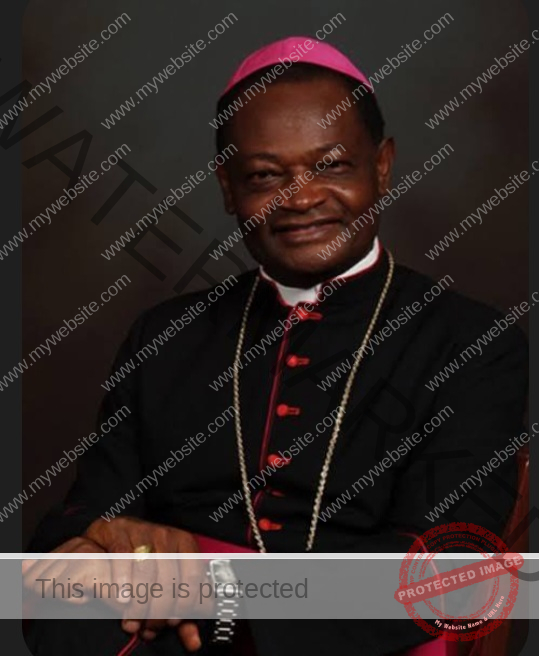
Eight years later, the same Bishop occupies two considerably more influential positions: Archbishop of Bamenda and President of the National Episcopal Conference of Cameroon. His responsibilities have expanded. His access to national authorities has presumably increased. His voice carries greater institutional weight. But this transformation invites an uncomfortable question: has the candour of Mamfe survived the institutional diplomacy of Bamenda?
From a Local Shepherd to a National Church Leader
Archbishop Nkea’s appointment to Bamenda in December 2019 placed him at the centre of one of the most politically sensitive ecclesiastical provinces in Central Africa. His subsequent election as president of the national bishops’ conference in April 2022 further expanded his responsibilities.
Such advancement does not automatically compromise a religious leader’s independence. Indeed, broader responsibility can provide opportunities to advocate more effectively for peace, humanitarian access and political reconciliation. Yet it creates a more complicated relationship between moral authority and political power.
A bishop responsible for an entire ecclesiastical province must engage the authorities. A national conference president must communicate with political institutions, government officials and international representatives. The challenge is ensuring that institutional diplomacy does not obscure the grievances of communities whose suffering gives urgency to the Church’s mission.
The Archbishop’s critics are therefore entitled to ask whether his growing prominence has changed the emphasis of his public interventions. Has he traded faith for politics? That question should be answered through his statements and actions, not through assumptions about his private motives.
The Political Question That Dialogue Cannot Avoid
At the centre of the Southern Cameroons conflict lies a political disagreement that cannot be reduced to the conduct of armed groups or the restoration of public order. For supporters of Ambazonian independence, the conflict concerns the historical and constitutional relationship between the former British Southern Cameroons and La République du Cameroun.
Their arguments invoke the 1961 United Nations-supervised plebiscite, the federal arrangements that followed, the 1972 constitutional referendum and subsequent changes to the constitutional structure. The legal implications of these events remain contested. Nevertheless, the historical grievances and political aspirations associated with them cannot simply be dismissed as security problems.
The Government of La République du Cameroun maintains a contrary position, emphasizing territorial integrity, national unity and constitutional arrangements within the existing state. These positions are fundamentally different.
Any serious peace process must therefore confront the political disagreement rather than assume that one position has already prevailed. This is where Archbishop Nkea’s leadership deserves examination. When he calls for dialogue, what political questions does he believe the process must be permitted to address?
Does dialogue include the possibility of discussing competing constitutional and sovereignty claims, or is it confined to negotiating the terms under which armed resistance ends? Without clarity, dialogue can become a word accepted by everyone precisely because it means different things to different participants.
What Archbishop Nkea Has Actually Said
Fairness requires acknowledging that Archbishop Nkea has not abandoned public advocacy for peace. In November 2019, he spoke about the breakdown of trust between civilians and the military. He emphasized rebuilding confidence and suggested that reconstruction of damaged homes could help establish conditions for reconciliation.
More recently, in March 2025, he publicly urged direct discussions between the government and separatist fighters. He acknowledged that some fighters doubted the government’s commitment to resolving the crisis. These statements matter. They demonstrate that the Archbishop has continued to recognize serious obstacles to peace and has not simply demanded unilateral submission by armed separatists.
In April 2026, following Pope Leo XIV’s visit to Cameroon, Nkea again spoke publicly about the need to bring separatists and government representatives into meaningful dialogue. His record therefore does not justify portraying him as completely silent or indifferent. But the existence of public appeals for dialogue does not settle the deeper question of whether the proposed dialogue adequately addresses the underlying political grievances. That distinction is central to this editorial.
Has Yaoundé Become Too Comfortable?
For a religious leader, access to government authorities is not inherently evidence of compromise. Such access can secure humanitarian assistance, facilitate the release of detainees, protect threatened communities and create channels of communication that would otherwise remain closed.
The Catholic Church can play a constructive role precisely because it may communicate with parties that refuse to speak directly to one another. Nevertheless, access brings responsibilities. A bishop’s closeness to political institutions must not prevent him from examining the actions of those institutions with the same moral seriousness that he applies to non-state armed groups.
The question for Archbishop Nkea is therefore not whether he should speak to the authorities in Yaoundé. He should. The question is whether he is equally prepared to challenge the assumptions that shape their approach to the Southern Cameroons conflict.
If the authorities insist that territorial integrity is non-negotiable, can a peace initiative still examine the historical grievances and constitutional questions raised by those demanding self-determination?
If the government presents decentralization or special-status arrangements as sufficient, who determines whether those measures adequately answer the aspirations of the affected communities? These are not questions that require Archbishop Nkea to endorse independence. They require him to explain what he understands by meaningful political dialogue.
The Difference Between Peace and Political Settlement
Peace is often discussed as though it means the absence of gunfire. For civilians living amid insecurity, an immediate reduction in violence would unquestionably be a major humanitarian achievement. Families need safety. Children need schools. Farmers need access to their land. Communities need functioning hospitals, markets and public services.
These necessities must not be held hostage to political disagreements. But a durable settlement requires more than the restoration of ordinary activity. It requires a political framework capable of addressing the grievances that sustain the conflict. Humanitarian peace and political settlement are related but distinct objectives.
Religious leaders may be particularly effective in facilitating the first. Their moral authority may also help create conditions for the second. The danger arises when the achievement of temporary calm is mistaken for resolution of the underlying dispute. Archbishop Nkea should therefore be encouraged to explain not only how dialogue can begin but also what principles should govern its credibility.
Who participates? Who represents affected communities? What guarantees protect participants? How are abuses investigated? Can competing political proposals be considered without intimidation? These questions would test the seriousness of any proposed process. The Church Cannot Be Reduced to an Instrument of Stability
The Catholic Church has a responsibility to defend human dignity, safeguard the vulnerable and speak against injustice. Its pastoral mission does not require endorsement of a particular political movement. It does, however, require moral independence from all parties exercising power or violence.
Government soldiers must be held accountable for abuses established through credible investigations. Armed separatist fighters must likewise be challenged when they attack civilians, threaten communities or violate humanitarian norms. The Church’s credibility depends upon applying these principles consistently.
For Archbishop Nkea, the issue is particularly important because his ecclesiastical province encompasses communities deeply affected by the conflict. Their expectations cannot be satisfied merely by symbolic gestures of reconciliation.
They need to understand whether their suffering, historical grievances and political aspirations are being meaningfully represented in the Archbishop’s appeals. A prophetic voice is not measured exclusively by the severity of its language. It is measured by its willingness to defend moral principles when doing so becomes inconvenient, including before the most powerful authorities.
Five Questions for Archbishop Nkea
The Independentist News respectfully places five questions before His Grace:
–Does the Archbishop believe that a credible dialogue process must permit consideration of the historical and constitutional grievances underlying the Southern Cameroons conflict?
–How does he distinguish a genuinely negotiated political settlement from an initiative designed primarily to restore the authority of the existing state?
–What safeguards does he consider necessary to ensure that representatives of affected communities, including those advocating independence, can participate without fear of reprisals?
–How should responsibility for violations against civilians be investigated and addressed, regardless of whether the alleged perpetrators belong to state forces or armed separatist organizations?
–What concrete progress would convince him that dialogue has moved beyond public declarations toward a credible and sustainable political settlement?
These questions are neither an attack on the Catholic Church nor a demand that its Archbishop adopt The Independentist News editorial position. They concern the meaning, scope and credibility of peace efforts conducted in the name of communities that have endured years of suffering.
The Prophetic Voice Must Remain Independent
The Archbishop who spoke from Mamfe in 2018 understood that violence demanded a moral response. The Archbishop who speaks from Bamenda in 2026 carries a wider responsibility and commands a larger audience.
His continued appeals for dialogue are documented and deserve acknowledgment. But the additional authority of his office invites additional scrutiny. If dialogue is to offer a lasting solution, its foundations must extend beyond calls for reconciliation. It must address the political issues that the parties themselves identify as fundamental.
The Catholic faithful, affected communities and the wider Ambazonian public have a legitimate interest in understanding how Archbishop Nkea proposes to meet that challenge. The Church need not become the political instrument of either Yaoundé or the independence movement.
Its contribution can be to defend truth, human dignity, accountability and genuine negotiation without surrendering its independence to either side. Archbishop Nkea, the voice that spoke from Mamfe must remain audible in Bamenda.
A shepherd may speak with political authorities. He may negotiate with those who exercise power. He may seek compromises that save lives. But the lasting test of prophetic leadership is whether he can preserve his moral independence while doing so.
The question is not whether Archbishop Nkea still speaks. It is whether the peace he advocates makes adequate room for the political truths that the parties find most difficult to confront. That is the question his public leadership must continue to answer.
As Amazon associate this site earns from qualifying purchases
Buy your copies of books on the Ambazonian revolution By Martin Mungwa on Amazon
https://www.amazon.com/s?k=martin+mungwa&crid=374C0JP35IX74&sprefix=southmartin+mungwa%2Caps%2C1306&linkCode=ll2&tag=njokings-20&linkId=4376c9469a3b549e5f15d73cd11f09e6&language=en_US&ref_=as_li_ss_tl
Timothy Enongene
Editor-in-Chief, The Independentist News | Editorial Commentary
Share This Post:
KING CHARLES III, CARIBBEAN REPARATIONS AND BRITAIN’S UNFINISHED RESPONSIBILITY TO SOUTHERN CAMEROONS: If Britain Must Confront Its Caribbean Past, It Must Also Answer Questions About Its 1961 Trusteeship
Timothy Enongene thanks the Editorial board and publisher of The Independentist News for his recent promotion
Related Post
KING CHARLES III, CARIBBEAN REPARATIONS AND BRITAIN’S UNFINISHED RESPONSIBILITY
Timothy Enongene thanks the Editorial board and publisher of
HOW MANY MORE SONS MUST DIE BEFORE THE HUMAN
THE AFRICAN BAR ASSOCIATION BREAKS THE SILENCE ON SOUTHERN
SOUTHERN CAMEROONS 2050 VERSUS LRC’S COLONIAL COMMUNITY DIALOGUE: AN
DION NGUTE’S PSYCHOLOGICAL GAME: Why community reconciliation cannot substitute