








Editorial commentary

We are home to news on Cameroon and the CEMAC region. We are dedicated to honest and reliable reporting. We are the voice of the Cameroonian people and their fight for freedom and democracy at a time when the Yaoundé government is silencing dissent and suppressing democratic voices.

The African Bar Association’s 2026 communiqué is an important development in the continental legal discussion of Southern Cameroons. It condemns serious abuses, calls for international mediation, supports transitional justice and demands humanitarian access. Those commitments deserve serious consideration.
The 2026 Cabo Verde communiqué places the Southern Cameroons conflict within Africa’s continental rule-of-law agenda—but does its proposed solution go far enough?
By Ali Dan Ismael
Senior Editor-in-Chief
Independentist News
29 October 2026
As Amazon associate this site earns from qualifying purchases
Get copies of publications on the Ambazonian revolution By Martin Mungwa
https://www.amazon.com/s?k=martin+mungwa&crid=374C0JP35IX74&sprefix=southmartin+mungwa%2Caps%2C1306&linkCode=ll2&tag=njokings-20&linkId=0a2091448b503d733d3889a10db21473&language=en_US&ref_=as_li_ss_tl
A Continental Legal Institution Addresses the Southern Cameroons Crisis
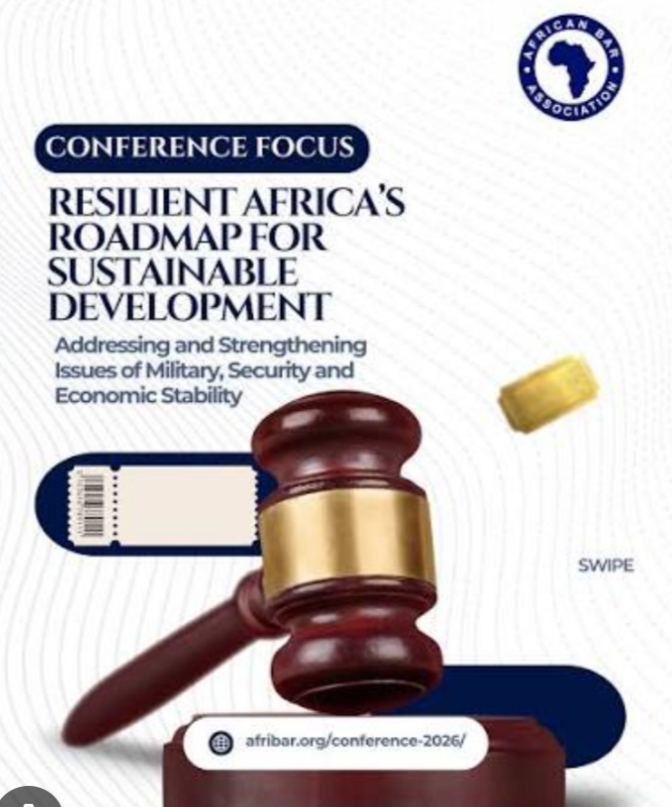
The African Bar Association (AFBA), meeting at its 2026 Annual Conference in Sal, Cabo Verde, from September 20 to 24, adopted a communiqué addressing some of Africa’s most consequential political, legal, humanitarian and security crises. Among its resolutions were four provisions devoted specifically to the Southern Cameroons conflict.
Their significance deserves the attention of Ambazonians, African governments, international legal scholars, human rights organizations and institutions concerned with the future of international mediation.
The communiqué, dated September 24, 2026, was subsequently transmitted under a covering letter dated October 7, signed by the Association’s president, High Chief Ibrahim Eddy Mark.
The document places Southern Cameroons alongside Darfur, eastern Democratic Republic of Congo, the Sahel and other conflicts requiring continental and international attention.
For Ambazonians who have consistently argued that the crisis cannot be resolved through unilateral declarations by La République du Cameroun (LRC), this development deserves careful examination. It is not a recognition of Ambazonian statehood. Nor is it a judicial decision.
It is, however, an institutional statement by a continental professional legal association that acknowledges grave violations, demands external mediation and calls for accountability. That distinction is central to understanding its importance.
Resolution 45: Condemnation of Abuses Must Apply to Everyone
Resolution 45 strongly condemns continuing violence in Cameroon’s North-West and South-West regions. The abuses identified include extrajudicial killings, arbitrary arrests, torture, sexual and gender-based violence, attacks against schools and humanitarian workers, and the killing of civilians. Importantly, the communiqué attributes civilian killings to both government forces and armed separatists.
This language establishes an uncompromising principle: civilian protection and the prohibition of serious abuses must apply regardless of political affiliation.
For the Ambazonian independence movement, this is an opportunity to demonstrate that the struggle for political self-determination and the protection of civilians must remain inseparable. No armed formation should be exempt from scrutiny because it claims to defend a legitimate political cause.
Equally, no state security force should escape accountability by invoking national sovereignty, territorial integrity or counterinsurgency operations. Allegations of atrocities require credible evidence, independent investigation and individualized responsibility. The legitimacy of a political objective cannot confer immunity for crimes committed in its pursuit.
Resolution 46: International Mediation Enters the Discussion
Resolution 46 is arguably the communiqué’s most politically consequential provision. The African Bar Association calls for internationally mandated mediation addressing the historical grievances, marginalization and political demands underlying the conflict. This represents a materially different approach from purely domestic consultation organized and controlled by the government whose conduct is itself under examination.
For years, LRC authorities have presented dialogue, administrative decentralization and other domestic initiatives as pathways toward resolving the Anglophone crisis. Critics within the Ambazonian movement have argued that such processes do not provide a sufficiently independent negotiating framework, particularly where the central questions of sovereignty and constitutional legitimacy remain disputed.
The AFBA resolution introduces international mediation as a necessary element of the proposed response. But its wording also exposes an important limitation. The communiqué refers specifically to demands for greater autonomy or federalism. It does not explicitly identify independence as a negotiating option. For advocates of Southern Cameroons independence, this omission is consequential.
A negotiation intended to settle a fundamental constitutional and national-status dispute cannot simply assume that every participant accepts continued membership in the existing state. The AFBA’s mediation recommendation therefore opens a potentially important discussion without settling the most contested political issue.
The Historical Question Cannot Be Avoided
The modern conflict cannot be understood without examining the constitutional history of the former British Southern Cameroons. The territory’s political status changed during the final stages of British trusteeship, culminating in the 1961 United Nations-supervised plebiscite and subsequent constitutional arrangements with the Republic of Cameroon.
United Nations General Assembly Resolution 1608 (XV) remains an important documentary reference in assessing that transition. Further controversies surround the 1972 constitutional referendum, the abolition of the federal structure and the constitutional developments of 1984.
Within the Ambazonian independence movement, these events are frequently presented as evidence that the original constitutional relationship was dismantled without valid consent. The government of Cameroon and supporters of continued national unity advance different constitutional and historical interpretations.
These disagreements cannot be resolved by political slogans alone. They require examination of the relevant UN resolutions, constitutional instruments, historical negotiations, state practice and applicable principles of international law. A serious international mediation process must distinguish the historical record from the competing legal conclusions drawn from it. Most importantly, it must allow the parties to present their claims without determining the outcome in advance.
Resolution 47: Transitional Justice and the Question of Accountability
The Association also calls for a comprehensive transitional justice mechanism. Its proposed objectives include holding perpetrators of atrocity crimes accountable, providing reparations to victims, preventing renewed abuses and ensuring the participation of affected communities.
This is an important recommendation because political negotiations frequently concentrate on the distribution of power while neglecting the experiences of victims. Across Southern Cameroons, families have suffered killings, displacement, destruction of property, detention, insecurity and interrupted education.
For many survivors, the meaning of peace cannot be reduced to the announcement of a ceasefire or the signing of an agreement. It must include the truth about what happened. It must include credible investigations. It must address the needs of survivors and displaced communities. And it must establish safeguards against renewed violence.
A transitional justice process that excludes victims or protects influential perpetrators from meaningful scrutiny risks producing another cycle of grievance. An independent mechanism would also have to consider the responsibilities of armed groups, public officials, security personnel and other actors implicated by reliable evidence. Accountability must be established through fair procedures rather than collective accusation.
Resolution 48: A Humanitarian Crisis That Cannot Wait for Political Settlement
The AFBA calls for unimpeded humanitarian access to populations in need. The communiqué refers to more than one million internally displaced persons and more than 3,000 civilian deaths. These are figures reported in the Association’s September 2026 resolution; they should not be mistaken for independently verified current totals. Displacement estimates may also vary according to reporting period, geographic scope and methodology.
Nevertheless, the underlying humanitarian problem is unmistakable. Prolonged violence has undermined education, health care, agriculture, livelihoods and community life. Civilians cannot be expected to postpone their survival until political leaders reach a comprehensive settlement.
Humanitarian access should not be made conditional on constitutional concessions, recognition of armed organizations or acceptance of a particular political settlement. Schools, hospitals, humanitarian personnel and civilians require protection under applicable international law. Any credible mediation initiative should therefore incorporate practical civilian-protection measures from its earliest stages.
Professor Gambari’s Warning: Africa Cannot Build Development on Injustice
Professor Ibrahim Agboola Gambari delivered the conference’s keynote address on September 21, addressing constitutional governance, insecurity, economic development and the rule of law. His central argument was that sustainable African development depends on credible institutions, security, constitutional legitimacy and enforceable law.
He examined the effects of military takeovers in the Sahel, the fragility of democratic institutions, economic indebtedness, conflict and the opportunities presented by continental economic integration. His address provides a broader intellectual framework for interpreting the Association’s Southern Cameroons resolutions.
Where institutions lose public trust, political grievances deepen. Where courts cannot operate independently, citizens lose confidence in lawful remedies. Where political conflicts remain unresolved, productive economic activity suffers. And where governments substitute coercion for legitimate political accommodation, security measures alone rarely produce lasting reconciliation. These observations are particularly relevant to Southern Cameroons.
The costs of prolonged insecurity extend far beyond direct military expenditure. They include lost investment, disrupted education, damaged infrastructure, population displacement and the erosion of institutions necessary for future prosperity. The economic future of the territory therefore cannot be separated from its political and constitutional future.
What the Communiqué Does Not Say
The AFBA document must not be exaggerated. It does not declare that Southern Cameroons is an independent state. It does not formally endorse Ambazonian sovereignty. It does not order the United Nations, African Union or any government to begin negotiations. It does not establish a tribunal, impose sanctions or authorize an international mediation mission. Nor does it provide a definitive legal interpretation of the 1961 reunification arrangements.
These limitations do not make the communiqué irrelevant. They define the nature of its contribution. The Association has articulated recommendations that political institutions, legal professionals and civil society organizations may now evaluate and pursue.
Its significance lies in the authority of its professional voice and the issues it has placed before the wider African legal community—not in legal powers that it does not possess.
A Necessary Question for the African Bar Association
The next challenge concerns implementation. If the Association considers international mediation essential, what practical steps will follow? Will it transmit its Southern Cameroons resolutions to the African Union Peace and Security Council and appropriate United Nations mechanisms? Will it engage the African Commission on Human and Peoples’ Rights? Will it encourage independent investigations of alleged violations? Will it invite submissions from affected communities, including advocates of independence, federalism and continued national unity? And will it develop a more detailed legal framework for mediation that does not predetermine the constitutional outcome?
These questions are not criticisms of the Association’s decision to address the conflict. They are tests of whether the recommendations can develop into sustained institutional action. The communiqué itself states that the Association intends to maintain follow-up beyond the 2026 conference. Its subsequent activities will therefore be important to monitor.
The Responsibility of Ambazonian Political Leadership
For Ambazonian institutions and political organizations, the publication of these resolutions presents a responsibility as well as an opportunity. The appropriate response should be disciplined, evidence-based and strategically coherent.
Any submission to continental or international legal institutions should clearly distinguish historical evidence, legal arguments, political demands and humanitarian priorities.
Political representatives should be prepared to explain the constitutional case for self-determination while acknowledging that its legal and political implications remain contested.
They should also demonstrate a credible commitment to protecting civilians and investigating abuses attributed to individuals acting in the name of the independence movement.
The strongest international argument is one capable of surviving rigorous legal examination, not merely one that attracts approval from an already sympathetic audience.
Beyond Another African Communiqué
Africa has produced many declarations defending constitutional government, human rights, peace and the rule of law. The recurring difficulty has been translating those declarations into enforceable institutional commitments.
The African Bar Association recognizes that problem in its wider conference deliberations. Southern Cameroons now forms part of that discussion.
For The Independentist News editorial board, the critical question is whether the Association’s call for internationally mandated mediation can become a practical process in which affected communities participate meaningfully and all relevant constitutional claims receive fair examination. The answer will depend on sustained engagement, political will and the willingness of institutions to move beyond ceremonial declarations.
Conclusion: Recognition of a Crisis Is Not Yet Resolution of Its Cause
The African Bar Association’s 2026 communiqué is an important development in the continental legal discussion of Southern Cameroons. It condemns serious abuses, calls for international mediation, supports transitional justice and demands humanitarian access. Those commitments deserve serious consideration.
But the document stops short of resolving the central constitutional dispute or expressly embracing independence as an option. Its value must therefore be understood accurately. It advances the discussion of accountability and mediation while leaving the ultimate political question open.
For Ambazonians, the task ahead is to transform that opening into a carefully substantiated international legal and diplomatic engagement, grounded in historical evidence, human rights and the protection of civilians.
For the African Bar Association, the challenge is to demonstrate that its resolutions can generate meaningful follow-up. For the wider international community, the question is whether a conflict of such duration and human consequence will continue to be managed as a domestic security problem or addressed through a credible political process that examines its historical foundations.
Southern Cameroons needs more than another declaration of concern. It needs a process capable of examining the past, protecting the present and permitting a legitimate political future to emerge.
Editorial source: African Bar Association, Communiqué of the 2026 Annual Conference, Sal, Cabo Verde, September 24, 2026, especially Resolutions 45–48 and 70–71; Professor Ibrahim A. Gambari, keynote address, September 21, 2026; forwarding letter of October 7, 2026.
Publication note: This article is an independent editorial analysis. The African Bar Association’s resolutions are distinguished from the interpretations and recommendations of Independentist News.
As Amazon associate this site earns from qualifying purchases
Get copies of publications on the Ambazonian revolution By Martin Mungwa on Amazon.
https://www.amazon.com/s?k=martin+mungwa&crid=374C0JP35IX74&sprefix=southmartin+mungwa%2Caps%2C1306&linkCode=ll2&tag=njokings-20&linkId=0a2091448b503d733d3889a10db21473&language=en_US&ref_=as_li_ss_tl
Ali Dan Ismael
Senior Editor-in-Chief
Independentist News
29 October 2026
Share This Post:
SOUTHERN CAMEROONS 2050 VERSUS LRC’S COLONIAL COMMUNITY DIALOGUE: AN INSULT TO INTERNATIONAL NEGOTIATION STANDARDS?
Related Post
SOUTHERN CAMEROONS 2050 VERSUS LRC’S COLONIAL COMMUNITY DIALOGUE: AN
DION NGUTE’S PSYCHOLOGICAL GAME: Why community reconciliation cannot substitute
DION NGUTE’S MIND GAME EXPOSED AS BULU PRIEST PLEADS
THE INDEPENDENTISTS NEWS: A NEW CHAPTER IN EDITORIAL LEADERSHIP
ROME CALLED FOR JUSTICE, CANTERBURY DEMANDED INCLUSION. DID YAOUNDÉ
KONYE KIDNAPPINGS: ARE LRC OPERATIVES DISGUISING THEMSELVES AS AMBAZONIAN