










News commentary

We are home to news on Cameroon and the CEMAC region. We are dedicated to honest and reliable reporting. We are the voice of the Cameroonian people and their fight for freedom and democracy at a time when the Yaoundé government is silencing dissent and suppressing democratic voices.

For France, this moment demands humility and honesty. For Africa, it demands clarity and strategic intelligence. And for Ambazonia, it demands patience, discipline, diplomatic sophistication, and a long historical vision.
By Ali Dan Ismael Editor-in-Chief The Independentist News
The Return of France to the African Stage
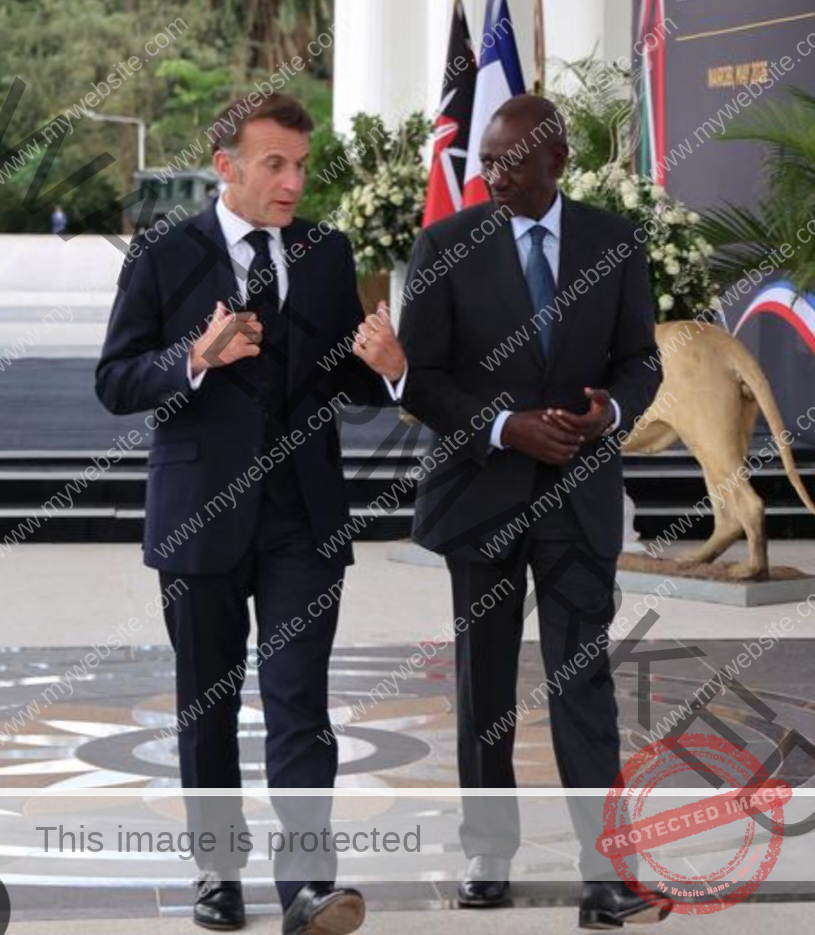
More than thirty African leaders recently gathered around Emmanuel Macron during a major summit in Kenya as France attempted to project a renewed image of itself across the African continent.
The message from Paris was carefully designed. A new partnership. A new era. Mutual respect. Shared prosperity. Strategic cooperation. Economic transformation. France now speaks the language of humility. But across Africa, millions are quietly asking a far more uncomfortable question:
Can a system built on decades of managed influence suddenly reinvent itself through diplomatic vocabulary and carefully staged summits? Africa has heard polished speeches before. The issue was never the speeches. The issue was always the structure beneath them.
The Architecture of Françafrique
For decades, France maintained one of the most sophisticated post-colonial influence systems in modern African history. Long after formal independence ceremonies ended, the architecture of influence remained deeply embedded across parts of the continent through military agreements, intelligence networks, economic leverage, political patronage, media influence, elite cultivation, and currency dependency structures tied to the CFA franc system. This structure became known as Françafrique. Officially, it was described as cooperation. Unofficially, many Africans experienced it as controlled sovereignty.
Today, that system is under pressure. Across the Sahel and beyond, French influence has faced increasing resistance. Military withdrawals. Public protests. Diplomatic expulsions. Rising anti-French sentiment. A growing continental awareness that political independence without strategic autonomy can become little more than symbolic freedom. The psychological foundations of the old order are weakening.
Why the Kenya Summit Matters
It is Not because France suddenly rediscovered Africa. But because France increasingly understands that Africa is changing faster than the old systems of influence can adapt. The monopoly era is ending. China has dramatically expanded its economic footprint. Russia has aggressively pursued security partnerships. Turkey continues expanding diplomatic and commercial influence.
The Gulf states are investing across strategic African corridors. Regional African powers themselves are beginning to assert greater autonomy. The geopolitical chessboard is shifting. And France now faces competition in territories once considered naturally aligned to Paris.
The Crisis of Moral Credibility
Today, the deeper problem confronting France is not merely geopolitical. It is moral credibility. Many Africans increasingly question whether Paris truly supported African sovereignty — or merely preferred stable systems that protected French strategic interests. That credibility crisis becomes particularly visible in the unresolved conflict involving Cameroon and Ambazonia.
For years, international narratives surrounding the conflict were largely reduced to discussions about terrorism, separatism, security operations, or internal instability. But for many Southern Cameroonians, the crisis represent something much deeper. A historical rupture. A colonial contradiction. A political identity crisis inherited from competing imperial systems. A struggle over sovereignty, governance, and self-determination.
Entire villages have been destroyed. Large populations displaced internally and externally.
Refugee communities scattered across borders.
Economic life disrupted. A generation psychologically shaped by war. Yet major international actors often continued approaching the crisis primarily through the lens of preserving regional stability rather than confronting root political questions.
Africa’s New Generation Is Watching
This is where Africa’s younger generation increasingly becomes skeptical. Because modern African populations are more connected, more informed, and more historically conscious than previous generations. They are studying the mechanics of power differently.
They understand that modern influence no longer requires direct colonial occupation. Control can function through debt systems, military dependencies, elite capture, diplomatic shielding, narrative management, economic pressure, and institutional dependency.
The language may evolve.
The architecture often survives. This is why symbolic diplomatic summits alone will not restore trust. Trust requires historical honesty. And honesty requires acknowledging uncomfortable truths. France cannot successfully market a “new African partnership” while avoiding meaningful reflection on the long-term consequences of post-colonial systems that many Africans increasingly associate with democratic stagnation, elite dependency, and constrained sovereignty.
Africa Must Avoid New Forms of Dependency
At the same time, Africa itself must also approach this geopolitical transition with caution and maturity. The collapse of one dependency structure does not automatically create freedom. Africa must avoid replacing one external patron with another. The continent must not exchange old dependency for new dependency wrapped in different flags.
Strategic sovereignty requires internal capacity.
Institutional discipline. Educational transformation. Economic productivity. Political accountability. Independent diplomacy. Without those foundations, external powers will always find entry points.
The Strategic Lesson for Ambazonia
This lesson is especially important for liberation movements and emerging political actors across the continent, including Ambazonia. Because emotional resistance alone is not enough to sustain long-term sovereignty. Successful nations are not built only through outrage. They are built through institutions, strategy, economic architecture, disciplined leadership, international legitimacy, and intellectual preparation.
The Ambazonian question itself increasingly reflects a broader African debate now unfolding across the continent: What happens when the post-colonial state becomes the unresolved problem? That question now hangs heavily over Cameroon. And no international summit can permanently avoid it. Not through diplomatic choreography. Not through media management. Not through carefully worded communiqués. Because unresolved historical contradictions always eventually return to the surface.
The Real Test for France
If France genuinely seeks a new relationship with Africa, then the true test will not be found in summit declarations or presidential photographs. The real test will emerge when difficult questions arise. Questions about justice. Questions about historical responsibility. Questions about political inclusion. Questions about selective international morality.
Questions about why some conflicts receive immediate mediation while others are reduced to “security concerns.” Questions about whether African populations possess equal moral value when strategic alliances are involved.
Africa’s Psychological Transition
Africa is entering a new political consciousness. The old fear barriers are weakening. The monopoly over narrative is weakening. The psychological dependency structures are weakening. A generation is emerging that increasingly wants partnership without submission. Cooperation without manipulation. Global engagement without permanent dependency. That transformation represents both danger and opportunity. Danger for systems built on controlled influence. Opportunity for peoples seeking genuine sovereignty.
Conclusion: History Notices Everything
For France, this moment demands humility and honesty. For Africa, it demands clarity and strategic intelligence. And for Ambazonia, it demands patience, discipline, diplomatic sophistication, and a long historical vision. Because empires rarely announce their decline. But history always notices when they begin negotiating with realities they once believed they could permanently manage.
Ali Dan Ismael Editor-in-Chief The Independentist News
Share This Post:
Patrick Asa’ah Ndangoh: The Anatomy of Custodial Martyrdom
The Panic Above Yaoundé: When Satire Begins to Reveal the Fear Inside the System
Related Post
IS THE WORLD LISTENING: THREE DAYS FOUR FRONTLINES, ASA
SEPTEMBER 24, 1965, THIS DAY IN HISTORY: From Equal
AMBAZONIA’S WAR- IS BIGGER THAN YAOUNDÉ: BRITAIN, FRANCE AND
THE DAY SEPTEMBER 22 1961: — WHAT AMBAZONIA CAN
TRUMP’S “SUPER INTELLIGENCE” ERA: WHAT IT REALLY MEANS —
Why Is Ambazonia More Powerful Than many Imagine.