



A political relationship must ultimately be judged not only by the unity it proclaims, but also by the dignity it protects, the rights it guarantees and the confidence it commands among the people it governs. History remembers what politicians say. It also remembers what institutions do—and what they choose to leave unanswered.
By Timothy Enongene
Editor-in-Chief,
The Independentist News
YAOUNDÉ – 23 November 2026 – There are moments in political history when a statement made during a television discussion becomes more significant than the programme itself. Such statements can reveal attitudes, provoke national reflection and raise fundamental questions about political responsibility, human dignity and the relationship between citizens and the institutions governing them.
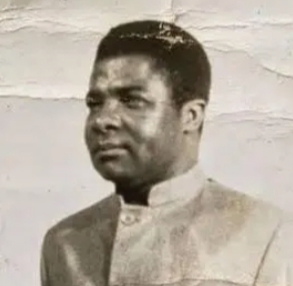
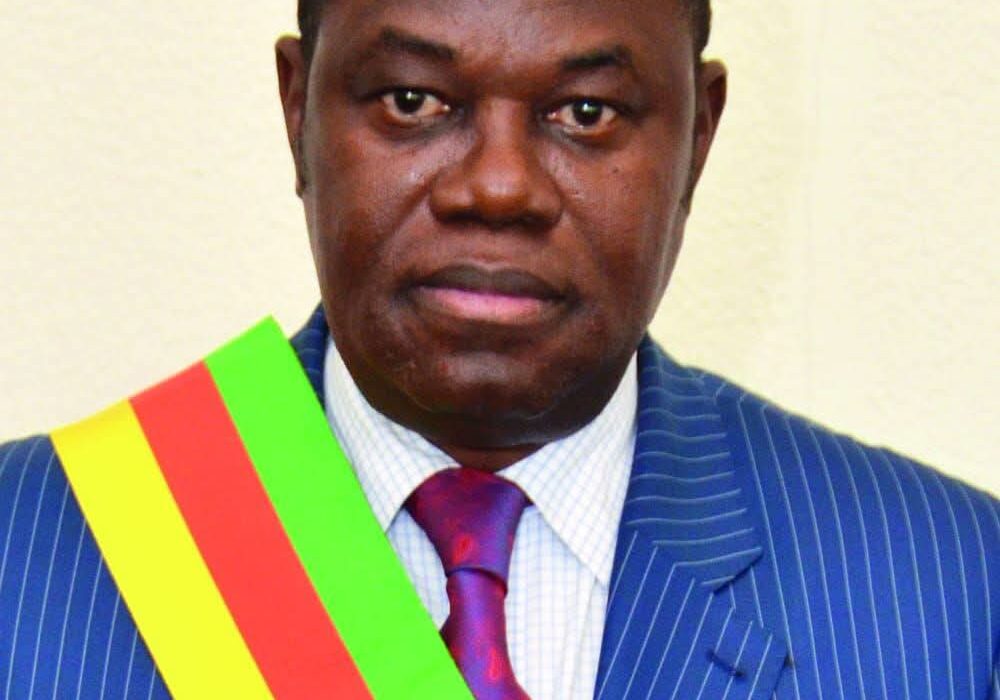
One such moment occurred on 13 May 2019, when Hon. Engelbert Essomba Bengono, an alternate Member of Parliament and member of the Central Committee of the ruling Cameroon People’s Democratic Movement (CPDM/RDPC), appeared on Équinoxe Soir, broadcast by Équinoxe Television.
During a discussion of the armed conflict in the North-West and South-West regions, Essomba Bengono invoked the biblical destruction of Sodom and Gomorrah. He questioned how many times God had destroyed populations in the course of establishing a people. He went further, making remarks reported in French as: “Nous ne comptons pas les morts. Nous comptons les Camerounais actifs.”
Translated into English, the message was chilling: “We do not count the dead. We count the active Cameroonians.” These words were spoken against the background of an armed conflict already marked by civilian deaths, displacement, destruction of property and profound human suffering.
For families mourning loved ones, for displaced communities and for those struggling to survive the violence, such language raised troubling questions about how human life was being discussed by individuals associated with the political establishment. It also raised a larger question: what happens when political calculations appear to overshadow the human consequences of a national crisis?
THE CONTROVERSY THAT FOLLOWED
The remarks attracted widespread condemnation and renewed concerns about inflammatory political language during the Anglophone conflict.
Barrister Akere Muna, a former president of the Cameroon Bar Association and a prominent political figure, addressed an open letter to the President of the National Assembly, Cavaye Yéguié Djibril, requesting parliamentary attention to Essomba Bengono’s statements.
The intervention was significant because it brought the controversy beyond television commentary into the sphere of parliamentary responsibility. Essomba Bengono subsequently apologised to the people of the North-West and South-West regions. That apology deserves acknowledgment. Political responsibility includes recognising when one’s words have caused legitimate public concern.
Nevertheless, an apology does not eliminate the importance of examining the circumstances that produced the controversy or the broader political questions it exposed. The historical record remains relevant, not to promote hostility against any community, but to encourage a serious examination of the language, attitudes and institutional responsibilities associated with the conflict.
ANGLOPHONES, WHAT EXACTLY ARE YOU STILL EXPECTING?
Seven years after those remarks, an important question remains for Anglophone political leaders, traditional authorities, religious personalities and ordinary citizens who continue to support the existing political arrangement between Southern Cameroons and the Republic of Cameroon.
What concrete political future do they envisage, and how will that future guarantee equality, security, institutional protection and meaningful political participation? This question applies to individuals occupying different positions in Cameroon’s public life.
Prime Minister Joseph Dion Ngute and Minister Paul Tasong exercise responsibilities within the governing establishment. Opposition figures such as Joshua Osih and Barrister Akere Muna approach the country’s political challenges from different perspectives. Religious leaders, including Archbishop Andrew Nkea and Rev. Samuel Fonki, operate within institutions whose responsibilities differ from those of elected politicians.
Their positions, authority and individual records should not be treated as identical. Nevertheless, each category of leadership has an important role in public debate about the future of the Anglophone population.
The fundamental question is not whether Anglophones should participate in Cameroon’s political institutions. They are entitled to exercise their political rights and pursue their preferred constitutional arrangements. The deeper question concerns the results of that participation. Has political representation translated into meaningful institutional influence?
Have successive appointments, commissions, parliamentary interventions and reform initiatives sufficiently addressed the grievances that contributed to the conflict? And what additional constitutional or political guarantees would be necessary to establish public confidence in any proposed settlement? These questions deserve answers grounded in evidence rather than political declarations alone.
WHY HAS THE ANGLOPHONE QUESTION REMAINED UNRESOLVED?
The political crisis has historical roots extending well beyond the events of 2019. The relationship between the former British Southern Cameroons and the former French-administered Republic of Cameroon emerged from the political arrangements surrounding the 1961 reunification process.
The subsequent evolution of the federation, the constitutional changes of 1972, and later developments have generated competing interpretations of the legitimacy, character and consequences of that relationship. Supporters of the existing state emphasise national unity, constitutional continuity and the possibility of reforms within Cameroon.
Federalists advocate the restoration or reconstruction of a federal arrangement that would provide stronger regional autonomy and institutional guarantees. Advocates of Southern Cameroons independence maintain that the historical and political relationship requires a more fundamental reconsideration, including the question of self-determination.
These positions differ substantially, but their existence demonstrates why the Anglophone question cannot be reduced to a disagreement over administrative appointments or government representation. It is a constitutional, historical, political and humanitarian question.
Cameroon’s parliament has addressed aspects of the crisis, including through legislation and institutional reforms. The more consequential question is whether those measures have adequately confronted the underlying constitutional grievances and earned the confidence of affected communities.
A meaningful political process must therefore examine not only the institutions that currently exist, but also their legitimacy, effectiveness and capacity to protect the population.
REPRESENTATION IS NOT THE SAME AS POLITICAL EQUALITY
There is a fundamental distinction between the presence of individuals from a particular community in government and that community’s ability to exercise meaningful political influence.
The appointment of an Anglophone prime minister, minister, parliamentarian or senior administrator may provide opportunities for representation. However, appointments alone cannot demonstrate that long-standing constitutional grievances have been resolved.
Political equality requires more than visibility. It requires enforceable rights, accountable institutions, effective representation and credible mechanisms through which communities can participate in decisions affecting their future.
Similarly, self-determination is not merely a slogan. It is a principle that raises complex questions of international law, constitutional arrangements, democratic legitimacy and the peaceful expression of collective political aspirations.
Those advocating continued unity, federal restructuring or independence should be prepared to explain how their preferred arrangements would protect individual rights, maintain public security and provide legitimate avenues for political participation. The lives and welfare of ordinary citizens must remain central to that discussion.
THE LESSON IS BIGGER THAN ONE TELEVISION APPEARANCE
The significance of Essomba Bengono’s remarks does not lie only in the controversy generated by a single broadcast. It lies in the larger responsibility of political leaders to recognise the humanity of populations affected by conflict.
Civilian deaths are not abstract statistics. Behind every reported casualty is a human being, a family and a community whose loss cannot be reduced to political arithmetic. The use of biblical imagery in political discussion carries particular responsibilities, especially when the imagery invokes destruction or divine punishment.
Religious references must never become a substitute for respect for human dignity or an excuse for minimising civilian suffering. That principle should apply equally to government officials, opposition politicians, separatist leaders, religious authorities and all other participants in the conflict.
No political objective can justify the deliberate targeting of civilians, indiscriminate violence or the dehumanisation of an entire population. Equally, criticism of statements made by a particular politician must not become hostility toward Francophone Cameroonians as a people. The political conduct of an individual does not define the moral character of an entire linguistic or cultural community.
WHAT DOES HISTORY REQUIRE OF POLITICAL LEADERS TODAY?
The enduring challenge is to move beyond public outrage and examine what political accountability requires. For those who support continued unity, the obligation is to explain how the existing political relationship can provide durable equality, security and institutional confidence.
For federalists, it is to demonstrate how constitutional restructuring could address historical grievances and prevent their recurrence. For advocates of Southern Cameroons independence, it is to articulate a credible, peaceful and responsible political future consistent with human rights, democratic accountability and international law.
For religious and civil society leaders, the responsibility includes defending human dignity, facilitating dialogue and speaking consistently against violence regardless of its source. And for government institutions, the responsibility is to provide transparent, credible and effective responses to the political and humanitarian dimensions of the crisis.
These responsibilities cannot be fulfilled through symbolic appointments, rhetorical commitments or occasional expressions of regret alone. They require substantive political engagement.
HISTORY REMEMBERS BOTH WORDS AND SILENCE
The events of 13 May 2019 remain relevant because they illustrate the consequences of political language during a national tragedy. Essomba Bengono’s remarks, the public reaction, Akere Muna’s intervention and the subsequent apology form part of the documented political history of the Anglophone conflict. They also offer a broader lesson about the obligations of those who hold public office. Human life must never be treated as expendable in the pursuit of political objectives.
Political representation must be assessed by its practical consequences, not merely by the prominence of those appointed to office. And unresolved historical grievances cannot be settled simply by asking affected populations to forget the past.
The future of Southern Cameroons and its relationship with the Republic of Cameroon remains the subject of competing political visions. Those differences demand serious discussion, historical accuracy, respect for human rights and credible political engagement.
A political relationship must ultimately be judged not only by the unity it proclaims, but also by the dignity it protects, the rights it guarantees and the confidence it commands among the people it governs. History remembers what politicians say. It also remembers what institutions do—and what they choose to leave unanswered.
By Timothy Enongene
Editor-in-Chief,
The Independentist News