

Until a legally binding treaty of union meeting the ordinary standards of international law is clearly produced and subjected to public scrutiny, assertions that diplomatic notes alone settled the constitutional future of Southern Cameroons remain highly questionable. The question therefore remains unanswered after sixty-five years: Where is the treaty of unuion?
By Professor Louis Mbua Contributor The Independentist News
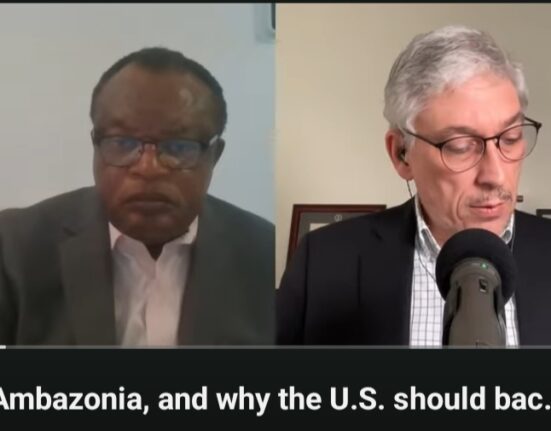
In recent interventions on the history of Southern Cameroons, Professor Victor Ngoh has suggested that the future of Southern Cameroons was lawfully determined through diplomatic notes exchanged between the United Kingdom and La République du Cameroun. Such a proposition raises profound historical and legal questions that deserve careful scrutiny.
The issue at stake is not merely academic. It concerns the constitutional and international legal foundations upon which millions of people were placed under a political arrangement that continues to generate controversy more than six decades later.
The first difficulty with this argument is that Southern Cameroons was not a British colony. It was a United Nations Trust Territory administered by the United Kingdom under the UN Trusteeship System. This distinction is critical.
As the administering authority, Britain exercised administrative responsibility, but it was not the sovereign owner of the territory. Southern Cameroons belonged neither to Britain nor to France. Its status was governed by international law, specifically the United Nations Charter, the Trusteeship Agreement, and resolutions adopted by the United Nations General Assembly.
Consequently, Britain did not possess unlimited authority to dispose of the territory or to determine its future through bilateral arrangements with another state. Any change in the political status of Southern Cameroons had to satisfy international legal requirements and not merely the preferences of London or Yaoundé.
Secondly, the 1961 plebiscite was not a secret diplomatic exercise conducted behind closed doors. It was a publicly supervised international process organised under United Nations authority. The future of Southern Cameroons was debated before the world community.
The people of Southern Cameroons participated in a UN-sponsored plebiscite whose outcome was subsequently transmitted to the General Assembly. Every stage of the process was subject to international observation and scrutiny.
This reality makes it difficult to reconcile the public nature of the decolonisation process with the suggestion that the final legal arrangements governing the territory’s future could somehow be settled through confidential diplomatic correspondence between two governments.
Indeed, if a legally binding international agreement existed establishing the union between Southern Cameroons and La République du Cameroun, several elementary questions naturally arise. When was the treaty signed? Who signed it? Under what legal authority did they sign? Was the agreement ratified by the competent constitutional institutions? Was it registered in accordance with international practice? Where is the official text available for public examination?
These are not radical questions. They are the ordinary questions lawyers, historians, diplomats, and scholars ask whenever sovereignty, territory, and state succession are involved. The absence of clear answers remains troubling.
Southern Cameroons possessed its own House of Assembly, elected government, and constitutional institutions. Any arrangement fundamentally altering the constitutional future of the territory would reasonably be expected to undergo legislative scrutiny, constitutional debate, and public ratification through those institutions.
Yet no publicly known treaty ratified by the Southern Cameroons House of Assembly has been produced. No internationally registered instrument transferring sovereignty has been presented.
No universally recognised legal document establishing the precise terms of the alleged union has been placed before the public. Instead, references are frequently made to diplomatic notes, correspondence, understandings, and informal exchanges.
Diplomatic notes certainly play an important role in international relations. They facilitate communication between governments. They clarify positions. They record intentions. However, diplomatic correspondence is not automatically equivalent to a treaty. A diplomatic note does not, by itself, transfer sovereignty. A diplomatic note does not automatically extinguish international obligations. A diplomatic note does not necessarily terminate a United Nations Trusteeship. A diplomatic note cannot simply erase the political identity of a people whose status was under international supervision.
The burden of proof therefore rests squarely upon those who claim that a valid and binding treaty existed. The principle is simple: extraordinary constitutional claims require extraordinary legal evidence. If the union between Southern Cameroons and La République du Cameroun rested upon a legally binding international agreement, that agreement should be identifiable, accessible, and capable of independent examination by scholars, lawyers, and the public.
A treaty affecting the destiny of an entire people cannot remain invisible. A constitutional arrangement that altered the status of a United Nations Trust Territory should leave a clear documentary trail. History is not strengthened by assumptions. It is strengthened by evidence. Law is not sustained by rumours. It is sustained by instruments, procedures, and verifiable facts.
Until a legally binding treaty of union meeting the ordinary standards of international law is clearly produced and subjected to public scrutiny, assertions that diplomatic notes alone settled the constitutional future of Southern Cameroons remain highly questionable. The question therefore remains unanswered after sixty-five years: Where is the treaty of unuion?
Until that question is answered with documentary evidence rather than conjecture, the legal foundation of the claimed union will continue to be one of the most contested issues in modern African constitutional history.
Professor Louis Mbua Contributor The Independentist News