

By Ali Dan Ismael, Editor-in-chief The Independentist News
As Amazon associate this site earns from qualifying purchases
Get books on productive Sovereignty and statecraft, By Martin Mungwa on Amazon
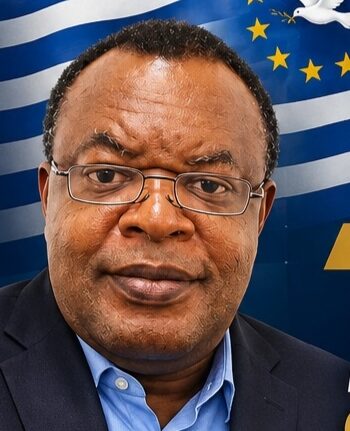
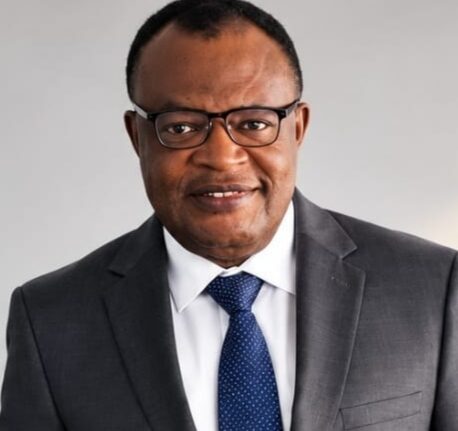
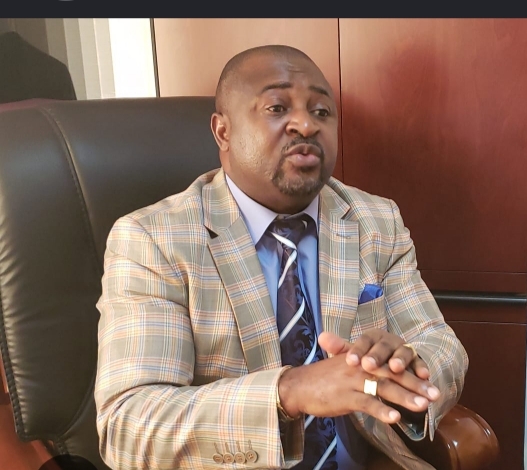
Dr. David Makongo has called on the Cameroon government to engage Sisiku Ayuk Tabe and the Nera 10 as part of a process to end the Southern Cameroons conflict. The appeal sounds reasonable. Peace is necessary. Dialogue is necessary. The killing must end.
But before Makongo presents himself as a broker of that peace, Ambazonians are entitled to ask a more difficult question: Who exactly is David Makongo speaking for today? That question matters because Makongo has not always occupied the political position from which he now appears to speak.
Years ago, he publicly recognized Sisiku Ayuk Tabe as President and Dr. Samuel Ikome Sako as Acting President and urged Ambazonians to support the Interim Government while pursuing independence. That history cannot simply disappear. If Makongo’s position has changed, he is entitled to change it. But he should explain the change.
SISIKU’S HISTORICAL IMPORTANCE IS NOT THE QUESTION
Sisiku Ayuk Tabe remains one of the most recognizable figures associated with the Southern Cameroons independence struggle. His imprisonment matters. The imprisonment of the Nera 10 matters. Their voices should be heard in any serious political process. But historical importance and present institutional authority are not automatically the same thing.
That distinction becomes especially important if, as recently reported, Sisiku no longer considers himself part of the Interim Government. If that position is accurate, then a basic question follows: In what capacity would Sisiku negotiate? As a political prisoner? As a historic leader? As spokesman for the Nera 10? As an influential individual within the independence movement? Or as the representative of a government structure from which he now reportedly distances himself? These are not technicalities. They go directly to the legitimacy of any eventual agreement.
THE MOVEMENT DID NOT STOP IN 2018
Any proposal that effectively reconstructs the Southern Cameroons conflict around Sisiku alone ignores nearly a decade of political development. The movement did not stop when Sisiku was arrested. Leadership structures evolved. Organizations split and reorganized. Different armed groups emerged. Civilian institutions adapted. Diaspora constituencies became increasingly influential. New leaders assumed responsibilities. Thousands of people were displaced, imprisoned, injured, or killed.
Whatever one thinks of those developments, they cannot simply be erased because one historical personality remains internationally recognizable. Political legitimacy cannot be permanently frozen at the moment of arrest.
THE SWISS EXPERIENCE SHOULD HAVE TAUGHT US SOMETHING
The failed Swiss facilitation effort is also relevant. Sisiku did not embrace that process. Other Ambazonian actors did. The initiative ultimately failed to produce substantive negotiations. That history should teach one clear lesson: There has never been a single uncontested Ambazonian position on negotiations, mediation, leadership, or political strategy.
Any future process must begin by acknowledging that reality. It cannot be built around the convenience of identifying one famous prisoner and presenting him as the political equivalent of an entire nation. Sisiku deserves a seat. He does not automatically constitute the whole table.
MAKONGO’S OWN POSITION REQUIRES EXPLANATION
There is another issue that cannot be ignored. Makongo has maintained political relationships and public activities involving both Cameroon and Guinea. That does not, by itself, prove that he is acting for the CPDM government, and such a charge should not be presented as established fact without evidence. But his proximity to political circles across Yaoundé and Conakry makes transparency essential.
If Makongo is advocating a particular negotiation formula, Ambazonians have a legitimate interest in knowing the basis of his intervention. He should answer plainly: What is his present relationship with officials in Yaoundé? Has anyone within the Cameroon government encouraged or requested this initiative? Is he communicating with political actors in Conakry about the Southern Cameroons conflict? Is he acting independently? Does he still support Southern Cameroons self-determination?
And if his position has changed from the position he publicly defended years ago, when did it change and why? These are legitimate political questions. They are not personal attacks. The credibility of a peace initiative depends partly on the credibility and transparency of those promoting it.
PEACE CANNOT BECOME POLITICAL ENGINEERING
There is a danger in every protracted conflict. A government can decide that negotiating with the full spectrum of opposing actors is too difficult. It can instead identify one recognizable individual, negotiate with that person, obtain an agreement, and declare the underlying political dispute resolved. That may create headlines. It may satisfy foreign diplomats. It may produce ceremonies and photographs. But it may not produce peace. Southern Cameroons is not merely a disagreement between Yaoundé and Sisiku Ayuk Tabe.
It involves competing claims concerning history, sovereignty, political identity, governance, territory, security, self-determination, and representation. No durable settlement can avoid those questions. And no individual, however historically important, can answer all of them alone.
WHO ACTUALLY HAS THE MANDATE?
That is the issue Makongo’s intervention inadvertently exposes. Who presently has the mandate to negotiate? Who represents the functioning political institutions of the independence movement? Who speaks for forces on the ground? Who speaks for political prisoners? Who represents refugees and internally displaced persons? Who represents civil society? Who represents the diaspora? And, ultimately, how are the people themselves to express their political will?
Those questions cannot be answered in Yaoundé alone. They cannot be answered in Conakry. They cannot be answered by Makongo. And they cannot be answered merely by restoring one imprisoned leader to the political position he occupied years ago.
ENGAGE SISIKU — BUT DO NOT MANUFACTURE REPRESENTATION
There is nothing wrong with engaging Sisiku Ayuk Tabe. He should be heard. The Nera 10 should be heard. Political prisoners should be heard. But so should the political institutions, organizations, civil society actors, community representatives, diaspora constituencies, and other stakeholders that now form the wider architecture of the conflict.
Any process that excludes those voices risks producing an agreement without legitimacy. And an agreement without legitimacy may simply become the prelude to another crisis. Makongo says the door to peace should be opened. Very well. Open it widely. Do not open it just far enough for Yaoundé to select the Ambazonian interlocutor it finds most convenient. Do not confuse visibility with mandate. Do not confuse imprisonment with permanent political authority. And do not confuse the recognition of one historical leader with the representation of an entire people.
Peace cannot be built by selecting yesterday’s leader, ignoring today’s institutions, and calling the result representation.
As Amazon associate this site earns from qualifying purchases
Get books on productive Sovereignty and statecraft, By Martin Mungwa on Amazon
Ali Dan Ismael, Editor-in-chief The Independentist News