









News commentary

We are home to news on Cameroon and the CEMAC region. We are dedicated to honest and reliable reporting. We are the voice of the Cameroonian people and their fight for freedom and democracy at a time when the Yaoundé government is silencing dissent and suppressing democratic voices.

The strongest nations are not those that shout the loudest. They are those that know when to speak, when to negotiate, when to withdraw, when to stand firm, and when to keep channels open for the future.
By Jean-Marie Poccachard
The Independentist News Political Desk Editor
A Serious Diplomatic Rupture
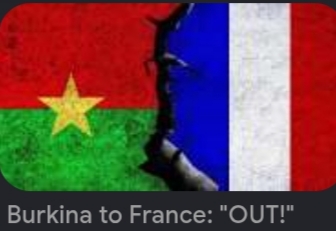
The decision by Burkina Faso to sever diplomatic relations with France has generated understandable debate across Africa and among Ambazonians watching the shifting political winds of the Sahel. France has described the decision as hostile and unfounded and has said that reciprocal measures are under review. Some observers may be tempted to ask whether such a diplomatic rupture is a declaration of war. It is not.
Diplomatic Break Is Not War
A country’s decision to sever diplomatic relations with another country is a serious political and diplomatic act, but it is not, by itself, a declaration of war. It means that one state no longer wishes to maintain formal diplomatic relations with the other through embassies, ambassadors, and normal channels of government-to-government engagement. It is a breakdown of official diplomatic communication, not an announcement of armed conflict.
This distinction matters. In international relations, states have the sovereign right to establish diplomatic relations, maintain them, reduce them, or terminate them. The Vienna Convention on Diplomatic Relations recognizes diplomatic relations as a system based on mutual consent between sovereign states. That means no country is legally required to maintain an embassy or ambassador in another country if it no longer wishes to do so.
What Reciprocal Measures Mean
What France is now considering are described as reciprocal measures. This means France may respond in a similar diplomatic manner. If Burkina Faso closes the French embassy in Ouagadougou, France may close Burkina Faso’s mission in Paris. If French diplomats are expelled, France may ask Burkinabé diplomats to leave. If diplomatic services are suspended in one direction, they may be suspended in the other. Such measures are common in diplomacy. They are not necessarily acts of war.
However, reciprocity has limits. France cannot lawfully use force against Burkina Faso merely because Burkina Faso ended diplomatic relations. It cannot attack the country, seize protected diplomatic property unlawfully, threaten civilians, or violate international law under the excuse of retaliation. Reciprocal diplomatic measures are one thing; military aggression is another. The severing of diplomatic relations does not automatically create a legal basis for war.
Retaliation or Reciprocity?
This is why the language of “retaliation” must be used carefully. In popular discussion, retaliation may sound like punishment or revenge. In diplomacy, the more accurate term is often reciprocity. A state may reduce ties, withdraw diplomats, suspend cooperation, impose visa restrictions, or take administrative steps affecting official relations. But those steps must remain within the boundaries of international law.
In the Burkina Faso-France case, the rupture reflects a much deeper struggle over sovereignty, memory, influence, and power. Burkina Faso’s military-led government has accused France of neo-colonial ambitions and interference, allegations France rejects. France has responded by calling the decision hostile and saying reciprocal measures are being examined. Reports indicate that embassy and consular closures could affect visas, administrative services, and French citizens living in Burkina Faso.
Why Ambazonians Should Pay Attention
For Ambazonians, the lesson is important. Diplomatic relations are not sentimental friendships. They are instruments of statecraft. Countries open embassies because they have interests to protect, citizens to serve, trade to conduct, security matters to manage, and political messages to deliver. When relations are broken, the channels of communication shrink. Misunderstanding can increase. Citizens, students, businesspeople, visa applicants, and dual nationals may suffer practical consequences.
But broken relations do not mean bombs must fall. They do not mean armies must move. They do not mean war has begun. Many countries have gone years, even decades, without diplomatic relations and still avoided war. Diplomatic rupture is often a sign of political hostility, mistrust, or realignment, but it remains below the level of armed conflict unless accompanied by military action or a formal declaration of war.
The Sahel’s Wider Realignment
The Sahel is currently undergoing a major geopolitical realignment. Mali, Niger, and Burkina Faso have all moved away from close dependence on France. Military-led governments in the region have challenged French influence, expelled French forces or diplomats, and sought alternative partnerships. Whether one supports or criticizes these governments, the pattern is clear: the old Franco-African order is being questioned more openly than at any time in recent history.
Ambazonians should study this development soberly. The issue is not whether one should automatically applaud every anti-French action or condemn every French response. The real lesson is that sovereignty must be managed with discipline. A serious state must know how to assert independence without endangering its people, how to defend dignity without isolating itself unnecessarily, and how to choose partners without becoming a pawn in another power’s game.
Sovereignty Requires Discipline
Diplomatic power requires clarity. A country must know what it wants, what it can afford, and what consequences may follow its decisions. Severing relations may be justified in some circumstances, especially when a state believes its sovereignty is being violated. But it is also a costly instrument. It reduces direct communication, complicates consular protection, disrupts visas, affects trade, and can push both sides into more rigid positions.
The Ambazonian public should therefore understand the difference between diplomatic rupture and war. Burkina Faso’s action against France is not a declaration of war. France’s reciprocal measures, if limited to diplomatic and administrative responses, are not war either. But the situation is serious because it shows how quickly relations between a former colonial power and an African state can deteriorate when trust collapses.
The Deeper African Lesson
The broader African lesson is that independence is not merely the act of rejecting outside influence. True independence is the capacity to govern wisely, negotiate firmly, protect citizens, build institutions, diversify partnerships, and make decisions from a position of strategic strength. A country that breaks with one power only to become dependent on another has not achieved full sovereignty. It has merely changed patrons.
For Ambazonia, the lesson is even sharper. Future diplomacy must be guided by national interest, not emotion alone. A future Ambazonian state must maintain relations with many countries, but it must not surrender its dignity to any of them. It must welcome cooperation without accepting domination. It must defend sovereignty without confusing diplomatic disagreement with war. It must understand that embassies, treaties, trade missions, diaspora networks, and international partnerships are tools of survival in a competitive world.
Not a Declaration of War
Burkina Faso’s rupture with France is therefore not a declaration of war. It is a declaration of political distance. It is a sign of broken trust. It is part of a wider struggle over Africa’s post-colonial future. France may respond with reciprocal measures, but those measures must remain lawful. Burkina Faso has the sovereign right to sever relations, but it must also manage the consequences responsibly.
The Ambazonian public should watch this moment carefully. It teaches that sovereignty is serious business. It is not merely a flag, a speech, or an emotional slogan. It is the disciplined management of power, interest, law, diplomacy, and national survival.
The Final Lesson
The strongest nations are not those that shout the loudest. They are those that know when to speak, when to negotiate, when to withdraw, when to stand firm, and when to keep channels open for the future.
Jean-Marie Poccachard
The Independentist News Political Desk Editor
Share This Post:
Pa Teku Thompson Teke, alias Lord Thompson leaves the scene
Africa’s FIFA world cup expedition: A competition not just a participation.
Related Post
THE CARETAKER PRESIDENCY: PAUL BIYA, FRANCE, AND CAMEROON’S UNFINISHED
THE ADF–ATANGA NJI FILES: WHAT THE WITNESSES SAY AND
OCTOBER 1 IS COMING: PREPARE FOR THE ANNIVERSARY, NOT
CRTV MUST EXPLAIN ITSELF: WHEN A STATE CONTROLS THE
A chat with Adelle Nazarian of The Western Journal:
THE LESSON OF HAITI: WHEN A NEIGHBOUR HELPED A