









News commentary

We are home to news on Cameroon and the CEMAC region. We are dedicated to honest and reliable reporting. We are the voice of the Cameroonian people and their fight for freedom and democracy at a time when the Yaoundé government is silencing dissent and suppressing democratic voices.

It may, however, determine whether Washington increasingly views Abuja as part of the problem or as one of the indispensable partners in building solutions for West Africa’s future. For Nigeria, that distinction matters enormously. For the United States, it may matter even more.
By Ali Dan Ismael. Editor-in-chief The Independentist News
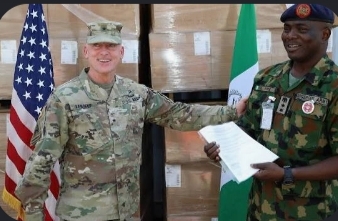
When a high-level delegation from Nigeria arrives in Washington this August, it will carry far more than briefing papers and military statistics. It will carry the burden of perception.
For years, international discussions about Nigeria have been dominated by headlines about insurgency, banditry, piracy, communal violence, kidnappings, and political instability. Too often, Africa’s largest economy and most populous nation has been viewed primarily through the lens of crisis rather than capability. Abuja appears determined to change that narrative.
The government of Bola Tinubu understands that strategic partnerships in the twenty-first century are built not merely on military necessity but on trust, credibility, and demonstrated progress. The upcoming discussions with the administration of Donald Trump therefore represent an opportunity to present Nigeria not as a permanent recipient of international assistance but as an indispensable partner in securing regional stability.
The argument is not difficult to make.
Few countries possess Nigeria’s combination of demographic weight, economic influence, military capacity, and geopolitical significance. As instability spreads across the Sahel and extremist groups continue to exploit weak governance structures across parts of West and Central Africa, Nigeria increasingly finds itself serving as the principal security anchor for an entire region. Washington understands this reality.
The question is whether Nigeria can convince American policymakers that recent gains are sustainable and that additional cooperation will produce measurable results. Military partnerships are rarely built on sentiment. They are built on outcomes.
American officials will seek evidence that intelligence cooperation is improving operational effectiveness. They will want reassurance that civilian protection mechanisms are strengthening. They will look for confidence that military assistance contributes to long-term stabilization rather than merely short-term tactical victories.
Nigeria, for its part, will expect recognition that the security challenges confronting a country of more than two hundred million people spread across vast and difficult terrain cannot be solved overnight. There is another dimension to these discussions that may prove equally important.
Global competition for influence in Africa is intensifying. Major powers increasingly view the continent not merely as a development partner but as a strategic arena for diplomacy, trade, technology, energy security, and military cooperation. For the United States, strengthening ties with Nigeria is not simply about counterterrorism. It is about maintaining influence and relevance in a rapidly changing geopolitical landscape.
For Nigeria, deeper engagement with Washington offers access to technology, intelligence capabilities, military modernization, maritime security cooperation, and investment opportunities that extend well beyond defence. The relationship therefore has the potential to evolve from a security partnership into a broader strategic alliance.
That outcome, however, will require realism on both sides. Nigeria must continue demonstrating progress in governance, accountability, and security sector reform. The United States must recognize that African security environments often demand long-term engagement rather than quick fixes and short political cycles. Partnerships endure when they are built on mutual interests rather than temporary crises.
The August visit will not solve Nigeria’s security challenges.
It may, however, determine whether Washington increasingly views Abuja as part of the problem or as one of the indispensable partners in building solutions for West Africa’s future. For Nigeria, that distinction matters enormously. For the United States, it may matter even more.
Ali Dan Ismael. Editor-in-chief The Independentist News
Share This Post:
America at 250: Lessons for Ambazonia Beyond the British Model, Independence Is Not the End of Struggle, But the Beginning of Responsibility
IS LA RÉPUBLIQUE DU CAMEROUN FINALLY LEARNING? SOSUCAM AND THE LIMITS OF THE CENTRALIZED STATE
Related Post
THE SECOND RETURN: FROM THE PAIN OF SEPARATION TO
WHEN THE REGULATOR BENDS: WHAT THE VISION 4 AFFAIR
PROPHECY, POLITICS, AND THE AMBAZONIAN QUESTION (PART II) :
IF SOMALILAND MATTERS TO WASHINGTON, WHY NOT SOUTHERN CAMEROONS?
A CALL FOR GENERATIONAL RENEWAL: From Individual Leadership to
The Government of the Federal Republic of Ambazonia (in