

Britain, America, and the wider West should ask whether they have genuinely moved beyond judging human legitimacy through pigmentation, or whether they have merely learned to celebrate diversity while preserving older tests of who truly belongs.
By Ali Dan Ismael and Timothy Enongene, The Independentist News editorial desk
Get more books on racism from Amazon
When Separate Events Begin to Speak to One Another
There are moments when apparently separate events begin to illuminate one another. The fall of Harvard’s first Black president, Claudine Gay, the plagiarism accusations directed at Black Harvard sociologist Christina Cross, the extraordinary rise and subsequent public unraveling of Cambridge professor Jason Arday, and the racial controversy surrounding Meghan Markle’s entry into Britain’s Royal Family are not identical cases and should not be presented as though they were. There is no evidence that Harvard, Cambridge, Buckingham Palace, or the Western media are participants in some centrally organized conspiracy against Black people. Yet taken together, these episodes raise a legitimate and increasingly uncomfortable question: what happens when Black people enter institutions whose highest levels of authority, prestige, and legitimacy were historically constructed without them?
That is the question behind what we call the West’s pigmentation war. It is not necessarily a war organized in a room, written into a memorandum, or commanded by a government. It is something subtler and therefore perhaps more difficult to confront: a recurring struggle over who is presumed competent, who must continuously prove legitimacy, whose errors remain individual errors, and whose errors are transformed into evidence against an entire philosophy of racial inclusion. Jason Arday’s death makes that question especially difficult to ignore.
Jason Arday and the Boundary Between Scrutiny and Destruction
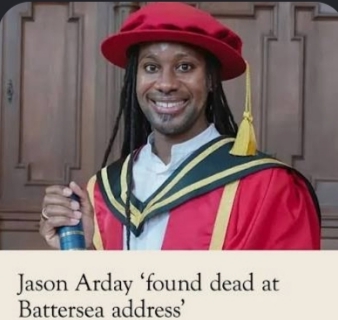
Arday became Cambridge University’s youngest-ever Black professor when he was appointed professor of sociology of education. His appointment was celebrated precisely because it represented something historically unusual in British academia. His scholarship engaged questions of race, education, inequality, and social mobility. Then came allegations. Questions were raised about passages in his doctoral thesis, aspects of his academic record, claimed institutional affiliations, and elements of his personal narrative. Those questions were not illegitimate merely because Arday was Black. Academic integrity matters. Universities have a responsibility to investigate credible allegations of plagiarism and to verify the qualifications of those appointed to senior positions.
But something else happened. The investigation of scholarship expanded into an investigation of the man. His publications were examined. His doctorate was examined. His curriculum vitae was examined. His athletic achievements were examined. His fundraising claims were examined. His childhood narrative was examined. His credibility as a human being appeared to become part of a national public prosecution.
Yet Liverpool John Moores University, which awarded Arday his doctorate, reviewed plagiarism allegations and did not revoke his PhD. Cambridge later opened additional investigations after receiving new information, and Arday resigned from his Cambridge position on August 5. Days later, he was found dead at the age of forty-one. Police described the death as unexpected but not suspicious. It would therefore be irresponsible to declare, without evidence, that racism, Cambridge, or media coverage directly caused Jason Arday’s death. But refusing to make an unsupported causal claim does not require society to ignore the environment surrounding him.
Public figures, politicians, academics, and campaigners have subsequently called for closer examination of the media treatment he received, while Lord Simon Woolley described what happened to Arday as a toxic and vicious witch-hunt. The issue is therefore not whether Black professors should be held accountable. They should. The issue is whether accountability was allowed to mutate into something closer to public annihilation.
Before Cambridge, There Was Harvard
Jason Arday’s experience did not occur in an intellectual vacuum. Across the Atlantic, Harvard had already become a battlefield over race, merit, academic integrity, and institutional legitimacy. Consider Christina J. Cross. Cross is a Black sociologist at Harvard whose scholarship examines families, inequality, and race. In 2024, an anonymous complaint accused her of plagiarism. The allegations generated substantial attention, although Harvard sociology colleagues publicly rallied to her defense and Cross was not dismissed from Harvard. That distinction matters because it prevents exaggeration. Her case does not prove that every Black scholar accused of plagiarism is removed from elite academia. What it does demonstrate is that plagiarism allegations themselves can become weapons within a much larger ideological struggle over race, diversity, equity, inclusion, and the legitimacy of Black scholarship.
Claudine Gay and the Burden of Symbolic Leadership
Then came Claudine Gay. Gay became Harvard’s first Black president, taking control of America’s oldest university in 2023. Within months, her presidency became engulfed in controversies involving Harvard’s response to antisemitism, her congressional testimony, and allegations concerning attribution in her scholarly work. She resigned the presidency in January 2024, although she remained on Harvard’s faculty.
There were legitimate questions surrounding Gay’s leadership and scholarship. Those questions should not be erased merely because she is Black. But neither should another part of the record be erased. Harvard itself acknowledged that Gay had been subjected to deeply personal attacks, including racist vitriol, while Gay spoke of threats and attacks fueled by racial animus.
This is where the argument becomes more complicated than either political camp often permits. Two things can be true simultaneously. A Black academic can have legitimate questions to answer, and that same Black academic can simultaneously be subjected to racism. Those propositions do not cancel each other. Too much contemporary political debate demands that society choose only one interpretation. Either the allegations are legitimate and therefore racism cannot possibly be relevant, or racism exists and therefore every allegation must be fabricated. Both positions are intellectually weak.
The real question is whether the standards are equal, whether the scrutiny is proportional, and whether the punishment imposed upon Black occupants of prestigious institutions is comparable to that imposed upon others.
The Pigmentation Test
Perhaps this is the deeper pigmentation test. For generations, people excluded from elite Western institutions were told to obtain the qualifications, become educated, work harder, become exceptional, and enter the institutions from which they had historically been excluded. Black people did exactly that. They entered Harvard. They entered Cambridge. They entered Parliament. They entered corporate leadership. They entered Buckingham Palace itself.
But physical entrance into the institution did not necessarily create the same presumption of legitimacy enjoyed by those whose families and communities had occupied those spaces for generations.
This creates an extraordinary psychological and institutional burden. The Black pioneer cannot simply be competent. The pioneer often becomes representative. A white professor accused of wrongdoing may remain a professor accused of wrongdoing. A pioneering Black professor accused of wrongdoing can become evidence in a political argument about whether diversity itself has failed.
A white university leader may fall because of poor leadership. A Black university leader may fall and suddenly an entire national debate emerges about whether affirmative action, DEI, or racial advancement elevated someone who never belonged there. The individual is no longer merely defending himself or herself. The individual is forced to defend the legitimacy of Black advancement itself. That distinction is enormous.
When One Person Becomes a Referendum on an Entire Race
This is one reason the Jason Arday controversy became larger than Jason Arday. Some of those who challenged him were openly engaged in a wider struggle against DEI and prevailing approaches to race. Nathan Cofnas, whose accusations helped propel renewed scrutiny of Arday, has publicly identified with arguments commonly described as “race realism” and had himself been at the center of controversy at Cambridge over claims concerning race and meritocracy.
That history does not automatically make his allegations against Arday false. Evidence must stand or fall on evidence. But neither should the ideological context be erased. Who investigates whom, why that person becomes the subject of extraordinary investigation, and what political conclusion is subsequently drawn from an individual’s mistakes are all legitimate questions.
From the University Gates to Buckingham Palace
The argument then leaves academia and enters Britain’s most symbolic institution: the Royal Family. When Meghan Markle married Prince Harry, Britain appeared to be presenting a new image of itself to the world. A biracial American woman had entered the House of Windsor. For many observers, the wedding seemed to symbolize a monarchy adapting to a multicultural Britain and a multicultural Commonwealth. But celebration eventually gave way to a much darker controversy.
In their 2021 interview with Oprah Winfrey, Meghan and Harry alleged that conversations had taken place within the royal circle concerning how dark their unborn child’s skin might be. Buckingham Palace later stated that the issues raised, particularly those concerning race, were troubling, while emphasizing that recollections differed. Prince William subsequently rejected the characterization of the Royal Family as racist.
Again, competing claims exist, and responsible analysis should acknowledge them. But the symbolism remains powerful. Harvard represents the summit of American academic prestige. Cambridge represents the summit of British academic prestige. The monarchy represents perhaps the most visible surviving institution of hereditary British establishment power. These are different institutions, different controversies, and different individuals, yet one recurring question connects them: how comfortable are historically white institutions when Blackness moves from outside the gate into the household of authority itself?
Celebrated on Monday, Questioned on Tuesday
Modern institutions have become exceptionally skilled at celebrating diversity. The photographs are compelling. The announcements are inspirational. The press releases celebrate historic firsts: the first Black president, the youngest Black professor, the biracial duchess. Blackness becomes evidence of institutional progress.
But symbolism creates an uncomfortable contradiction. If race matters when the institution celebrates the appointment, why must race suddenly become irrelevant when society examines what happens to that individual afterward?
Cambridge understood the historical significance of Jason Arday’s appointment. Harvard understood the significance of Claudine Gay becoming its first Black president. The British establishment understood the global symbolism of Meghan’s arrival. These institutions cannot celebrate pigmentation on Monday and insist that pigmentation has nothing to do with the story when controversy arrives on Tuesday. Race cannot simultaneously be significant for institutional advertisement and entirely irrelevant for institutional accountability.
Equality Does Not Mean Immunity
That does not mean lowering standards. Lowering standards for Black people would itself be discriminatory. If Jason Arday committed academic misconduct, it should have been established through rigorous and independent investigation. If Claudine Gay violated scholarly standards, those violations deserved examination. If Christina Cross faced credible allegations, those allegations deserved impartial institutional scrutiny. If claims made by Meghan and Harry are disputed, competing evidence should be considered. Equality does not mean immunity. But equality also does not mean selective maximum enforcement. That is the distinction that must be protected if accountability is to retain legitimacy.
Why a Public Inquiry Matters
This is why the calls for inquiry following Jason Arday’s death deserve serious consideration. Such an inquiry should not begin with a predetermined conclusion that racism caused his death or that every allegation against him was false. It should examine something broader and more important.
Do comparable allegations against academics of different racial backgrounds receive comparable media attention? Do headlines distinguish allegations from findings? Do academic disputes become personal investigations more readily when the subject is Black and symbolically important? Are vulnerable individuals given meaningful institutional protection while investigations proceed? Are accused scholars afforded a reasonable opportunity to respond before public judgment becomes irreversible? Does the misconduct of one Black scholar become an indictment of DEI, affirmative action, or Black intellectual competence in ways that the misconduct of white scholars does not become an indictment of white intellectual competence?
This is not a demand for censorship. It is a demand for proportionality.
The Privilege of Being Imperfect
Perhaps one of the least discussed privileges inside elite institutions is the privilege of being imperfect. Human beings exaggerate. Human beings make citation mistakes. Human beings exercise poor judgment. Some commit serious misconduct. Institutions establish procedures precisely because accusations must be separated from findings and findings from punishment.
Yet historically dominant groups often possess something minorities still struggle to acquire: the ability to fail individually. The wrongdoing of one white professor rarely becomes evidence that white professors were mistakenly admitted into academia. The collapse of one white university president does not normally initiate a philosophical debate about whether white people possess the intellectual ability to lead universities. The misconduct of one white member of the aristocracy does not become an argument against admitting white people into the monarchy. But an individual Black failure can rapidly become representative. That is the hidden burden carried by the pioneer. It is also where pigmentation becomes political.
Jason Arday Did Not Need to Be Perfect
Those who believe Jason Arday was treated unjustly should therefore resist the temptation to make him flawless in death. He does not need to have been flawless for his treatment to deserve examination.
Indeed, the stronger argument begins by accepting the possibility that some criticisms may have been justified. Suppose mistakes occurred. Suppose some biographical claims required correction. Suppose Cambridge’s recruitment procedures were inadequate. Investigate all of it. But then investigate the investigators. Investigate proportionality. Investigate the media ecosystem. Investigate the racial commentary. Investigate institutional duty of care. Investigate how a scholarly controversy became a referendum on DEI and Black competence. Justice cannot mean examining only the weakest person in the chain.
What We Mean by a Pigmentation War
The phrase “pigmentation war” is intentionally provocative, but it should not be misunderstood. We are not arguing that every white person is at war with every Black person. We are not arguing that Western civilization has produced nothing but racism. We are not arguing that Black achievement should be protected from criticism. We are certainly not arguing that misconduct becomes acceptable when committed by minorities.
The argument is more demanding. Western societies have spent decades opening doors that were once closed, and that is progress worth defending. But opening the door is only the first stage of equality. The second is allowing those who enter to possess the same dignity, presumption of competence, right to due process, capacity for disagreement, and even capacity for imperfection as those who were already inside.
The Citadel and the Question of Belonging
Harvard teaches that lesson through Claudine Gay and Christina Cross. Cambridge now confronts it through Jason Arday. Britain’s monarchy confronted another version through Meghan Markle. The similarities should not erase the differences, but neither should the differences prevent us from seeing the question connecting them. Who is allowed to enter the citadel? Who is presumed to belong after entering? Who must continuously prove that the appointment was deserved? Whose mistake remains personal, and whose mistake becomes racial evidence? Those are not questions about political correctness. They are questions about power.
Beyond Mourning to Institutional Reckoning
Jason Arday’s death should therefore produce more than mourning and more than another polarized argument about DEI. It should produce investigation, introspection, and a wider reckoning with how Western institutions treat Black people once they move beyond symbolic inclusion into positions of genuine visibility and authority.
Britain, America, and the wider West should ask whether they have genuinely moved beyond judging human legitimacy through pigmentation, or whether they have merely learned to celebrate diversity while preserving older tests of who truly belongs.
A society has not achieved equality merely when a Black person can enter Harvard, Cambridge, or Buckingham Palace. Equality arrives when that person’s humanity is no longer exceptional, when achievement does not require sainthood, when accountability does not become collective racial prosecution, when criticism does not become dehumanization, and when the color of a person’s skin neither protects that person from legitimate scrutiny nor quietly determines how merciless that scrutiny becomes. That is the test. After Jason Arday, the West should have the courage to take it.
As Amazon associate this site earns from qualifying purchases
Get more books on racism from Amazon
Ali Dan Ismael and Timothy Enongene, The Independentist News editorial desk