








News commentary

We are home to news on Cameroon and the CEMAC region. We are dedicated to honest and reliable reporting. We are the voice of the Cameroonian people and their fight for freedom and democracy at a time when the Yaoundé government is silencing dissent and suppressing democratic voices.

Advocates argue that any decision regarding Dzelamonyuy’s status should be based on a thorough examination of the specific risks he may face if returned. They maintain that his personal history, family circumstances, and the broader context of the Southern Cameroons conflict warrant careful scrutiny.
By Timothy Enongene
Associate Editor-in-Chief, The Independentist News
The Expanding Reach of a Political Conflict
As the conflict in the Southern Cameroons enters its second decade, attention is increasingly shifting beyond the battlefield and toward the experiences of individuals and families caught in the wider political struggle.
Many Ambazonian activists argue that the government of La République du Cameroun has expanded its focus beyond armed groups and political organizations to include relatives, associates, and perceived supporters of the independence movement. Whether through surveillance, arrests, legal proceedings, or administrative measures, critics contend that the conflict’s consequences are increasingly reaching ordinary civilians whose primary connection to the struggle is family affiliation.
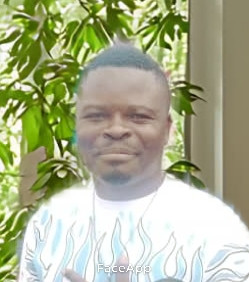
The case of Godwin Dzelamonyuy has emerged as one such example. As reports surface that he may face repatriation from the United Kingdom, supporters view his situation as part of a broader pattern that raises serious humanitarian and human-rights concerns.
A Family Caught in the Conflict
Godwin Dzelamonyuy’s story reflects the difficult realities faced by many young Southern Cameroonians whose lives have been shaped by a conflict they neither initiated nor controlled.
In 2016, as violence intensified across the Bamenda area, Dzelamonyuy left his hometown and relocated to Yaoundé in search of safety and stability. There he lived with relatives, including his uncle, Herman Suiye, a professional nurse who had previously worked in Kumbo.
According to family members and supporters, Suiye was arrested by state authorities in 2020 and subsequently convicted by the Yaoundé Military Tribunal for allegedly providing medical assistance to wounded individuals associated with the conflict. He reportedly spent several years in detention before obtaining relief through the appeals process.
Throughout this period, Dzelamonyuy is said to have regularly visited his uncle in detention and maintained contact with other detainees. Supporters argue that these associations, combined with his family background, increased official scrutiny of his activities.
The Burden of Political Association
The situation became more complicated because of Dzelamonyuy’s family ties abroad. His father, Bernard Tanyu Konfo, is a prominent Ambazonian activist based in the United Kingdom and has participated in public demonstrations and advocacy campaigns concerning the Southern Cameroons issue.
Supporters of Dzelamonyuy argue that relatives of political activists often face heightened scrutiny because of their family connections rather than any personal involvement in political activities. Human-rights advocates have long warned that guilt by association can place innocent family members in vulnerable positions during periods of political conflict.
Whether such concerns apply in Dzelamonyuy’s case is ultimately a matter for legal and immigration authorities to determine. Nevertheless, his supporters contend that his family history and prior experiences should be carefully considered in any assessment of his future.
A Test of International Protection Principles
The prospect of repatriation has generated concern among members of the Ambazonian diaspora and among those who monitor human-rights conditions in conflict-affected regions.
At the center of the debate is the principle of non-refoulement, a cornerstone of international refugee and human-rights law that prohibits returning individuals to countries where they may face persecution, torture, or serious harm.
Advocates argue that any decision regarding Dzelamonyuy’s status should be based on a thorough examination of the specific risks he may face if returned. They maintain that his personal history, family circumstances, and the broader context of the Southern Cameroons conflict warrant careful scrutiny.
British authorities, for their part, are expected to evaluate such matters under established legal procedures and international obligations. The integrity of those processes is essential to ensuring that decisions are grounded in evidence and respect for the rule of law.
Beyond One Individual
While Godwin Dzelamonyuy’s case concerns one individual, many observers believe it reflects larger questions about the impact of prolonged political conflicts on families, communities, and future generations.
The issue extends beyond politics and diplomacy. It concerns the rights of individuals who may find themselves caught between opposing sides of a conflict because of family ties, personal relationships, or circumstances beyond their control.
As international attention focuses on the future of Southern Cameroons, cases such as Dzelamonyuy’s serve as reminders that behind every political dispute are human beings whose lives can be profoundly affected by decisions made far from their homes.
Whether viewed through a legal, humanitarian, or political lens, his case underscores the continuing need for careful adherence to international human-rights standards and for a commitment to ensuring that vulnerable individuals receive fair and impartial consideration.
For many Ambazonians at home and abroad, the hope remains that justice, due process, and respect for human dignity will prevail over fear, politics, and collective punishment.
The views expressed in this commentary are those of the author. Allegations discussed herein should be assessed through appropriate legal and evidentiary processes.
Timothy Enongene
Associate Editor-in-Chief, The Independentist News
Share This Post:
A disappointed reader of the Independentist News at home front, writes to the editor in reaction to the fall of Ayaba and Efang.
THE EDEA BLACKOUT: WHY ENERGY SOVEREIGNTY MATTERS FOR AMBAZONIA
Related Post
SPIRITUAL CHOKE POINT, Guidance, Gatekeeping, and the Recovery of
WHEN INDEPENDENCE BECOMES STATECRAFT: What Scotland, Wales and Ireland’s
Dr. Martin Mungwa publishes Southern Cameroons 2050 : why
Adelle Nazarian of the Western Journal calls on the
NKAMOUNA, WASHINGTON, AND THE NEW POLITICS OF AFRICA’S STRATEGIC
When Conflict Becomes an Economy The Political Economy of