

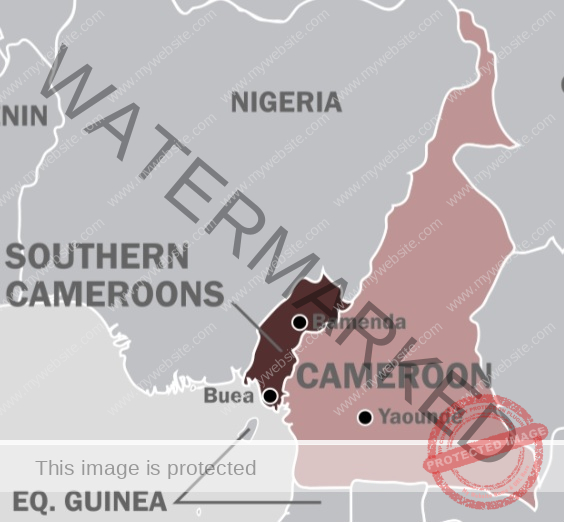


The central question is not merely who deserves to be called a secessionist. It is whether the constitutional relationship established in 1961 was transformed in ways consistent with its original foundations and the rights of the populations concerned. That is the question history has left for political leaders, constitutional scholars, and institutions of justice. And it deserves an answer grounded in law, evidence, and accountability rather than political labels.
By The Independentist News editorial desk— SPECIAL EDITORIAL. 18 November 2026
As Amazon associate this site earns from qualifying purchases
Follow the Amazon link below to get your copies of other publications on the Ambazonian revolution By Martin Mungwa
A striking expression attributed today to the President — “the Secessionist State of LRC” — raises a question that deserves serious historical and constitutional examination.
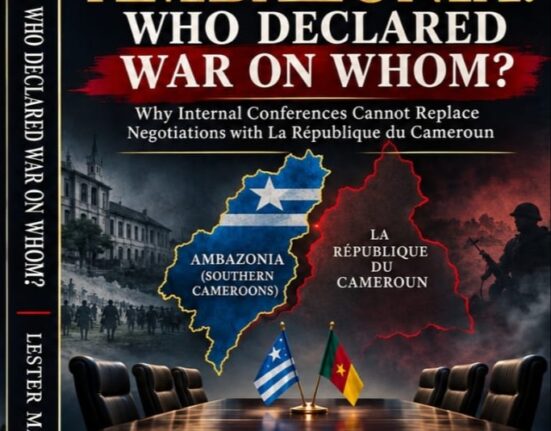
For decades, advocates of Southern Cameroons independence have been described as secessionists. Yet the constitutional history of Cameroon presents a striking paradox: in 1984, the central government formally abandoned the designation United Republic of Cameroon and restored the name Republic of Cameroon, the designation under which French-administered Cameroun had attained independence on 1 January 1960. What, precisely, did that decision mean for the political relationship established in 1961? This question cannot be dismissed merely because its implications are uncomfortable.
THE FEDERATION WAS NOT BORN IN 1984
The historical sequence is fundamental. On 1 January 1960, French-administered Cameroun became independent as the Republic of Cameroon. Following the United Nations-supervised plebiscite of February 1961, the British Southern Cameroons joined the Republic of Cameroon in a federal arrangement that came into effect on 1 October 1961.
The new constitutional structure was known as the Federal Republic of Cameroon. Its federal character recognized the existence of two constituent entities with different colonial experiences, legal systems, educational institutions, and political traditions. In 1972, a nationwide referendum replaced the federation with a unitary constitutional structure under the name United Republic of Cameroon.
Then came 4 February 1984. Through Law No. 84-1, the United Republic of Cameroon became the Republic of Cameroon. The name adopted was the same as that of the independent state that existed before the 1961 federation. That is a matter of constitutional record.
THE QUESTION THAT 1984 LEFT BEHIND
For critics of Cameroon’s constitutional evolution, the restoration of the pre-federal name carried significance far beyond terminology. If the 1961 federation embodied a partnership between two distinct territories, what did the restoration of one constituent state’s original name signify about the identity of the resulting state?
Was it simply a change of constitutional nomenclature? Was it an assertion of continuity by a unified state? Or did it symbolize the abandonment of the federal partnership’s original conception? These competing interpretations lie at the heart of the Southern Cameroons constitutional dispute.
Independence advocates, including the senior Barrister Fon Gorji Dinka, advanced the argument that the 1984 measure amounted to a withdrawal by La République du Cameroun from the original union. Under that interpretation, the allegation of secession deserves to be examined in reverse.
But constitutional symbolism, however compelling, must be distinguished from an established legal conclusion. The 1984 law did not expressly announce territorial withdrawal, and Cameroon continued to function internationally as one state.
Consequently, describing the 1984 measure as an act of secession is a contested constitutional interpretation, not an internationally settled legal determination. That distinction does not make the historical question disappear. It makes rigorous examination all the more necessary.
THE DEEPER ISSUE IS CONSTITUTIONAL CONSENT
The controversy reaches beyond a country’s name. It concerns the nature of the 1961 political arrangement, the safeguards associated with federalism, the authority exercised in replacing that arrangement in 1972, and the meaning of political consent.
For many Southern Cameroonians, the abolition of federal institutions represented the loss of protections they believed were fundamental to the original union. The 1984 restoration of the earlier name subsequently reinforced concerns that the distinct constitutional identity of the former Southern Cameroons was being progressively diminished.
Successive Cameroonian governments have presented the constitutional changes as stages in the consolidation of national unity. Critics have interpreted those same developments as evidence of centralization, unequal political power, and the erosion of the partnership’s original foundations.
Both interpretations must be understood in their historical setting. The underlying constitutional documents, however, remain open to scrutiny.
THE BURDEN OF CONSTITUTIONAL EXPLANATION
A serious examination of Cameroon’s constitutional history should address several questions. – What obligations arose from the arrangements establishing the federation in 1961? – What protections, if any, limited the ability of federal authorities to abolish its structure? – How should the constitutional legitimacy of the 1972 referendum be evaluated against the provisions of the 1961 Federal Constitution? – What legal significance, if any, attached to restoring the name Republic of Cameroon in 1984? – And how should these events inform present discussions about self-determination, equality, constitutional reform, and territorial integrity?
These are substantive questions of history and law. They warrant documentary evidence, expert scrutiny, and reasoned responses. They cannot be resolved by attaching the word secessionist to one political movement while declining to examine the constitutional acts of the state itself.
A NAME CANNOT SETTLE A CONSTITUTIONAL DISPUTE
The 1984 change is particularly significant because the designation Republic of Cameroon did not originate with the post-1972 unitary state. It was the name of the state that entered the 1961 federation. This historical coincidence is the foundation of the argument that the government’s decision represented more than administrative rebranding.
Yet names alone do not determine the international legal identity of states. A change of national designation does not automatically establish dissolution, succession, or secession. Such determinations require analysis of constitutional authority, territorial continuity, state practice, and international law.
The African Commission on Human and Peoples’ Rights, in Mgwanga Gunme and Others v. Cameroon, recognized significant violations of the African Charter while declining to endorse secession as a remedy. It nevertheless discussed forms of self-determination compatible with territorial integrity. That decision demonstrates both the seriousness of Southern Cameroons grievances and the legal complexity of proposed remedies.
HISTORY DESERVES SOMETHING BETTER THAN SELECTIVE LABELS
The expression “Secessionist State of LRC” is provocative because it challenges the conventional direction of the accusation. Its value as a constitutional proposition, however, depends on whether the underlying historical argument withstands careful legal examination.
The essential facts are not obscure. The Republic of Cameroon existed in 1960. The Federal Republic of Cameroon was established in 1961. The United Republic of Cameroon replaced the federation in 1972. The name Republic of Cameroon returned in 1984. These four milestones define the historical record around which the debate must proceed.
The political interpretation of those milestones remains contested. No credible account of the Southern Cameroons question should omit them. Equally, no serious constitutional argument should claim that the 1984 name change alone conclusively determines the status of the former British Southern Cameroons.
The central question is not merely who deserves to be called a secessionist. It is whether the constitutional relationship established in 1961 was transformed in ways consistent with its original foundations and the rights of the populations concerned. That is the question history has left for political leaders, constitutional scholars, and institutions of justice. And it deserves an answer grounded in law, evidence, and accountability rather than political labels.
The Independentist News editorial desk