









Commentary

We are home to news on Cameroon and the CEMAC region. We are dedicated to honest and reliable reporting. We are the voice of the Cameroonian people and their fight for freedom and democracy at a time when the Yaoundé government is silencing dissent and suppressing democratic voices.

The future of Ambazonia will not be decided solely in Bamenda, Buea, Yaoundé, Paris, Brussels, or Washington. It will also be shaped by the larger transformation unfolding across Africa as nations seek to reclaim control over their resources, their economies, and their destiny. The question before us is whether we are prepared to understand that transformation and act accordingly.
By Ali Dan Ismael Editor-in-Chief The Independentist News
Every Southern Cameroonian ought to watch and listen carefully to the video circulating online. The video, which is purported to show a private discussion concerning Africa’s future and the interests of foreign powers on the continent, has generated intense debate among Africans worldwide.
While the authenticity and complete context of the video require independent verification, the concerns it raises cannot simply be dismissed. For many viewers, the video confirms long-held suspicions that Africa remains at the center of a global struggle for resources, influence, and economic control.
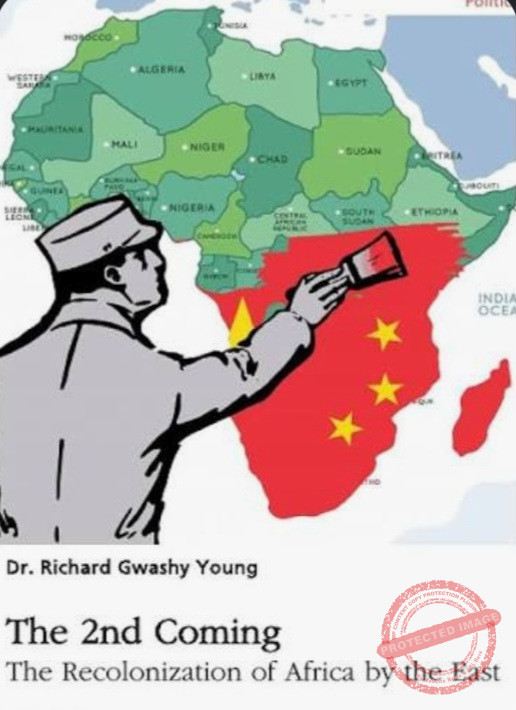
One of the most striking claims attributed to the discussion in the video is that Africa’s immense wealth in minerals, energy resources, rare earth elements, agricultural potential, and strategic raw materials makes it too important to be left to chart its own economic destiny. According to interpretations circulating online, the participants suggest that Africa should remain primarily a supplier of raw materials to foreign industries rather than becoming an industrial and manufacturing power in its own right.
The argument, as understood by many viewers, is simple: Europe and other industrialized powers need Africa’s resources more than Africans themselves are allowed to benefit from them. If African nations were to industrialize fully, process their own raw materials, build competitive industries, and control their own supply chains, they could fundamentally alter the global balance of economic power. Consequently, some observers believe that powerful interests seek to prevent this outcome at all costs.
Whether these views reflect actual policy or merely the opinions expressed in the alleged discussion, they resonate because they echo patterns that many Africans believe they have witnessed for decades. Ambazonians must therefore look at our own situation from this broader perspective.
Across Africa, colonial flags may have been lowered, but foreign interests remain deeply entrenched through economic agreements, military partnerships, multinational corporations, financial institutions, and political influence. What many Africans now describe as neo-colonialism is simply colonialism by different means.
This is why the Ambazonian struggle cannot be viewed merely as a local conflict between Southern Cameroons and La République du Cameroun. It must also be understood within the wider African struggle for sovereignty, self-determination, economic independence, and control over natural resources.
Some of us examine developments only at the surface level. We celebrate the tarring of roads from Bamenda through Kumbo to Nkambe as evidence of progress and development. Yet we must ask deeper questions. Why now? Who benefits first? What strategic objectives are being served?
Infrastructure undoubtedly benefits local populations. However, in conflict zones, roads also serve military and security purposes. They facilitate the rapid deployment of troops, armoured vehicles, military logistics, and state control over territory.
Many Southern Cameroonians fear that the long-term objective is not simply development but the consolidation of control over the territory while weakening resistance and neutralizing politically active segments of the population. They point to examples elsewhere in Africa where resource-rich regions have remained poor while their wealth flowed elsewhere.
The experience of countries discussed in the debate surrounding Françafrique demonstrates that Africans are increasingly questioning inherited political arrangements and foreign influence over their affairs. Across the Sahel, populations have challenged systems that many believed would last forever.
Whether one agrees with every aspect of these movements or not, they reveal a fundamental truth: political systems lose their permanence when people begin to question their legitimacy.
For Ambazonians, the lesson is clear. We must understand the larger forces shaping Africa today. We must think strategically, study geopolitical developments carefully, and situate our struggle within the broader African quest for dignity, sovereignty, industrial development, and genuine self-determination.
The future of Ambazonia will not be decided solely in Bamenda, Buea, Yaoundé, Paris, Brussels, or Washington. It will also be shaped by the larger transformation unfolding across Africa as nations seek to reclaim control over their resources, their economies, and their destiny. The question before us is whether we are prepared to understand that transformation and act accordingly.
Ali Dan Ismael Editor-in-Chief The Independentist News
Share This Post:
Macron’s Ghana Visit: A Strategic Opening Ambazonia Cannot Afford to Ignore
Ubuntu, Connecting with God, and the Crisis of Modern Civilization
Related Post
Adelle Nazarian of the Western Journal calls on the
NKAMOUNA, WASHINGTON, AND THE NEW POLITICS OF AFRICA’S STRATEGIC
When Conflict Becomes an Economy The Political Economy of
THE POLITICAL ECONOMY OF THE SOUTHERN CAMEROONS CONFLICT: Who
WHEN HISTORY DEMANDS AN ANSWER: Jamaica’s Legal Challenge to
COMING IN DECEMBER !!!!!! WHAT REMAINS? Building Africa’s Regenerative