








News commentary

We are home to news on Cameroon and the CEMAC region. We are dedicated to honest and reliable reporting. We are the voice of the Cameroonian people and their fight for freedom and democracy at a time when the Yaoundé government is silencing dissent and suppressing democratic voices.

The decisive economic question is therefore no longer merely whether this conflict can be expected to “die a natural death.” It is this: How much investment, employment, enterprise and productive capacity will the Southwest lose while waiting for that death to occur? Peace cannot be postponed without economic cost. And capital will not wait forever.
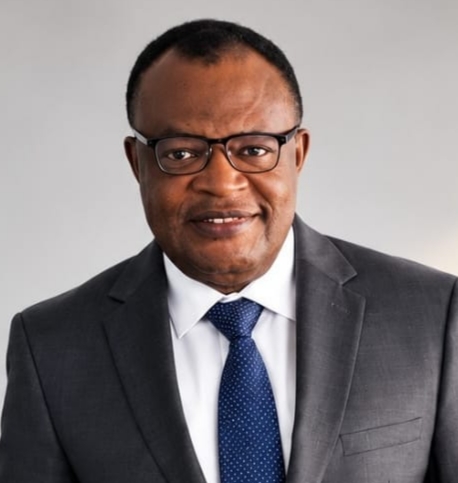
By Martin S. Mungwa, Ph.D., MBA, P.E., F.ASCE
Political Economist and Contributor to The Independentist News.
As Amazon associate this site earns from qualifying purchases
Get books on Productive Sovereignty and the future of Ambazonia by Martin Mungwa on Amazon via link below.
https://www.amazon.com/s?k=Books+By+Martin+Mungwa&crid=V79NRY7JJ30O&sprefix=books+by+martin+mungwa%2Caps%2C543&linkCode=ll2&tag=njokings-20&linkId=cc338489c1954220720687a3f1a1f9c9&language=en_US&ref_=as_li_ss_tl
BUEA – 28 September 2026 – There are statements politicians make for political audiences, and there are statements that markets hear very differently. Prime Minister Joseph Dion Ngute’s reported assertion that the Ambazonian conflict will “die a natural death”—reportedly over a period of roughly ten years—belongs in the second category.
If accurately reported, the statement raises a profound economic question. Is the Prime Minister effectively asking businesses to price years of continuing insecurity into their investment decisions? That question should concern every business owner, investor, banker, insurer, plantation operator, hotel developer, manufacturer and entrepreneur with an economic interest in Cameroon’s Southwest.
Because capital does not evaluate political rhetoric through applause. Capital evaluates risk, security, predictability, return and time. And by those measures, the Prime Minister’s reported statement may have unintentionally reinforced precisely the concern Yaoundé should be trying hardest to dispel.
An Unintended Confirmation of Investor Concerns
The irony is difficult to ignore. For years, now businesses and international institutions have identified insecurity in the Northwest and Southwest as an obstacle to economic activity and investment. The U.S. Department of Commerce currently states that unrest associated with the separatist conflict in the Northwest and Southwest disrupts economic activity, restricts movement and increases the cost of protecting personnel and assets.
The U.S. State Department’s May 15, 2026 travel advisory goes further, designating both the Northwest and Southwest as “Do Not Travel” areas because of terrorism, unrest, crime, kidnapping and improvised explosive devices.
The International Monetary Fund likewise reported in its 2026 Article IV consultation that continued security challenges weigh on Cameroon’s economic outlook. These are not Ambazonian political declarations. They are external risk assessments.
Then comes the Prime Minister’s reported declaration that the conflict will die a “natural death” after years of attrition. Instead of contradicting those concerns, such a statement risks reinforcing them. If insecurity may persist for years, what precisely should an investor put into the risk column for years one through nine? That is the economic problem created by the statement.
The Government’s Own Actions Reveal the Security Challenge
There is another uncomfortable contradiction. Only days ago, on September 17, Prime Minister Dion Ngute himself chaired a meeting specifically devoted to assessing security conditions and the reopening of schools in the Northwest and Southwest. Official reporting following that meeting acknowledged continuing security incidents.
More than 2,400 schools were reported non-operational across the two regions, while UNICEF figures cited by recent reporting indicated that 223,749 children remained completely out of school. In the Southwest, roughly 300 of 400 schools were reported operational.
Those figures demonstrate progress in some areas. They also demonstrate that the security problem has not disappeared. The government is therefore caught between two messages. One message emphasizes improving normalcy. The other requires high-level security meetings, deployments around schools and continuing efforts to restore basic activities disrupted by conflict.
Investors notice contradictions like these. They are not interested in whether the government or separatists win the communications battle. They want to know whether their employees, assets, supply chains and investments will be secure. The Southwest Should Be an Investment Powerhouse That is what makes this situation tragic for the Southwest.
The region possesses extraordinary productive advantages. It has fertile agricultural land. It has major plantation assets. It has access to the Atlantic. It has petroleum and energy infrastructure. It has important commercial corridors. It has tourism potential. It has an educated population and proximity to major domestic and regional markets.
Buea, Victoria/Limbe, Tiko, Kumba and their surrounding productive corridors should be competing aggressively for investment in agro-processing, logistics, tourism, real estate, technology, manufacturing and services. Instead, investors must include political insecurity in their calculations. That produces what economists effectively recognize as a risk premium.
Security costs rise. Insurance becomes more expensive. Transportation becomes less predictable. Supply chains become vulnerable. Employees become harder to recruit and retain. Lenders become more cautious. Expected returns must rise before an investment becomes attractive. Some projects are consequently delayed. Others are reduced. And some capital simply goes elsewhere.
Capital Has Choices
Cameroon is not competing only with itself. An investor considering an agro-processing facility, hotel, logistics hub or manufacturing plant can compare opportunities across Africa. The choice may be between Cameroon and Ghana. Cameroon and Côte d’Ivoire. Cameroon and Senegal. Cameroon and Kenya. Cameroon and Rwanda Investment committees do not award projects based on political sympathy. They compare risk-adjusted returns.
Suppose a company is considering a $25 million processing facility. Its board will want answers. Can raw materials reach the factory reliably? Can workers travel safely? Can finished goods reach markets and ports? Can foreign specialists visit the project without extraordinary security arrangements? Can the company obtain insurance at commercially reasonable rates? Can operations continue consistently? Can the lender confidently model ten or fifteen years of cash flows? Those questions determine where capital goes. And this is why the reported “natural death” statement matters.
Politically, it may have been intended as a message of endurance. Economically, it can sound like a warning. Ten Years Is an Eternity in Business Political leaders sometimes speak casually about five years, ten years or fifteen years. Business cannot. Ten years may represent the entire maturity of a major commercial loan. It may represent most of the productive life of expensive equipment. It may represent several corporate planning cycles.
For an entrepreneur, ten years can represent the decisive period during which a company either succeeds or disappears. Therefore, if a government effectively signals that an unresolved security conflict may persist for another decade, investors cannot simply ignore the statement. They must price it.
And once prolonged insecurity enters a financial model, the economic consequences multiply. Higher risk raises the required return. A higher required return reduces the value of the investment. A lower project valuation makes financing more difficult. More expensive financing makes marginal projects uneconomic. Eventually, the investor chooses another location.
That is how insecurity translates into lost factories, lost businesses and lost employment. Normalcy Is Not the Same as Investment-Grade Security. Government officials understandably point to reopened schools, operating markets, restored roads and increased economic activity as signs of progress. Those improvements matter. They should be welcomed. People deserve functioning schools. They deserve open markets. They deserve safe highways. They deserve jobs and functioning hospitals. But visible activity is not the same thing as investment-grade security.
A trader may reopen a shop because his family must eat. A farmer may take produce to market because crops cannot remain indefinitely on the farm. Parents may send children back to school because they desperately want their children educated. None of those actions automatically tells an investor what security conditions will look like ten years from now.
Investors ask a different question: Is the operating environment sufficiently predictable for long-term capital? That is a considerably higher standard. Administrative Control Is Not the Same as Commercial Predictability Governments frequently understand territorial control administratively. An administrative officer occupies his office. A military checkpoint operates. Schools reopen. Government delegations travel. Official ceremonies take place.
But businesses define control differently. Can a delivery truck leave Kumba early in the morning and arrive predictably at its destination? Can plantation workers travel consistently? Can engineers inspect facilities without extraordinary security precautions? Can a company guarantee deliveries? Can hotels confidently receive visitors? Can multinational corporations send personnel into the region without triggering internal corporate-security restrictions? Can an insurer reasonably quantify exposure? Can a bank lend against a twenty-year project? That is what economic control looks like.
And those questions cannot be answered simply by pointing to administrative presence. The Government Needs an Economic Endgame The central problem created by the reported statement is therefore not rhetorical. It is strategic. If the government has a credible pathway toward ending the insecurity, investors need to understand it. What is the political strategy? What is the security strategy? What is the investment-protection strategy? What measurable milestones demonstrate progress from conflict management toward durable peace? What conditions would allow insurers and financial institutions to reduce the security premium attached to investment in the Southwest?
Those are legitimate economic questions. “Natural death” is not an investment strategy. Waiting is not an economic development plan. And attrition does not provide the predictability required for long-term capital. Peace Is Productive Infrastructure Cameroon understandably thinks about infrastructure in terms of roads, bridges, electricity, ports, airports and telecommunications. But there is another form of infrastructure without which the others cannot reach their full economic potential: peace.
Peace is productive infrastructure. Peace lowers insurance costs. Peace reduces transportation risks. Peace encourages lending. Peace allows companies to make twenty-year plans. Peace encourages farmers to invest in equipment. Peace allows plantations to expand. Peace attracts hotels and tourism. Peace allows manufacturers to establish factories. Peace encourages skilled workers to remain. Peace encourages diaspora capital to return. Peace expands the tax base. Peace creates jobs. Most importantly, peace produces the commodity every serious investor requires: confidence.
The Prime Minister’s Investment Paradox
That is why the Prime Minister’s reported statement presents such an extraordinary paradox. Cameroon needs investment. The Southwest needs investment desperately. Government officials want companies to believe that conditions are improving. Yet a statement suggesting that the conflict may simply exhaust itself over many years risks telling investors that prolonged insecurity remains part of the government’s own expectations.
The Prime Minister may therefore have unintentionally corroborated the very fear investors already carry. Not that every part of the Southwest is permanently unsafe. Not that economic activity has stopped. Not that investment is impossible. But that security remains sufficiently uncertain that long-term capital must continue pricing political risk into major decisions. That distinction matters.
The Cost of Waiting
The economic consequences of another decade of uncertainty would not be abstract. They would be measured in investments postponed. Factories never constructed. Hotels never financed. Plantations never modernized. Processing plants located elsewhere. Jobs never created. Entrepreneurs who relocate. Professionals who leave. Diaspora capital that stays abroad. Tax revenue that never materializes. And productive opportunities transferred permanently to competing economies.
Capital can return after instability. But not every lost investment comes back. If a multinational corporation chooses another country today for a regional facility designed to operate for thirty years, Cameroon may never recover that particular opportunity. That is the hidden cost of prolonged political uncertainty. The Question the Business Community Is Entitled to Ask
The Prime Minister’s reported remark therefore raises a question larger than the political contest between Yaoundé and Ambazonian separatists. It raises a question about economic governance. What is Cameroon offering investors as a credible pathway from insecurity to durable predictability? Because telling investors that a conflict may eventually disappear is fundamentally different from demonstrating how peace will be achieved.
Investors do not require political perfection. They require calculable risk. And there is a profound difference between the two. The tragedy for the Southwest is that a region with immense productive potential continues to carry a security discount precisely when it should be attracting capital, industries and employment.
That is why the reported “natural death” declaration deserves scrutiny far beyond its political meaning. If intended to communicate governmental confidence, it risks producing the opposite economic message. It risks telling businesses: Prepare for uncertainty to continue. And that may be the most damaging signal of all.
The decisive economic question is therefore no longer merely whether this conflict can be expected to “die a natural death.” It is this: How much investment, employment, enterprise and productive capacity will the Southwest lose while waiting for that death to occur? Peace cannot be postponed without economic cost. And capital will not wait forever.
As Amazon associate this site earns from qualifying purchases
Get books on Productive Sovereignty and the future of Ambazonia by Martin Mungwa on Amazon via link below.
https://www.amazon.com/s?k=Books+By+Martin+Mungwa&crid=V79NRY7JJ30O&sprefix=books+by+martin+mungwa%2Caps%2C543&linkCode=ll2&tag=njokings-20&linkId=cc338489c1954220720687a3f1a1f9c9&language=en_US&ref_=as_li_ss_tl
Martin S. Mungwa, Ph.D., MBA, P.E., F.ASCE
Political Economist and Contributor to The Independentist News.
Share This Post:
The Illusion of a ‘Natural Death’: Why Yaoundé’s Playbook May Fail in Ambazonia
Related Post
The Illusion of a ‘Natural Death’: Why Yaoundé’s Playbook
AN AMBAZONIAN RESPONSE TO, Navy Captain Cyrille Serge Atonfack
IS THE WORLD LISTENING: THREE DAYS FOUR FRONTLINES, ASA
SEPTEMBER 24, 1965, THIS DAY IN HISTORY: From Equal
AMBAZONIA’S WAR- IS BIGGER THAN YAOUNDÉ: BRITAIN, FRANCE AND
THE DAY SEPTEMBER 22 1961: — WHAT AMBAZONIA CAN