











THE INDEPENDENTIST NEWS BOOK REVIEW |
By Ali Dan Ismael
Editor-in-Chief, The Independentist News
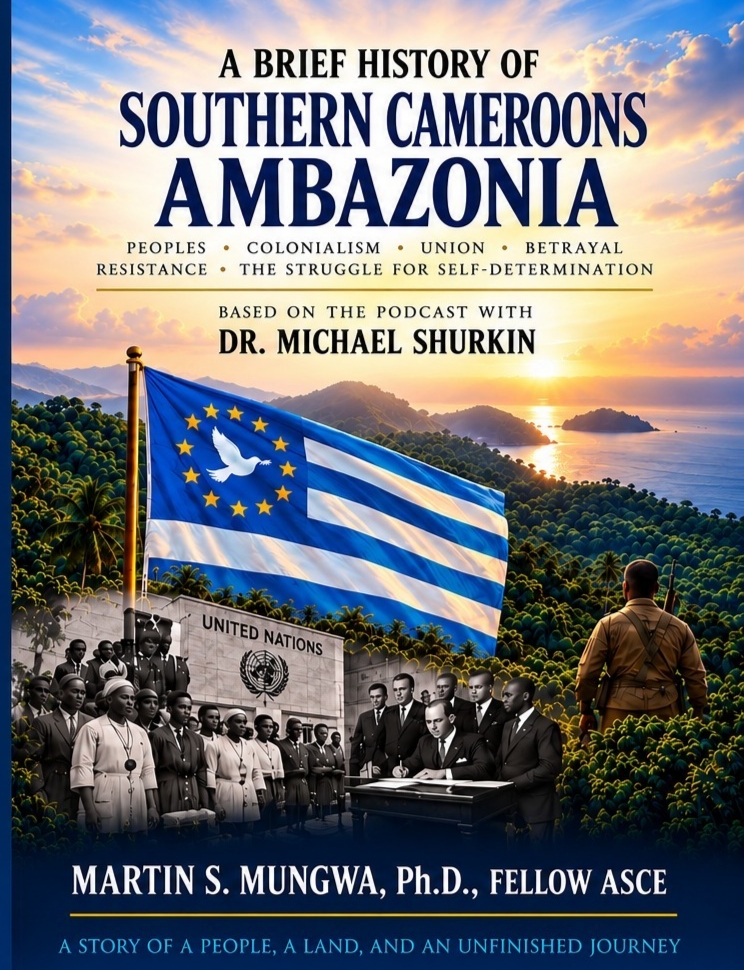
Book: A Brief History of Southern Cameroons–Ambazonia: From United Nations Trusteeship to the Quest for Self-Determination
Author: Martin S. Mungwa, Ph.D., Fellow ASCE
Publisher: Mungwa Legacy Press, USA
Year: 2026
Length: Approximately 55 pages
Origin: Developed from Dr. Mungwa’s interview with Michael Shurkin on Pax Americana, subsequently expanded into a five-chapter historical narrative.
As Amazon associate this site earns from qualifying purchases
Get your copy Now !!!!
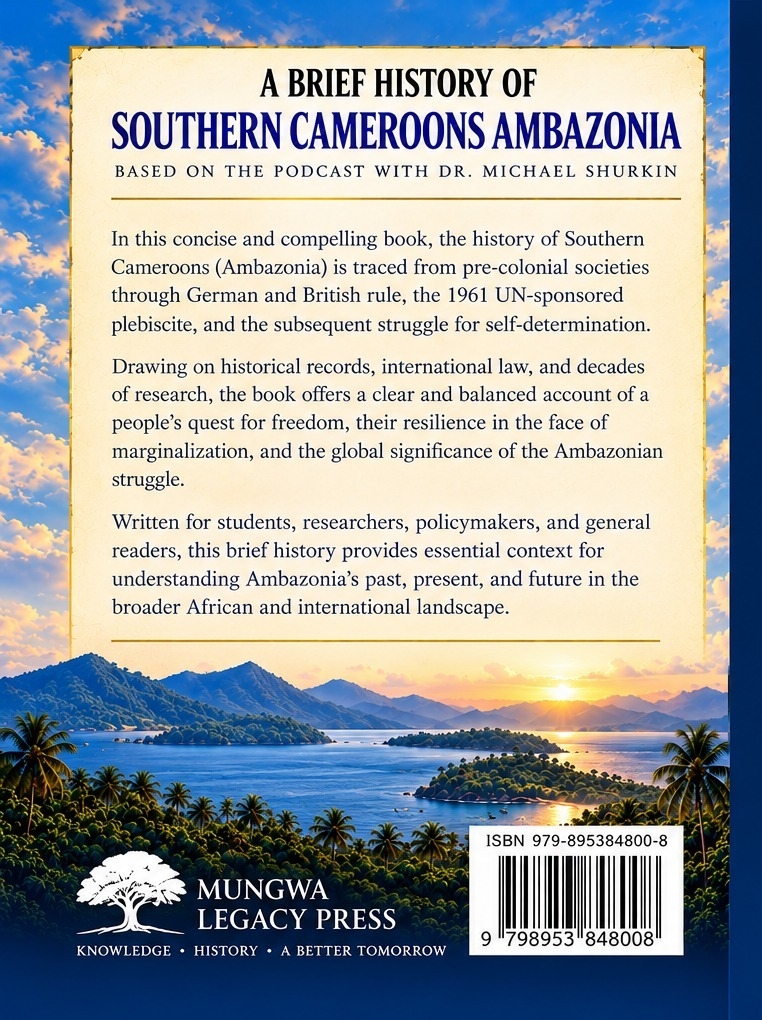
A Short History of a Long Political Dispute
Some books explain history. Others help readers understand why history remains politically consequential. Dr. Martin S. Mungwa’s A Brief History of Southern Cameroons–Ambazonia attempts both.
Originating from an international interview, the book transforms a discussion of Southern Cameroons history into an accessible examination of colonial partition, United Nations trusteeship, the 1961 plebiscite, constitutional transformation, and the continuing quest for self-determination.
Its central question is compelling: How did Southern Cameroons, a territory with its own political institutions and distinct administrative history, become the subject of one of Africa’s most enduring constitutional disputes?
Five Chapters That Reconstruct a History
The first chapter examines how German Kamerun was partitioned following the First World War, producing two territories governed under different British and French administrative systems. Mungwa highlights the parliamentary traditions, common-law institutions, and political autonomy developed in Southern Cameroons before 1961.
The second chapter, The Ballot Without a Third Box, examines the February 11, 1961 plebiscite. Voters could choose to join Nigeria or the Republic of Cameroun, but separate independence was not offered. The author carefully distinguishes this limitation from the actual voting outcome and examines United Nations Resolution 1608.
The third chapter traces the constitutional transformation from the 1961 federation to the unitary state in 1972 and the country’s renaming in 1984. It connects these events to the grievances underlying the contemporary Anglophone crisis.
The fourth chapter moves beyond historical grievance to examine international law, self-determination, and the institutional responsibilities associated with sovereignty.
The final chapter explores international diplomacy, regional security, mediation, and the role of the international community.
What Makes the Book Distinctive?
Mungwa approaches Southern Cameroons history through institutions rather than political slogans alone. His central contribution is the distinction between the historical basis of a political claim and the practical responsibilities of government.
The book argues that historical grievances deserve careful examination, but effective political change also requires functioning courts, schools, hospitals, public finances, and accountable institutions.
Its interludes, historical timeline, and case studies make complicated constitutional issues accessible to readers unfamiliar with the Southern Cameroons question.
Scholarly Strengths and Limitations
The manuscript is clearly organized, readable, and relevant to students of African history, decolonization, political economy, and international relations.
Its strongest sections concern the 1961 plebiscite, the transformation of federalism, and the relationship between constitutional institutions and political identity.
However, further primary-source verification, expanded bibliography, and detailed legal references would strengthen its suitability for university research. The current edition remains a working manuscript rather than a fully verified scholarly publication.
Final Assessment
A Brief History of Southern Cameroons–Ambazonia offers a concise introduction to a complex historical and constitutional dispute.
Its importance lies in connecting the colonial past, the 1961 plebiscite, subsequent constitutional changes, and contemporary debates about governance and self-determination.
The book also advances a useful principle: political sovereignty and institutional responsibility must be examined together.
For international readers seeking to understand why the Southern Cameroons question remains unresolved, Mungwa provides an accessible starting point.
The Independentist News Editorial Assessment: A clearly structured and accessible historical introduction with valuable institutional analysis. Completion of documentary verification and final scholarly editing would strengthen its academic standing.
Get your copy here ……
Ali Dan Ismael, The Independentist News — Books, History and Political Thought




Leave feedback about this