










Whether the eventual transition unfolds through orderly succession, elite negotiation, military influence, or broader national instability remains unknown. What is increasingly clear, however, is that Cameroon is approaching the structural end of the Biya era. And an entire nation is now waiting to discover what comes next.
By Timothy Enongene
Guest Editor-in-Chief, The Independentist News
8 May 2026
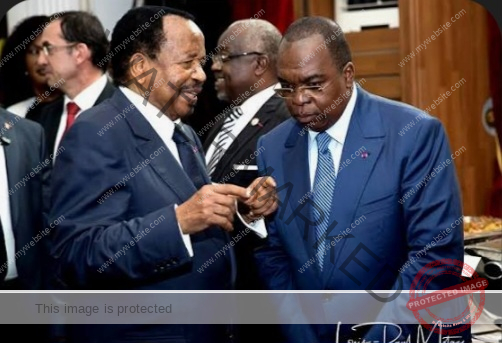
The silence hanging over the Unity Palace in Etoudi has never been louder. For decades, the health of President Paul Biya, now 93, has remained one of the most tightly guarded subjects in Cameroon’s political system. Yet the events of early May 2026 have shaken the carefully maintained image of continuity surrounding one of Africa’s longest-serving rulers. The catalyst for the current storm did not come from opposition parties, foreign governments, or military insiders. It came from within the presidential family itself.
Brenda Biya’s Public Break with the Regime
On May 4, 2026, Brenda Biya published an Instagram message that rapidly reverberated across Cameroonian and international political circles. In the post, she declared bluntly: “PB is dying period.
This message went far beyond a statement about her father’s health. Her words painted the picture of a deeply fractured ruling environment marked by fear, mistrust, and internal political warfare. Brenda Biya described what she called a “year of torture” and a broader “machination” aimed at destroying her socially and financially after the eventual passing of the President.
In doing so, she exposed something rarely seen publicly within entrenched African presidential systems: visible cracks inside the ruling dynasty itself. Her statements suggested a growing fear that powerful actors surrounding the presidency are already positioning themselves for the post-Biya era. Even more striking was the fact that Brenda Biya had previously urged Cameroonians to “reject my father at the polls” during the tense political atmosphere surrounding the 2025–2026 electoral cycle.
Whether viewed as emotional outburst, political rebellion, or indirect warning, the significance remains undeniable: for the first time in modern Cameroonian history, a member of the presidential family has publicly challenged the stability of the regime while openly acknowledging the President’s declining condition.
The Deaths of Cameroon’s Institutional Successors
The anxiety surrounding succession has intensified further following the recent deaths of the two senior officials historically considered closest in constitutional succession hierarchy.
Marcel Niat Njifenji — Senate President
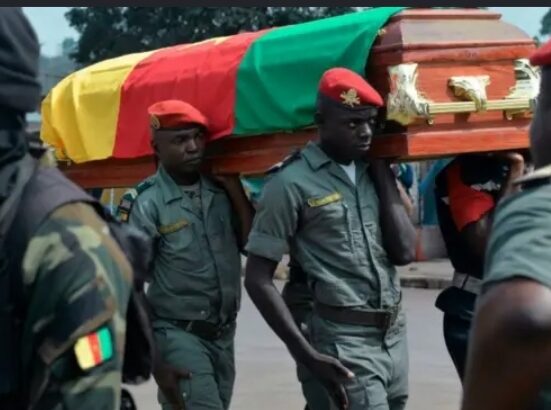
Marcel Niat Njifenji died on April 11, 2026, at the age of 91 after years as one of the regime’s most enduring institutional figures.
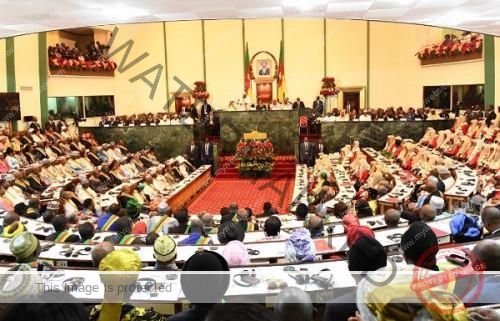
Cavaye Yéguié Djibril — Speaker of the National Assembly. Just weeks later, on May 6, 2026, Cavaye Yéguié Djibril also passed away after serving for more than three decades as Speaker of the National Assembly. Official explanations cited prolonged illness in both cases. However, the timing of the deaths—occurring during a sensitive period of political restructuring and succession uncertainty—has fueled widespread speculation inside Cameroon regarding deeper transition dynamics within the ruling establishment.
For many observers, the simultaneous disappearance of two pillars of institutional continuity symbolizes more than coincidence. It reflects the gradual exhaustion of an aging political order built almost entirely around the authority of one man.
The Geneva Question
Adding further tension to the unfolding situation were reports published by whistleblower Boris Bertolt claiming that preparations were underway for an emergency medical evacuation of President Biya to a private clinic in Geneva. According to those reports, the President’s physical condition had reportedly deteriorated significantly ahead of Cameroon’s May 20 National Day celebrations.
Although Cameroonian authorities have not officially confirmed such claims, the prolonged absence of visible public appearances by the President has only intensified public speculation across the country and within the diaspora.
In modern political systems, silence often becomes its own form of communication.
The Vice President Question
Amid growing uncertainty, political attention has increasingly focused on reports that discussions are underway regarding the possible strengthening of constitutional succession mechanisms, including renewed consideration of a vice-presidential structure. As of now, no definitive public announcement has clarified whether such a mechanism will formally emerge or who might eventually occupy such a position. The uncertainty surrounding succession has therefore become the single most important political issue in Cameroon today.
Several scenarios are being discussed quietly within political circles: the emergence of a trusted regime insider, the positioning of influential military networks, the possibility of dynastic continuity through figures linked to the presidential family, or the elevation of a compromise technocratic candidate designed to stabilize the transition.
Among the names frequently discussed is Franck Biya, whose political visibility has increased steadily in recent years despite holding no formal elected office. The Structural Problem Facing Cameroon
The current uncertainty extends far beyond the health of one individual. Cameroon now faces the structural consequences of a political system that concentrated stability overwhelmingly around presidential continuity rather than around strong, independent institutions.
In many post-colonial African states, long-serving governments often produce political systems where succession itself becomes the greatest national vulnerability. Security institutions, economic elites, regional blocs, foreign partners, and ruling-party networks all begin repositioning simultaneously once the perception emerges that a political era is nearing its end. Cameroon is now entering precisely such a moment. Unlike previous periods of uncertainty, however, the current transition unfolds amid: the unresolved conflict in the former British Southern Cameroons, worsening economic pressure, rising public frustration among younger generations, growing international scrutiny, and increasing geopolitical competition involving French influence networks, regional actors, and emerging global powers.
This makes the stakes of succession significantly higher than at any point during the Biya era.
In states where political longevity becomes inseparable from national governance, transitions are rarely managed by constitutional text alone. Security services, economic patrons, regional loyalties, and foreign interests often become decisive actors behind the scenes. Cameroon’s greatest challenge may therefore not simply be succession itself, but whether its institutions remain strong enough to absorb the transition peacefully without triggering wider instability across an already fragile national landscape.
A Nation Holding Its Breath
For now, Cameroon remains suspended between continuity and uncertainty. The ruling establishment continues to project institutional calm, yet beneath the surface, political repositioning appears increasingly visible. Brenda Biya’s public intervention has shattered one of the regime’s most important unwritten rules: the preservation of absolute silence surrounding presidential vulnerability.
Whether the eventual transition unfolds through orderly succession, elite negotiation, military influence, or broader national instability remains unknown. What is increasingly clear, however, is that Cameroon is approaching the structural end of the Biya era. And an entire nation is now waiting to discover what comes next.
Timothy Enongene
Guest Editor-in-Chief, The Independentist News




Leave feedback about this