









News commentary

We are home to news on Cameroon and the CEMAC region. We are dedicated to honest and reliable reporting. We are the voice of the Cameroonian people and their fight for freedom and democracy at a time when the Yaoundé government is silencing dissent and suppressing democratic voices.

The Ambazonian struggle is not only against external domination; it is also against internal complicity. The greatest obstacle to freedom has never been the oppressor alone—it has always been the willing collaborators within.
By Ali Dan Ismael, Editor-in-Chief The Independentistnews
History is uncomfortable when it tells the truth. One of its most unsettling lessons is this: not all oppressed people resist oppression. Some defend it. Some benefit from it. Some become its most loyal agents. During slavery, they were called house slaves—those who lived close to power, who identified with the master, and who feared freedom more than bondage. They defended the system not because it was just, but because it was profitable to them. That reality did not die with abolition. It evolved. Today, in the Ambazonian struggle, we are confronted with its modern form.
The New House Slaves
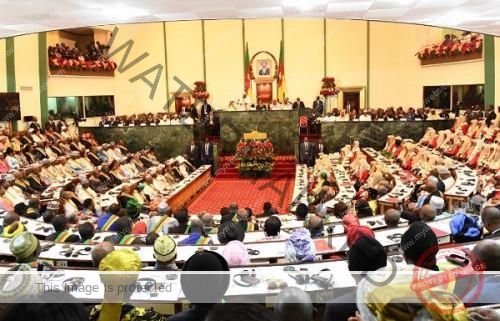
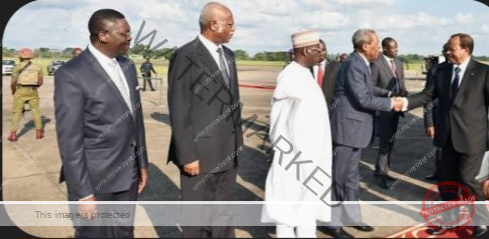
They wear suits instead of chains. They hold titles instead of tools. But their function remains the same: to protect the system that subjugates their own people. Let us speak plainly. Figures such as Philemon Yang, Joseph Dion Ngute, Victor Arrey-Nkongho Mengot, Peter Mafany Musonge, Paul Atanga Nji, Andrew Nkea, Samuel Fonki, Paul Njukang Tassong, and Rose Acha represent, in different forms, a troubling pattern. They are Ambazonian by origin, yet function within and for a system headquartered in Yaoundé—a system widely accused by critics of suppressing Anglophone identity, autonomy, and dissent. Alongside them stand colonial-era administrative structures still in operation today—DOs (Divisional Officers), SDOs (Senior Divisional Officers), parliamentarians, and political intermediaries—forming a network of internal enforcement. This is not merely governance. This is continuity of control through local instruments.
The Logic of Proximity to Power
The house slave mentality is not about ignorance. It is about calculation. It says: “Better to be comfortable within the system than uncertain outside it.” It trades collective freedom for personal access and substitutes dignity with proximity. These actors often speak the language of “peace,” “unity,” and “stability,” but beneath that language lies a consistent outcome: the preservation of the status quo. When challenged, they deploy familiar arguments—“No country is perfect,” “Why complain when others suffer too?” “You are abroad—what do you know?” These are not arguments. They are deflection strategies.
The Diaspora Argument—A Convenient Distraction
A common refrain is this: “Those abroad are second-class citizens. Are they not begging there? Why criticize from outside?” Let us dismantle this clearly. Migration is not weakness—it is agency. People move globally in search of opportunity, safety, and growth. Yes, racism exists in places like the United States, but reducing an entire reality to insults is not analysis—it is internalized inferiority projected outward. More importantly, the issue is not whether any country is perfect. The real question is this: Are people free? Are they protected by law? Can they speak without fear? Freedom is not theoretical. It is lived. And where it is absent, it must be demanded—not explained away.
Pride Without Freedom Is Illusion
“We are proud to be here,” they say. But pride without freedom is illusion. If it is truly “your country,” then why must voices be silenced? Why is dissent treated as rebellion? Why do communities live under fear? Freedom is not declared. It is demonstrated through rights, protections, and lived experience.
The System of Internal Reinforcement
What makes this situation more complex—and more dangerous—is that the system no longer relies solely on external domination. It has internalized its enforcement through political appointments, religious influence, administrative control, and economic incentives. It creates a class of individuals whose survival depends on defending the system, not transforming it. This is the modern architecture of control. And within that architecture, the modern house slave is not an accident. They are a design feature.
History’s Verdict
History is relentless. Despite the resistance of house slaves, slavery ended—not because they approved, but because truth, resistance, and sacrifice outweighed comfort and fear. When freedom came, those who defended bondage did not shape the future; they were rendered irrelevant by it. The same principle applies today.
Final Word
The Ambazonian struggle is not only against external domination; it is also against internal complicity. The greatest obstacle to freedom has never been the oppressor alone—it has always been the willing collaborators within. But history is clear on one thing: freedom does not wait for the approval of the comfortable. It advances—with or without them.
Ali Dan Ismael, Editor-in-Chief The Independentistnews
Share This Post:
The Yaoundé Charade: A Vice President for a Vanishing Union
Manufactured Praise, Manufactured Power: The Fiction Behind “Biya’s Best Choice”
Related Post
PROPHECY, POLITICS, AND THE AMBAZONIAN QUESTION (PART III) Why
WHEN YAOUNDÉ’S ALLIES SUDDENLY ENDORSE AYUK TABE: SOLIDARITY OR
THE SECOND RETURN: FROM THE PAIN OF SEPARATION TO
WHEN THE REGULATOR BENDS: WHAT THE VISION 4 AFFAIR
PROPHECY, POLITICS, AND THE AMBAZONIAN QUESTION (PART II) :
IF SOMALILAND MATTERS TO WASHINGTON, WHY NOT SOUTHERN CAMEROONS?