










Commentary

We are home to news on Cameroon and the CEMAC region. We are dedicated to honest and reliable reporting. We are the voice of the Cameroonian people and their fight for freedom and democracy at a time when the Yaoundé government is silencing dissent and suppressing democratic voices.

For many Ambazonians, the political class of La République du Cameroun represents not competing alternatives but different faces serving the same project. Until a major political force emerges willing to confront the fundamental question of Southern Cameroons’ political status, many Ambazonians will continue to view promises of change from Yaoundé with profound skepticism. The names may change. The project remains the same.
By Carl Sanders Guest Writer, The Independentist News, Soho, London
The Illusion of Political Change
One of the most persistent misconceptions surrounding the conflict between Ambazonia and La République du Cameroun is the belief that a change in leadership within Yaoundé would fundamentally alter the political reality confronting the people of Southern Cameroons. For decades, observers have placed their hopes in new political personalities, opposition movements, reformist agendas, and electoral transitions. Yet despite changes in political rhetoric and the emergence of new actors, the underlying structure of the state has remained remarkably unchanged. From an Ambazonian perspective, the issue has never been simply about who occupies the Unity Palace. The issue is the political project itself.
The Untouchable Principle of One and Indivisible Cameroon
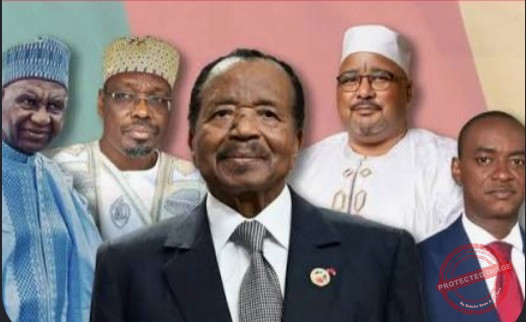
Whether represented by President Paul Biya, Maurice Kamto, Issa Tchiroma Bakary, Cabral Libii, Joshua Osih, or any other prominent figure within the political establishment of La République du Cameroun, the central objective remains the same: preserving the territorial integrity and centralized authority of the Cameroonian state. Their disagreements concern governance, corruption, elections, economic management, and the distribution of power within the existing system. Rarely do they challenge the foundational assumption that Southern Cameroons must remain permanently incorporated within that system.
This reality explains why many Ambazonians view the political divisions within Cameroon with skepticism. What appears to outsiders as fierce political competition often appears, from the perspective of Southern Cameroons, as a contest between different managers of the same political order. Government and opposition may disagree on methods, but they frequently converge on the principle that Cameroon must remain “one and indivisible.”
When Opposition Protects the System
For Ambazonians, this principle is not a neutral constitutional doctrine. It is the very foundation upon which decades of political marginalization, cultural assimilation, and centralized control have been justified. Consequently, any political actor who accepts that premise, regardless of their reformist credentials, is perceived as defending the same structure that many Ambazonians seek to leave behind.
The careers of Cameroon’s political elite provide ample evidence of this continuity. President Paul Biya has spent decades defending the centralized state while presenting periodic reforms as evidence of progress. Opposition leaders have criticized corruption, challenged election results, and demanded institutional reforms, yet few have been willing to question the political architecture inherited from reunification. Even those who advocate federalism often do so within a framework that assumes the permanence of Cameroonian sovereignty over Southern Cameroons.
Why Ambazonia Rejects Internal Solutions
This is why repeated promises of reform have failed to inspire confidence among many Ambazonians. Constitutional amendments, decentralization initiatives, national dialogues, commissions of inquiry, and electoral transitions have all been presented at various times as pathways to peace. Yet none have fundamentally addressed the central question at the heart of the conflict: whether the people of Southern Cameroons possess the right to determine their own political future.
For many Ambazonians, the answer provided by Yaoundé’s political class has remained remarkably consistent regardless of who speaks. The language may change, the tone may soften, and the personalities may differ, but the conclusion remains the same. Self-determination is considered unacceptable, independence is rejected outright, and the territorial integrity of Cameroon is treated as non-negotiable.
Beyond Constitutional Reforms and Dialogues
The lesson drawn from this experience is therefore straightforward. Different faces may emerge, political fortunes may rise and fall, and governments may change, but as long as the underlying political project remains the preservation of the existing state, the essential relationship between Yaoundé and Ambazonia remains unchanged.
For decades, Ambazonians have been encouraged to trust in reforms, commissions, constitutional amendments, and promises of decentralization. Yet each initiative has ultimately operated within the same political framework. The destination may be described differently, but the boundaries remain fixed. The possibility of self-determination remains excluded from the conversation before it even begins.
The Case for Political Separation
In this sense, the debate is not fundamentally between Biya and the opposition. It is between two competing visions of political legitimacy. One seeks to preserve and reform the existing state. The other seeks a complete redefinition of the political relationship through the exercise of self-determination.
For many Ambazonians, the conflict is no longer about obtaining a better place within Cameroon but about determining whether they should remain part of Cameroon at all. This distinction explains why calls for reform frequently fail to resonate within large segments of the independence movement.
No Hope from Yaoundé
That is why, for many Ambazonians, the political class of La République du Cameroun represents not competing alternatives but different faces serving the same project. Until a major political force emerges willing to confront the fundamental question of Southern Cameroons’ political status, many Ambazonians will continue to view promises of change from Yaoundé with profound skepticism. The names may change. The project remains the same.
Carl Sanders
Guest Writer, The Independentist News, Soho, London
Share This Post:
THE MYTH OF THE “ANGLOPHONE REPRESENTATIVE”: Why Yaoundé’s Selected Leaders Do Not Speak for Ambazonia
Beyond Waiting: Connecting with God Through Responsibility
Related Post
AMBAZONIA’S WAR- IS BIGGER THAN YAOUNDÉ: BRITAIN, FRANCE AND
THE DAY SEPTEMBER 22 1961: — WHAT AMBAZONIA CAN
TRUMP’S “SUPER INTELLIGENCE” ERA: WHAT IT REALLY MEANS —
Why Is Ambazonia More Powerful Than many Imagine.
THIS DAY IN HISTORY SEPTEMBER 22, 2017: THE DAY
A President Unseen, a Country Waiting: Yaoundé’s Succession Uncertainty