










News commentary

We are home to news on Cameroon and the CEMAC region. We are dedicated to honest and reliable reporting. We are the voice of the Cameroonian people and their fight for freedom and democracy at a time when the Yaoundé government is silencing dissent and suppressing democratic voices.

The question is: WHO IS PREPARED TO DO WHAT PEACE REQUIRES? Not another speech. Not another photograph. Not another predetermined dialogue. Not another temporary silence before another funeral. A credible process. A mutually acceptable facilitator. No predetermined political outcome. Protection of civilians. Credible international guarantees. And the courage to place the political dispute itself on the table.
By Ali Dan Ismael, Editor-in-chief The Independentist News
As Amazon associate this site earns from qualifying purchases
Get your back to schools needs on Amazon
https://www.amazon.com/s?k=back+to+school+needs&rh=p_6%3AA2N0PBIRR6F78F&dc=&ds=v1%3A1nbdSoXGtNwH6%2F4WC3U9ftjZoWRiEZVr3ED%2BlK%2BzQnc&qid=1788373179&rnid=331539011&linkCode=ll2&tag=njokings-20&linkId=1a75a64ee6b2156621ea8614ae910337&language=en_US&ref_=as_li_ss_tl
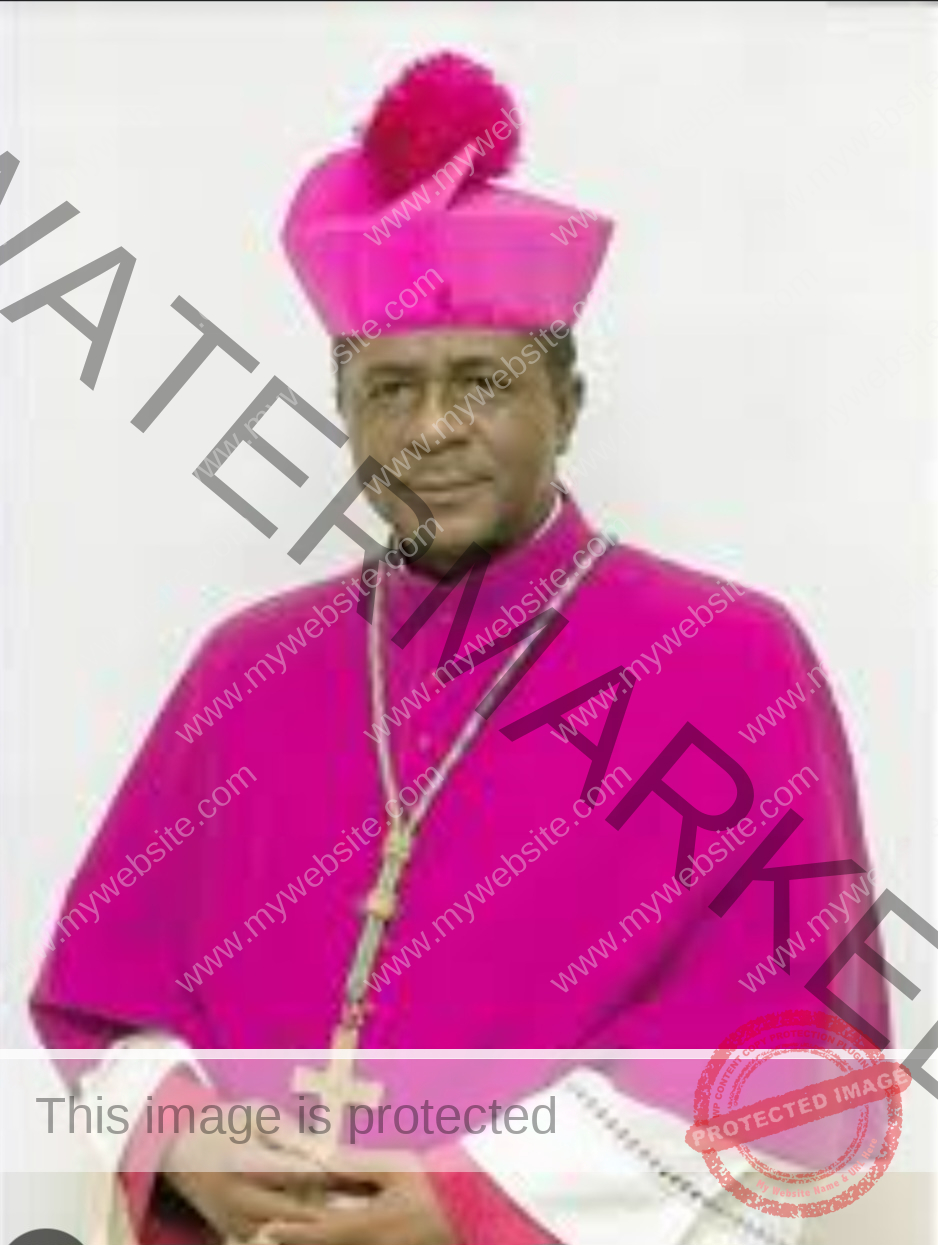
Archbishop Andrew Nkea has opened a door that should neither be slammed shut nor allowed to become another corridor leading nowhere. Speaking recently on Under The Baobab, the Archbishop of Bamenda said that he has personally spoken with separatists in Cameroon and abroad and that many are open to dialogue and increasingly tired of a conflict that has lasted nearly a decade. He also said that the Catholic Church is working to bring the parties together and believes meaningful dialogue remains the only path to a lasting settlement. That statement deserves serious attention.
But peace cannot be measured by whether Ambazonians are tired of war. It must be measured by whether the parties are prepared to confront the political dispute that produced the war. That is the real test. Being Tired of War Is Not the Same as Surrender Of course Ambazonians are tired. Who would not be?
Mothers are tired of burying children. Families are tired of displacement. Communities are tired of insecurity. Businesses are tired of uncertainty. Schoolchildren are tired of growing up under the shadow of conflict. Soldiers and fighters have families too. The diaspora is tired. An entire generation has lived with a conflict that should never have been allowed to continue this long. But war fatigue is not a political settlement. And willingness to talk must never be confused with willingness to surrender. That distinction matters enormously.
If Archbishop Nkea has genuinely established that significant numbers of Ambazonians are prepared to consider dialogue, that should be welcomed. It should not be weaponized as evidence that the independence movement is collapsing, that fighters have been defeated, or that Ambazonians are prepared simply to abandon the political questions that brought the conflict into existence.
Dialogue means something very different.
It means that parties with fundamentally different political positions recognize that violence cannot indefinitely substitute for political engagement. That is not weakness. It is precisely what serious conflicts eventually require. The Test Cannot Be Applied Only to Ambazonia
For years, the language surrounding dialogue has too often focused almost entirely on one side. Will the separatists talk? Will the fighters lay down their weapons? Are they divided? Are they exhausted? Will they accept dialogue? Those questions may have their place. But where are the corresponding questions for Yaoundé?
Is the Government of Cameroon genuinely prepared for political dialogue? Is it prepared to discuss the root cause of the dispute rather than merely the security consequences of that dispute? Is it prepared to allow Ambazonians to determine who legitimately represents them rather than selecting convenient interlocutors? Is it prepared to accept a mutually agreed mediator or facilitator? Is it prepared to enter discussions without deciding the outcome before the negotiations begin? And is it prepared to accept credible guarantees for whatever settlement the parties ultimately reach? These are not hostile questions. They are the minimum tests of whether the word dialogue means anything.
A negotiation in which one party chooses the representatives of the other is not genuine negotiation. A process in which the final political answer has already been determined before the parties sit down is not dialogue. And a peace initiative designed merely to silence the guns while leaving the underlying political dispute untouched is not durable peace It is an intermission.
The Pope’s Visit Demonstrated Something Important
Archbishop Nkea has also pointed to Pope Leo XIV’s visit to Cameroon as creating renewed hope for peace and helping produce a rare temporary ceasefire among separatist fighters. Whatever one’s politics, that deserves attention. A temporary ceasefire is obviously not a peace agreement. But it demonstrates something crucial: agency. Armed actors capable of deciding not to fire for several days are also capable of participating in discussions about how the firing might end permanently—if a credible political process exists.
The lesson should therefore not be that Ambazonians are exhausted. The lesson is that political space still exists. And if political space exists, responsible leaders should expand it rather than exploit it.
Archbishop Nkea Now Carries a Responsibility
The Archbishop’s remarks also place a responsibility upon the Church. If Archbishop Nkea says he has personally spoken with people involved in the Ambazonian struggle both at home and abroad, then he is acknowledging the existence of channels of communication. That matters. If those channels are genuine, they should now be used to determine whether the parties are prepared to move from private expressions of frustration and fatigue toward an organized political process.
The Church need not determine the final political outcome. Indeed, it should not. Its potentially historic contribution may simply be to help create the conditions in which the parties can finally determine that outcome themselves.
The Catholic Church can be an extraordinarily important bridge. But it should be careful not to become the destination. Its moral authority will be strongest if it facilitates communication without attempting to predetermine the substance of a settlement, manufacture political representatives, or pressure one party into accepting conditions established by the other. That neutrality would strengthen rather than weaken its role.
Peace Must Address the Political Dispute
The greatest mistake would be to reduce this conflict to the existence of armed groups. The guns are part of the conflict. They are not the entire explanation for the conflict. Any sustainable process must therefore engage the historical, constitutional, institutional and political questions that produced the rupture.
People may disagree profoundly about those questions. That is precisely why negotiations are required. Otherwise, every peace initiative will continue treating the symptoms while refusing to confront the underlying political dispute. The negotiating table does not require the parties to abandon their opening positions before arriving. One side may enter insisting upon the preservation of Cameroon as presently constituted. The other may enter insisting upon the sovereignty of Ambazonia. Those positions are fundamentally opposed.
That disagreement is not evidence that dialogue is impossible. It is the reason dialogue is necessary. If everybody already agreed, there would be nothing to negotiate. No Preconditions Must Mean No Predetermined Outcome The phrase “dialogue without preconditions” must also mean what it says.
It cannot mean that Ambazonians first abandon their political objective and then come to discuss development projects, decentralization, reconstruction, or administrative reforms. Nor should it mean that Yaoundé must first accept Ambazonian independence before discussions begin. Both propositions would defeat the purpose of negotiations.
A credible process allows each party to enter with its position intact. The negotiating table then becomes the place where claims, evidence, interests, risks, safeguards, compromises and possible arrangements are tested. That is what serious diplomacy looks like. A genuine settlement may require imagination neither side currently possesses. But imagination becomes possible only after a credible process begins.
Who Really Wants Peace?
This brings us to the question at the heart of Archbishop Nkea’s remarks: Who genuinely wants this conflict to end? That question should not be answered by speeches. It should be answered by conduct. Do not ask who says peace most often. Do not ask who produces the most communiqués. Do not ask who can blame the other side most effectively.
Ask instead: Who is prepared to sit down? Who is prepared to listen? Who is prepared to let the other side choose its own representatives? Who is prepared to discuss the root political dispute? Who will accept a mutually agreeable facilitator? Who will protect civilians while negotiations proceed? Who will permit credible international guarantees? Who is prepared to compromise where compromise is possible without demanding capitulation where it is not? And above all: Who is prepared to place human life above whatever political advantage continued conflict may provide? Those questions apply to everyone.
They apply to Ambazonian political leaders. They apply to armed groups. They apply to diaspora organizations. They apply to Yaoundé. They apply to the Catholic Church. And they apply to the international community. No one should be exempt from the test.
The Nkea Test
Archbishop Nkea’s intervention should therefore be welcomed—but converted into a test. If Ambazonian representatives say they are prepared to negotiate, test them at a credible table. If Yaoundé says it wants peace, test whether it is prepared to discuss the underlying political dispute rather than merely demand disarmament. If the Church believes it can help, test whether it can facilitate without predetermining the outcome or choosing one side’s representatives for it. If the international community says it wants the conflict ended, test whether it is prepared to support a mutually acceptable process with credible guarantees rather than another ceremonial dialogue.
The objective should not be another conference photograph. Not another communiqué. Not another process whose conclusions are effectively written before the participants arrive. And certainly not another temporary silence followed months later by another round of funerals.
What is needed is a credible political process capable of producing a settlement strong enough that people no longer believe violence is their only remaining instrument. The question before Yaoundé, Ambazonia and the Church is therefore no longer simply: Who is tired of fighting? After nearly a decade, almost everybody is. The question is: WHO IS PREPARED TO DO WHAT PEACE REQUIRES? Not another speech. Not another photograph. Not another predetermined dialogue. Not another temporary silence before another funeral. A credible process. A mutually acceptable facilitator. No predetermined political outcome. Protection of civilians. Credible international guarantees. And the courage to place the political dispute itself on the table.
That is the Nkea Test. Let Yaoundé take it. Let Ambazonia take it. Let the Church take it. And after nearly a decade of war, let the people finally see who truly wants peace.
As Amazon associate this site earns from qualifying purchases
Get your back to school needs on Amazon
https://www.amazon.com/s?k=back+to+school+needs&rh=p_6%3AA2N0PBIRR6F78F&dc=&ds=v1%3A1nbdSoXGtNwH6%2F4WC3U9ftjZoWRiEZVr3ED%2BlK%2BzQnc&qid=1788373179&rnid=331539011&linkCode=ll2&tag=njokings-20&linkId=1a75a64ee6b2156621ea8614ae910337&language=en_US&ref_=as_li_ss_tl
Ali Dan Ismael, Editor-in-chief The Independentist News
Share This Post:
WHY I WROTE SOUTHERN CAMEROONS 2050: WHY AMERICA SHOULD CARE
Related Post
WHY I WROTE SOUTHERN CAMEROONS 2050: WHY AMERICA SHOULD
The Government of the federal Republic of Ambazonia (in
THE COMPROMISED SHEPHERD: Why Archbishop Andrew Nkea Is Serving
THE COUNTERINTELLIGENCE NETWORK SERIES Part VII: The Humanitarian Mask,
THE ILLUSION OF SUPERIOR HEALTH STANDARDS: What COVID-19 Revealed
CHURCHILL’S TWO FREEDOMS: LIBERTY FOR BRITAIN, EMPIRE FOR AFRICA