










Commentary

We are home to news on Cameroon and the CEMAC region. We are dedicated to honest and reliable reporting. We are the voice of the Cameroonian people and their fight for freedom and democracy at a time when the Yaoundé government is silencing dissent and suppressing democratic voices.

The Independentist News does not pronounce a verdict. It demands evidence, accountability and constitutional transparency. Etoudi may control the communiqués, but it no longer controls the questions. Citizens are asking who governs them. Foreign intelligence and diplomatic establishments are assessing whether the chain of command remains credible. Southern Cameroons/Ambazonia continues to ask by what consent it is governed from Yaoundé. The world is watching. The Presidency must answer
By Ali Dan Ismael, Editor-in-chief The Independentist News
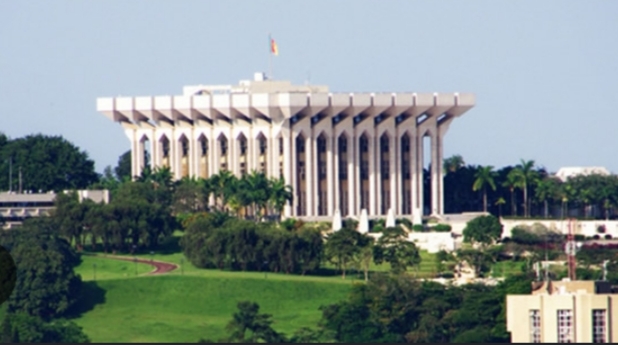
YAOUNDÉ -July 25, 2026 – Allegations made by an exiled former presidential-security officer have placed Ferdinand Ngoh Ngoh, Minister of State and Secretary-General at the Presidency, under renewed scrutiny. At stake is a question larger than the conduct of any single official: Who is exercising effective authority at Etoudi, and under whose lawful mandate?
Former Captain Donald Effoudou Awussi, who says he served within the presidential-security establishment, has accused Ngoh Ngoh and people around him of operating an unelected network of influence at the center of the state. His accusations include claims that the Secretary-General exceeded the lawful limits of his office, manipulated presidential authority and engaged in conduct the former officer characterizes as high treason. These are serious allegations, not established facts.
The Independentist News, has not independently verified every claim made by Effoudou Awussi. No court has found Ngoh Ngoh guilty of treason or of unlawfully assuming presidential powers. Ngoh Ngoh, the Presidency and any other persons implicated are entitled to respond.
The accusations nevertheless deserve careful public examination because they concern the integrity of the state’s chain of command. They arise amid persistent questions about presidential decision-making, succession and the concentration of power around officials who possess enormous influence but no independent electoral mandate.
A Powerful Office, but Not the Presidency
Ferdinand Ngoh Ngoh has served as Secretary-General at the Presidency since 2011 and has held the rank of Minister of State since 2019. His office stands at the administrative center of presidential power.
The Secretary-General processes presidential instructions, coordinates services attached to the Presidency, monitors the implementation of presidential decisions and prepares official instruments for the head of state. The position is therefore exceptionally influential. But administrative influence is not constitutional sovereignty.
The Secretary-General assists the president; he does not replace him. He may coordinate presidential decisions, but he has no independent mandate to exercise powers reserved for an elected head of state. This distinction becomes critical whenever the president is not publicly and verifiably directing the government. If consequential instructions continue to circulate in Paul Biya’s name, citizens are entitled to ask whether those instructions originated with him, whether he personally approved them and what procedures authenticate them.
Government must continue functioning during a president’s absence. That is not the controversy. The constitutional danger arises when administrative coordination quietly becomes the unaccountable exercise of presidential power.
An Insider’s Testimony Requires Evidence
Effoudou Awussi presents himself as a former insider familiar with the presidential-security establishment. He has accused Ngoh Ngoh of operating beyond the legitimate boundaries of his office and has described what he alleges to be a network of officials and private interests exercising influence around Etoudi. He has also reportedly made claims involving private conversations, foreign diplomatic relations, internal security operations and the treatment of people regarded as threats to the presidential circle.
His former position may make his testimony significant, but it does not automatically prove every accusation. Claims about confidential conversations and activities conducted behind closed doors require independent corroboration.
The former captain must therefore establish precisely what position he held, when he served and whether his responsibilities gave him direct knowledge of the events he describes. Any documents, recordings, correspondence or other evidence in his possession should be authenticated and independently examined. Other witnesses should also be invited to corroborate or challenge his account. These standards do not dismiss his testimony. They are what separate responsible investigation from political accusation.
High Treason Is Not a Journalistic Verdict
High treason carries grave legal and political consequences. It must not be transformed from an accuser’s characterization into a newspaper’s verdict. Effoudou Awussi may describe the alleged conduct in those terms. The Independentist News must report that language as his accusation. Whether any conduct constitutes treason can be determined only through credible evidence, lawful investigation and competent judicial proceedings. The immediate public-interest issue is constitutional accountability.
If any official knowingly issued unauthorized presidential instructions, interfered with lawful succession or exercised powers reserved for the head of state, the matter would demand investigation. But the existence and nature of such conduct must first be proved. The Independentist News, does not declare Ferdinand Ngoh Ngoh a traitor. It demands that the allegations be answered and that the constitutional chain of authority be made transparent.
The Vulnerability of Government by Secrecy
Paul Biya’s political system was constructed around highly centralized personal authority. Ministers, security agencies and senior administrators operate within a structure in which the president remains the ultimate source of power. Yet the system offers the public remarkably little transparency about how presidential authority is exercised during extended periods when Biya is not visibly conducting the affairs of state.
When the president is publicly engaged, the Secretary-General can credibly describe himself as implementing presidential instructions. When the president is inaccessible or largely unseen, that explanation becomes increasingly difficult for citizens and institutions to verify.
A constitutional government cannot indefinitely require the public to assume that every instruction attributed to an unseen president is authentic simply because it passes through his secretariat. This is not proof that Ngoh Ngoh has seized power. It exposes a structural vulnerability: the machinery of government may continue operating while citizens remain unable to determine who is making its most consequential decisions.
If Biya is actively directing the state, the Presidency should be capable of establishing that fact without violating legitimate medical privacy. If he is unable to discharge his responsibilities, the Constitution, not an informal palace arrangement, must govern what happens next. Silence cannot substitute for constitutional authority.
The Alleged Palace Network
The expression palace cartel is politically dramatic but evidentially imprecise. It implies the existence of an organized group controlling state decisions for private, financial or succession-related purposes. Such a conclusion cannot rest on accusation alone. However, public suspicion of informal rule has not emerged in a vacuum.
Parliament exercises limited oversight. Presidential decision-making remains opaque. Security institutions operate with insufficient public accountability. Senior officials often appear to derive their authority from personal proximity to Biya rather than from clearly defined and independently supervised constitutional powers. Secret networks flourish in the public imagination when formal institutions refuse to provide credible answers.
The government therefore carries the responsibility to explain who may transmit presidential instructions, how those instructions are authenticated and what safeguards prevent unelected officials from exercising authority that does not belong to them. Official silence will not protect Etoudi. It will reinforce the perception that the formal state has become a screen behind which competing factions struggle for control.
Succession Beneath the Surface
The controversy cannot be separated from the struggle over what follows the Biya presidency. Ngoh Ngoh is widely regarded as one of the most influential figures around the president. Other centers of power include the military and security hierarchy, the ruling party, the first family and networks associated with senior ministers. Each possesses an interest in shaping the eventual transition. The danger is not merely that one official may have become too powerful. It is that the absence of a trusted and transparent succession process could transform state institutions into weapons of factional competition.
If instructions attributed to Biya are being used to reposition officials, influence military appointments or weaken political rivals, the country could already be experiencing an informal succession struggle concealed behind the appearance of presidential continuity. Effoudou Awussi’s allegations emerge within this atmosphere. They should neither be accepted uncritically nor buried without investigation.
The larger question is whether institutions trained to obey one man can manage a lawful transfer of power when that man is no longer able or willing to exercise visible control. A system founded on personal loyalty may appear stable until its center weakens. At that point, every decree, appointment and security command becomes politically contested.
The Ambazonian Question Remains Distinct
A leadership transition in Yaoundé would not resolve the separate historical, legal and political question of Southern Cameroons/Ambazonia. The Ambazonian conflict cannot be reduced to a competition over who occupies the presidency of La République du Cameroun. Replacing Biya with another leader would not, by itself, answer the fundamental question of consent: By what freely expressed and continuing political agreement is Southern Cameroons/Ambazonia governed from Yaoundé?
The weakness of the Biya system may expose the failure of centralized rule, but it does not automatically deliver Ambazonian freedom. Nor should Ambazonia attach its political future to any faction seeking to inherit power at Etoudi.
Two questions must remain clearly distinguished: Who lawfully governs La République du Cameroun, and what legitimate political relationship, if any, exists between Yaoundé and Southern Cameroons/Ambazonia? Neither can be answered through palace secrecy.
Washington, Paris and London Are Watching
The uncertainty surrounding Etoudi is no longer merely a domestic concern. Intelligence and diplomatic establishments from Washington to Paris and London will be assessing the actual distribution of power inside the state. Foreign governments with strategic, economic and security interests in Central Africa will be examining Biya’s capacity, Ngoh Ngoh’s influence, the competing presidential factions and the reliability of instructions issued in the president’s name. They will also be evaluating the military chain of command, the Ambazonian conflict and the possibility of a disorderly transition.
Paris will be concerned about whether France’s longstanding political, economic and security relationships can survive a contested succession. Washington will be assessing the implications for constitutional government, civilian protection, counterterrorism cooperation and stability across the Gulf of Guinea and Central Africa.
London faces an additional burden: its unresolved historical responsibility toward the former British Southern Cameroons. Intelligence agencies do not publish their assessments. Diplomatic silence should not be confused with inattention. Before foreign governments announce public positions, their analysts will be identifying possible successors, mapping competing power centers and preparing for several transition scenarios.
They will ask who has access to Biya, who transmits his instructions, who controls communications, who influences military appointments and who can speak authoritatively for the state. They will distinguish the legal appearance of continuity from the actual exercise of power. This scrutiny does not prove the accusations against Ngoh Ngoh, nor does it mean Washington, Paris and London have adopted a common policy. It means the uncertainty surrounding Etoudi has become an international strategic concern.
Any successor seeking diplomatic recognition, security cooperation or financial assistance will face questions about how power was acquired and whether the transition possesses constitutional legitimacy. The palace may remain silent, but the world is watching.
The Commonwealth’s Embarrassing Silence
Britain’s caution also exposes the declining credibility of the Commonwealth. For decades, the Commonwealth’s declared commitments to democracy, human rights, constitutional government and the rule of law have been dragged through the mud by its accommodation of the Biya system. La République du Cameroun has enjoyed Commonwealth respectability while the former British Southern Cameroons, the territory providing its principal historical connection to that institution, has endured the erosion of its inherited legal and political institutions.
The Commonwealth welcomed the government but neglected the people. It accepted the flag while avoiding the constitutional history that brought La République du Cameroun into its association. The Commonwealth has been dragged through the Biya mud for decades. Its lofty declarations have been repeatedly compromised by its willingness to accommodate a political order accused of suppressing consent, weakening inherited institutions and prolonging the conflict in Southern Cameroons/Ambazonia.
Joseph Chamberlain’s imperial generation imagined British influence extending as far as the eye could see. Today, Britain’s political courage scarcely appears to extend beyond the end of its nose. The disappearance of the British Empire is not the tragedy. Empires were never entitled to govern other peoples indefinitely. The tragedy is that Britain appears to have abandoned moral responsibility together with imperial control.
London need not return as a colonial power. It must, however, confront the consequences of a decolonization process it helped supervise. Britain cannot invoke democracy elsewhere while refusing to examine the absence of freely expressed consent in a territory it once administered. Truly, the British Empire is gone. What remains uncertain is whether Britain still possesses the courage to face what it left behind.
Ngoh Ngoh and the Presidency Must Answer
Fairness requires that Ferdinand Ngoh Ngoh receive a meaningful opportunity to answer the allegations. Did he make the statements attributed to him? Has he ever transmitted or issued instructions in the president’s name without direct authorization? What procedures authenticate presidential decisions? What authority does he exercise when Biya is absent? Does he play any role in succession planning beyond his formal responsibilities? A refusal to answer would not prove guilt. Transparent answers, however, could help the public distinguish legitimate presidential administration from unconstitutional substitution.
Effoudou Awussi also bears a burden. He must provide whatever evidence supports his accusations and submit it to independent scrutiny. If his allegations rely primarily on personal recollection, that limitation must be acknowledged. Accountability runs in both directions: the Presidency must explain how authority is exercised, while the accuser must substantiate the claims he has placed before the public.
The Real Scandal Is Institutional
The responsible conclusion is not that Ferdinand Ngoh Ngoh has been proved to be a shadow emperor. Neither should Effoudou Awussi’s testimony be dismissed merely because he speaks from exile. The real story is institutional. A former security insider has accused one of the country’s most powerful unelected officials of exercising authority beyond his lawful office while uncertainty surrounds the operation and eventual succession of the presidency.
A functioning constitutional state should not require citizens to guess whether presidential instructions are authentic. It should not permit authority to migrate through personal networks without legislative scrutiny. It should not leave the public uncertain about who governs whenever the president disappears from view.
The Presidency must clarify the chain of command. Ngoh Ngoh must answer the allegations. Effoudou Awussi must produce his evidence. Independent investigators must examine the claims. Until that happens, one question will continue to hang over Etoudi: Is Ferdinand Ngoh Ngoh administering the Presidency, or has the opacity surrounding presidential authority allowed unelected officials to govern behind Paul Biya’s name?
The Independentist News does not pronounce a verdict. It demands evidence, accountability and constitutional transparency. Etoudi may control the communiqués, but it no longer controls the questions. Citizens are asking who governs them. Foreign intelligence and diplomatic establishments are assessing whether the chain of command remains credible. Southern Cameroons/Ambazonia continues to ask by what consent it is governed from Yaoundé. The world is watching. The Presidency must answer.
Ali Dan Ismael, Editor-in-chief The Independentist News
Share This Post:
THE EMPTY PALACE AND THE CLOSING CIRCLE: Why the Biya Regime Has Never Been More Vulnerable
THE EMPIRE THAT CANNOT SEE BEYOND ITS NOSE: How Britain and the Commonwealth Lost Their Moral Authority in Southern Cameroons
Related Post
THIS DAY IN HISTORY SEPTEMBER 22, 2017: THE DAY
A President Unseen, a Country Waiting: Yaoundé’s Succession Uncertainty
BEYOND THE FLAG: THE HARDER QUESTION OF BUILDING AMBAZONIA
EKONA UNDER FIRE: THREE CIVILIANS REPORTED KILLED AS RESIDENTS
The Government of the Federal Republic of Ambazonia (in
À PARAÎTRE EN DÉCEMBRE 2026: UN AUDIT DE L’ÉCONOMIE