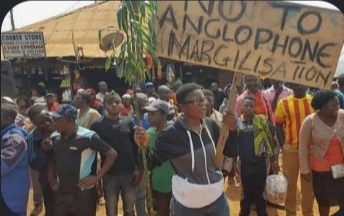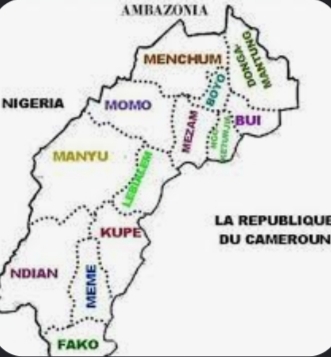


Ambazonia must protect itself from hostile penetration, foreign manipulation, financial capture and organized deception. It must also protect the citizen from arbitrary surveillance, factional accusation and political persecution conducted in the name of national security.
By Ali Dan Ismael, Editor-in-chief The Independentist News
Part IV demonstrated that an informed and politically conscious population can become a national early-warning system. From the Takembeng women’s protective wall around John Fru Ndi to Senegal’s defense of constitutional time and the Sahel’s rejection of inherited foreign arrangements, the lesson was clear: when citizens understand the threat and trust the institution under attack, they can provide a form of national protection no conventional security service can manufacture.
But popular vigilance cannot stand alone. Information gathered by citizens must reach institutions capable of evaluating it. Allegations must be tested against evidence. Public money must be traceable. Sensitive authority must be distributed. Foreign engagements must be disclosed. Intelligence bodies must remain subordinate to constitutional law. Otherwise, counterintelligence becomes another name for political fear.
Ambazonia therefore requires more than a security organization. It requires a constitutional counterintelligence doctrine: a system through which the nation can identify infiltration, espionage, financial capture, coercion, sabotage, organized disinformation and covert foreign influence without destroying civil liberty or criminalizing political disagreement. The doctrine must begin with a truth many governments discover too late: A nation is not secure merely because its leaders possess secrets. It is secure when its institutions deserve the confidence of its people.
Counterintelligence in a Constitutional Republic
Counterintelligence is commonly understood as the protection of a nation against espionage, infiltration, sabotage, covert influence and the theft of sensitive information. In authoritarian systems, however, the term is often expanded until almost every critic becomes a suspected enemy. That cannot become the Ambazonian model. A constitutional counterintelligence system must protect the republic—not the political survival of a president, faction, commander, party or liberation organization. It must defend lawful institutions without turning those institutions into instruments of intimidation.
Its legitimate responsibilities should include detecting and preventing espionage, infiltration and covert foreign direction; protecting sensitive public information and essential institutions; identifying undisclosed foreign financing and political influence; safeguarding constitutional processes and public decision-making; protecting public finances from capture; countering hostile disinformation through verified communication; and investigating serious security breaches under lawful authority.
These powers must coexist with an equally important obligation: protecting the rights, dignity and due process of every citizen. The definition matters because undefined security authority expands easily. A government empowered to investigate any conduct considered “against the national interest” can place almost anything within that category. A journalist exposing corruption, an opposition leader challenging government policy or a citizen criticizing a military operation may then be accused of weakening the state. Ambazonia must reject that logic before it becomes an institutional habit. National-security offenses must be defined by law. Treason must be defined narrowly. Political disagreement must remain lawful.
The Republic Must Never Become the Regime The first constitutional principle must distinguish the republic from the government temporarily administering it. Governments change. Presidents leave office. Parties lose elections. Ministers resign. Commanders retire. The republic remains. Counterintelligence officers must therefore swear loyalty to the constitution and the people—not personal loyalty to the head of government. Their responsibility should be to protect the continuity of constitutional order regardless of which party, coalition or transitional authority holds office.
When security institutions identify the ruler with the state, criticism of the ruler becomes treason. Opposition parties become internal enemies. Electoral competition becomes a security threat. Intelligence files become instruments of blackmail, and public resources are redirected toward preserving incumbency.
That is how a national-security service becomes a regime-protection service. Ambazonia’s experience under La République du Cameroun provides sufficient warning. A security system that places executive survival above constitutional liberty eventually fears its citizens more than it fears foreign penetration. The future republic must not reproduce the architecture it condemns.
The Constitutional Shield
A credible counterintelligence doctrine should rest upon seven constitutional protections. First, intelligence and counterintelligence powers must be established by public law. The legal mandate should identify what agencies may investigate, which methods require judicial authorization, how long information may be retained and what conduct is prohibited.
Second, intrusive surveillance should require an independent warrant based upon specific and credible facts. Political association, ethnicity, religion, journalism, peaceful advocacy or criticism of government should never be sufficient grounds.
Third, citizens must possess enforceable rights against unlawful surveillance, detention, confiscation and reputational destruction. A right that cannot be defended before an independent court is merely a promise.
Fourth, intelligence agencies must be prohibited from operating as political organizations, financing candidates, manipulating elections or conducting propaganda against lawful opponents.
Fifth, the military and intelligence services must remain under civilian constitutional authority. Civilian authority, however, must mean lawful institutional control—not personal command by an elected autocrat.
Sixth, serious accusations must be governed by due process. No citizen should be publicly labeled an infiltrator, traitor or foreign agent without authenticated evidence and an opportunity to respond. Seventh, emergency powers must expire unless renewed through a transparent constitutional process. A permanent emergency is merely dictatorship expressed through administrative language. These protections do not weaken counterintelligence. They give it legitimacy.
Distributed Authority and the Lesson of Nera
The abduction of the Nera Ten exposed the danger of concentrating leadership, sensitive information and institutional continuity in one place. A resilient national system must assume that any leader may become unavailable through arrest, illness, coercion, compromise, resignation or death. It must therefore be designed so that no single loss can paralyze the government or disable the national cause.
This requires distributed authority. The president should not personally control diplomacy, intelligence, military command and national finance. The intelligence director should not possess unrestricted power over investigation, surveillance and prosecution. A single fundraiser should not control both the receipt and expenditure of national contributions.
Sensitive decisions should require more than one lawful authorization. Succession procedures should be written before a crisis occurs. Emergency replacements should receive limited mandates with defined expiration dates. Essential records should be preserved securely in more than one authorized location. Authority should be divided among institutions whose responsibilities overlap only enough to create accountability.
The principle is simple: No single person should possess enough authority to capture the republic. No single arrest should disable the government. No single betrayal should expose the entire national system. The institution must survive the individual. Compartmentalization Without Secret Government. Counterintelligence requires confidentiality. Witness identities, ongoing investigations, protective arrangements, diplomatic communications and certain operational details cannot always be made public immediately.
But confidentiality must not become government by secrecy. Information should be compartmentalized according to lawful responsibility. An official should receive the information necessary to perform his duties—not unrestricted access to every sensitive activity of the state. Every compartment must nevertheless remain accountable to an authorized oversight institution. Secret expenditure must still be audited. Classified operations must still be reviewed. Confidential diplomatic commitments must still be recorded within the lawful government.
The distinction between legitimate secrecy and political concealment lies in accountability. Legitimate secrecy temporarily restricts public access to protect a lawful national interest. Political concealment hides information to protect misconduct, private enrichment, unauthorized commitments or abuse of authority. No official should be permitted to classify information merely because its disclosure would embarrass the government. Classification must protect the republic—not reputations.
Financial Sovereignty Is National Security
Political movements are often infiltrated through money long before they are penetrated through ideology. A donor offers assistance without clearly identifying the source. An intermediary promises access to foreign officials. A leader receives private travel, accommodation, consulting income or commercial opportunities. Funds collected for national purposes pass through personal accounts. A commander develops a financial network independent of political authority. Each arrangement may be defended as a practical necessity. Together, they can transfer national decision-making into private hands. Ambazonia must therefore recognize financial transparency as a counterintelligence instrument.
Every institution collecting money in the name of the nation should operate through authorized accounts. Public contributions should never be deposited into the ordinary personal account of a leader or official. Collection, custody, approval, expenditure and audit should be divided among different officers. Large or unusual donations should undergo source verification. Foreign gifts, sponsored travel, consulting relationships and material benefits received by senior officials should be disclosed to an independent ethics authority.
Confidential security spending may require restricted reporting, but it should never escape review. A small security-cleared audit body can examine such expenditure without revealing operational details publicly. Citizens may not need to know the identity of every protected source or the details of every sensitive activity. They nevertheless have the right to know that national money was lawfully authorized, independently reviewed and used for a legitimate purpose. A nation that cannot trace its money cannot protect its sovereignty.
Foreign Engagement Without Foreign Capture
Ambazonia cannot isolate itself from the world. It requires diplomatic relationships, academic partnerships, commercial investment, security cooperation and support from states, institutions and civil society. The danger lies not in foreign contact. It lies in undisclosed obligation. Every country acts according to its interests. A foreign government may support one Ambazonian objective while opposing another. An institution may offer a scholarship, conference invitation or research partnership for legitimate reasons. It may also seek information, influence or privileged access.
Mature diplomacy does not respond with paranoia. It responds with rules. No individual should possess authority to make private commitments affecting national policy without a written mandate. Significant diplomatic engagements should be institutionally recorded. Gifts and sponsored travel should be disclosed. Negotiators should receive defined instructions and report through lawful channels.
Foreign partners should understand that Ambazonia welcomes cooperation but cannot be purchased through personalities. The republic must distinguish access from recognition, assistance from dependency and friendship from strategic interest. A photograph is not a treaty. An invitation is not diplomatic recognition. A scholarship is not evidence of espionage. But none of these should place an official beyond disclosure and accountability.
Leadership Vetting Without Political Purges
Individuals entrusted with sensitive responsibilities should undergo appropriate vetting. Their identity, qualifications, professional history, significant conflicts of interest and relevant foreign financial relationships should be examined. Vetting, however, must never become ideological purification. A person should not be excluded merely because he criticized a leader, belonged to a rival organization, studied abroad, married a foreign citizen or previously supported a different political strategy. Regional, ethnic, religious or family identity must never be treated as evidence of disloyalty.
The purpose of vetting is to identify specific vulnerabilities and undisclosed conflicts—not to manufacture political conformity. A constitutional system should distinguish among three questions: Is the person competent? Is the person trustworthy with the responsibilities of the office? Does the person possess a conflict or vulnerability requiring management?
A disclosed vulnerability may be manageable. An undisclosed vulnerability is often more dangerous. A person with relatives living under La République du Cameroun may face pressure, but that fact alone does not make him disloyal. The appropriate response may be to adjust access, provide support or strengthen protective safeguards. Vetting must protect people as well as institutions. It must never become a license for humiliation, rumor or factional revenge.
MICE as Institutional Awareness
Money, ideology, coercion or compromise, and ego—the vulnerabilities summarized by the acronym MICE—should be incorporated into leadership and public-service education. The framework should not encourage citizens to suspect everyone. Its purpose is to explain why national institutions must not depend upon supposedly perfect individuals. Money is restrained through disclosure, separation of financial duties and independent audit. Ideological manipulation is restrained through pluralism, constitutional procedure and evidence-based debate. Coercion is reduced through distributed knowledge, support for threatened personnel and protected channels for reporting pressure.
Ego is restrained through term limits, collective decision-making, transparent mandates and a political culture in which titles never replace accountability. No screening process can guarantee that an individual will never be compromised. The stronger defense is an institutional system that limits the damage any compromised individual can cause. Counterintelligence must therefore ask more than, “Can this person be trusted?” It must also ask, “What happens if this person fails?”
An Independent Constitutional Security Commission
Ambazonia should establish an independent Constitutional Security and Intelligence Commission. The commission should not conduct ordinary intelligence operations. Its purpose should be to provide civilian oversight, investigate abuse and ensure that national-security institutions remain within their legal mandate. Its membership should include people with demonstrated expertise in constitutional law, finance, digital evidence, human rights, national security and public administration. Appointments should require cross-institutional approval so that no president, party or faction can select the entire commission.
Its responsibilities should include reviewing compliance with intelligence laws; examining allegations of politically motivated surveillance; auditing classified expenditure through secure procedures; receiving protected disclosures from security personnel; investigating conflicts of interest involving senior officials; reviewing the use of emergency authority; and referring serious violations to the legislature, courts or other competent bodies.
The commission should publish periodic reports that protect legitimate secrets while informing the public about institutional performance, violations discovered and corrective actions taken. Members should hold staggered terms and be removable only for defined cause. They should not simultaneously occupy party leadership positions or command roles in institutions they oversee. Oversight must be independent enough to uncover abuse and responsible enough to protect genuine national-security information.
Legislative Oversight and the Power of the Purse
A representative legislature should possess authority over counterintelligence laws, budgets and senior appointments. A specialized multiparty committee may review classified matters under strict legal obligations. Its members should be permitted to question agency leaders, inspect authorized records and investigate substantial failures. The committee should not direct operations or expose protected sources. Its purpose should be to ensure that national-security institutions operate lawfully, efficiently and within their approved budgets.
Control over funding is particularly important. An agency able to raise and spend money outside the public financial system can become a state within the state. Secret commercial enterprises, unauthorized fees, private donor arrangements and off-budget operations should therefore be prohibited. The power of the purse must remain with constitutional institutions. Security necessity cannot become financial independence from the republic.
The Courts as Guardians of the Boundary
Independent courts must guard the boundary between lawful intelligence activity and abuse. Judges should review applications for intrusive surveillance, exceptional searches and extended detention. They must possess sufficient security knowledge to evaluate government claims rather than automatically accepting the executive’s assertion that secrecy is necessary. Citizens who believe they were unlawfully targeted should have access to a meaningful remedy. Where evidence cannot safely be disclosed in public, the court should employ protected procedures that preserve national security without making government allegations impossible to challenge.
Secret evidence must never become unquestionable evidence. The judiciary should also review emergency powers and disputes concerning classification. A government must not be the sole judge of whether its secrecy is lawful. No intelligence director, military commander or president should stand beyond judicial review. A Professional and Politically Neutral Service The counterintelligence service should be professional, merit-based and politically neutral.
Recruitment should draw upon qualified investigators, lawyers, financial analysts, cybersecurity specialists, linguists, regional experts and public administrators. Training should include constitutional rights, evidence handling, ethics, protection of civilians and the lawful limits of state authority. Political party officers should not direct professional investigations. Intelligence personnel should be prohibited from campaigning in their official capacity, using classified information to influence elections or investigating political opponents without lawful cause.
Career advancement should depend upon competence and integrity—not ethnic affiliation, factional loyalty or personal access to political leaders. The institution must also develop a culture in which officers can question unlawful instructions. “Orders from above” cannot excuse constitutional violations. Every official should understand that loyalty to the constitution may sometimes require refusing a political command.
Protected Channels for Whistleblowers
A counterintelligence system that cannot receive internal warnings will discover its failures too late. Officials, contractors and citizens should have protected channels through which they can report unlawful surveillance, financial misconduct, foreign influence, fabricated evidence, abuse of classified authority or deliberate violations of constitutional rights. The reporting system should permit confidential submission to an inspector general, the oversight commission or an appropriate judicial authority. Retaliation against a person making a good-faith disclosure should be punishable.
Protection should not extend to deliberate fabrication, personal defamation or reckless exposure of information that endangers lives. But the fact that a disclosure embarrasses an agency should not transform the person reporting misconduct into a traitor. Sometimes the person protecting the nation is the one warning that its protectors have crossed the constitutional line.
Digital Evidence in the Age of Artificial Intelligence
Artificial intelligence has made evidence authentication a national-security necessity. Voices can be cloned. Videos can be manipulated. Documents can be fabricated. Authentic recordings can be edited so that genuine words convey a false meaning. Social-media accounts can impersonate leaders, issue false commands and provoke retaliation before corrections become possible.
Ambazonia must establish professional standards for receiving, preserving and examining digital evidence. Original files should be retained. The chain of custody should be recorded. Complete recordings should be obtained where possible. Metadata, surrounding communications and independent corroboration should be examined. Individuals named in serious allegations should receive an opportunity to respond.
No official investigation should rely solely upon a compressed social-media clip. No journalist should claim technical certainty without competent analysis. No citizen should be punished merely because an accusation has gone viral. The proper response to technological deception is not to dismiss every piece of evidence as fake. It is to strengthen the institutions capable of determining what is authentic.
The Constitutional Boundary
Ambazonia must protect itself from hostile penetration, foreign manipulation, financial capture and organized deception. It must also protect the citizen from arbitrary surveillance, factional accusation and political persecution conducted in the name of national security.
These objectives are not contradictory. They are the two sides of constitutional counterintelligence. The republic must possess enough authority to investigate genuine threats but never enough unchecked authority to manufacture enemies. It must preserve necessary secrets without permitting secret government. It must vet leaders without conducting political purges. It must engage foreign partners without allowing private personalities to mortgage national sovereignty.
Most importantly, it must create institutions capable of surviving the failure of any individual. A president may be compromised. A commander may become ambitious. A fundraiser may misuse public money. An intelligence officer may abuse classified authority. A celebrated leader may place personal survival above the national cause. The purpose of constitutional architecture is not to pretend these failures cannot occur. It is to ensure that when they occur, the nation does not collapse with the individual.
Ambazonia does not require a counterintelligence system that asks citizens to trust leaders blindly. It requires one that makes leaders verifiably trustworthy. That distinction separates a constitutional republic from a regime. The constitutional doctrine establishes the boundary. But principles alone cannot protect the nation. They must be converted into civic education, Home Front participation, independent journalism, transitional institutions, emergency safeguards and measurable standards of performance.
Part VI will present that implementation framework. It will ask what AAC III should establish, how the Home Front should participate, how emergency authority should end and how the public can determine whether the system is protecting the republic or merely protecting its rulers.
The final question will not be whether Ambazonia can build a secret service. It will be whether Ambazonia can build institutions worthy of the people’s protection. Because weapons may defend a government. Secrecy may protect an operation. Surveillance may expose an adversary. But only legitimacy can secure a republic. The republic must never become the regime. And the strongest fortress must remain trust.
Ali Dan Ismael, Editor-in-chief The Independentist News