





News commentary
We are home to news on Cameroon and the CEMAC region. We are dedicated to honest and reliable reporting. We are the voice of the Cameroonian people and their fight for freedom and democracy at a time when the Yaoundé government is silencing dissent and suppressing democratic voices.

When Rome arrives, it does not simply bless. It observes. And in observing, it quietly shapes the future. The question is not whether the Pope will see corruption or contradiction. The question is whether Cameroon is prepared for what Rome sees — and remembers.
By Ali Dan Ismael Editor-in-Chief, The Independentistnews
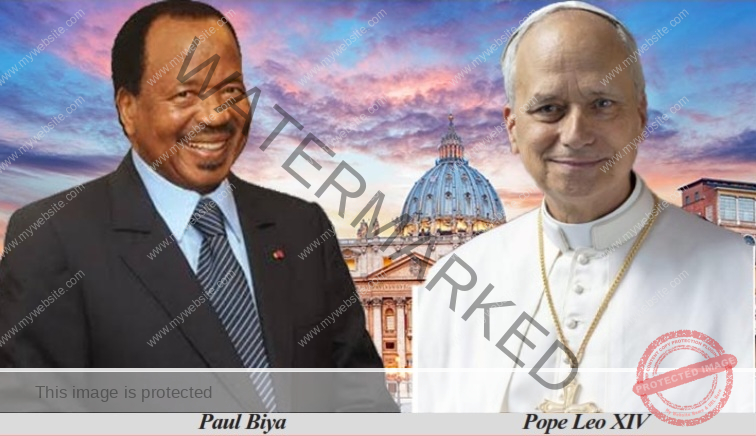
In April 2026, Pope Leo XIV will arrive in Cameroon. His itinerary — Yaoundé, Bamenda, and Douala — reflects a country divided between political authority, wounded periphery, and economic vitality.
But the visit will unfold against a difficult backdrop: socio-political stagnation, economic strain, allegations of human rights abuses, and public mistrust of institutions — including, at times, the religious establishment itself.
The key question is no longer whether the Pope is coming. It is what Rome will encounter — and how both Church and State will respond.
A Pattern of Political Choreography
Cameroon’s political culture is not unfamiliar with high-profile visits. Historically, Yaoundé has responded to international scrutiny with careful stage management: ceremonial precision, tightly controlled messaging, curated public interactions, and extensive security deployment.
Based on past performance, one can reasonably expect: Heavy security presence, especially in Bamenda, Carefully organized public events, State-aligned messaging emphasizing unity and stability, Strong visual optics of institutional order. Governments everywhere manage image during global visits. Cameroon will likely be no exception.
But the Vatican is not a typical diplomatic guest. Can a State “Corrupt” a Papal Visit? Some critics ask a blunt question: will Yaoundé attempt to politically co-opt or “corrupt” the visit?
In practical terms, co-optation would not mean bribery or overt manipulation. It would mean shaping optics — ensuring that the visit appears as international endorsement of the political status quo.
However, the Holy See is one of the oldest diplomatic institutions in the world. It has operated through monarchies, dictatorships, republics, and revolutionary regimes. Papal entourages are briefed extensively before arrival. They receive reports not only from governments, but from: Apostolic Nunciatures, Local bishops, Missionary networks, Humanitarian agencies, Independent observers. The Vatican rarely arrives uninformed.
A papal visit can be ceremonially managed, but it is difficult to politically “corrupt.” The Vatican’s strength lies precisely in its distance from electoral politics.
The Question of Prelates and Power
A more delicate issue concerns the local Church. In many African states, including Cameroon, religious institutions operate within close proximity to political authority. This proximity can produce tension: collaboration for stability on one hand, and accusations of excessive accommodation on the other.
Some segments of civil society believe certain prelates have, at times, appeared too aligned with political structures. Whether fair or exaggerated, this perception exists.
Will the Pope see such dynamics? Almost certainly. The Vatican evaluates episcopal leadership continuously. Papal visits are not merely pastoral celebrations; they are also moments of internal ecclesiastical assessment. Meetings with bishops are often private and candid. Rome listens carefully.
But will the Pope “promote regardsless”
The Catholic Church operates through gradual institutional processes, not reactive political gestures. Public criticism of individual bishops during state visits is highly unlikely. Vatican diplomacy values internal correction over public embarrassment. What is more probable is subtle recalibration.
When a Pope emphasizes themes like prophetic courage, moral independence, protection of the vulnerable, and integrity in public life, those messages are heard most clearly by clergy. The correction, if needed, is often delivered through emphasis rather than confrontation.
What the Papal Entourage Will Actually Observe
The entourage will observe beyond speeches: The tone of security in conflict-affected areas. The freedom with which citizens gather. The atmosphere surrounding clergy and civic leaders. The visible economic realities outside ceremonial zones. They will note contradictions between official messaging and lived experience.
They will also evaluate the Church’s posture: Is it visibly close to political power? Is it advocating reconciliation? Is it protecting civilians? Is it maintaining moral distance? The Vatican understands that moral authority is its most valuable currency. It does not easily risk that currency.
The Limits of Political Stagecraft
Governments can choreograph events. They can shape crowd composition and control podium access. But they cannot fully choreograph perception.
The Pope will see official receptions in Yaoundé.
He will also see the condition of communities in Bamenda. He will hear carefully prepared speeches.
He will also hear quiet testimonies. Diplomatic experience has taught the Holy See how to read atmospheres.
A Subtle Test for Yaoundé
If past behavior is a guide, the government will emphasize: National unity, Sovereignty, Stability, Development achievements.
Yet the more delicate question is whether it will allow space for authentic expression — especially in regions marked by conflict. Excessive securitization may protect order, but it can also signal anxiety. Restraint, on the other hand, signals confidence. The world — and Rome — will notice the difference.
Will Corruption Within Institutions Be Ignored?
No major institution is immune from human weakness. The Church itself acknowledges this. But the Vatican’s long-term interest lies in preserving moral credibility. If corruption — political or ecclesiastical — becomes too visible, silence becomes strategically costly.
The Holy See historically prefers reform through internal channels. It rarely confronts publicly during ceremonial visits. Yet it does not forget what it observes.
Promotions within the Church are not typically decided during apostolic journeys. They are influenced by broader assessments of leadership integrity, pastoral effectiveness, and moral posture over time. Rome has patience.
The Real Question
The more important question is not whether Yaoundé can influence optics. It is whether Cameroon — both state and Church — are prepared for moral scrutiny. The papal visit will not overthrow systems. It will not deliver political verdicts. But it will create a moment of exposure. Exposure to global attention. Exposure to moral language. Exposure to contrast between ceremony and condition.
When Rome arrives, it does not simply bless. It observes. And in observing, it quietly shapes the future. The question is not whether the Pope will see corruption or contradiction. The question is whether Cameroon is prepared for what Rome sees — and remembers.
Ali Dan Ismael Editor-in-Chief
Share This Post:
Understanding the Risks of the Papal Visit: A Practical Reflection for the April 2026 Moment
A Moment to Speak Wisely: How Ambazonian Civil Society Should Approach the Papal Visit
Related Post
IS THE WORLD LISTENING: THREE DAYS FOUR FRONTLINES, ASA
SEPTEMBER 24, 1965, THIS DAY IN HISTORY: From Equal
AMBAZONIA’S WAR- IS BIGGER THAN YAOUNDÉ: BRITAIN, FRANCE AND
THE DAY SEPTEMBER 22 1961: — WHAT AMBAZONIA CAN
TRUMP’S “SUPER INTELLIGENCE” ERA: WHAT IT REALLY MEANS —
Why Is Ambazonia More Powerful Than many Imagine.