

Political unions are like marriages. They survive only when built on consent, equality, respect, and shared vision. When one side imposes domination, erases identity, and uses violence to hold the other hostage, the union is already dead.
By Kemita Ashu, Independentist Contributor
The world pretends that political separation is rare, dangerous, or illegitimate. That is not true. History is full of nations that walked away from failed unions, oppressive arrangements, and political marriages that no longer made sense. Separation is one of the most common outcomes when a people are denied dignity, identity, justice, or equality. Ambazonia is not an exception. It is the rule. The only difference is that some people refuse to acknowledge it. Political Separation Is Normal. It Happens Everywhere.
From Europe to Asia, from Africa to the Middle East, nations have separated the moment they realized their partnership was built on force, fraud, or fantasy. Korea split because the two sides refused to be governed by opposing ideologies. Vietnam split because each half wanted its own destiny. Germany split for forty years and then reunited when it chose to. Ireland split because two identities could never live under one roof. Czechoslovakia split peacefully when the marriage ended. Yugoslavia exploded into multiple nations when its internal contradictions could no longer be contained. Sudan and South Sudan separated after bloodshed made unity impossible. Bangladesh walked away from Pakistan when its identity and dignity were crushed. Kosovo broke free from Serbia after state violence crossed a line.
There is nothing unusual here. When a union becomes toxic, nations leave. This is the global norm, not the exception. Africa Has Done It Too. And Will Do It Again. Eritrea left Ethiopia after thirty years of war. South Sudan left Sudan after decades of marginalization. Somaliland has operated as a de facto state since 1991. Western Sahara continues its long struggle for sovereignty.
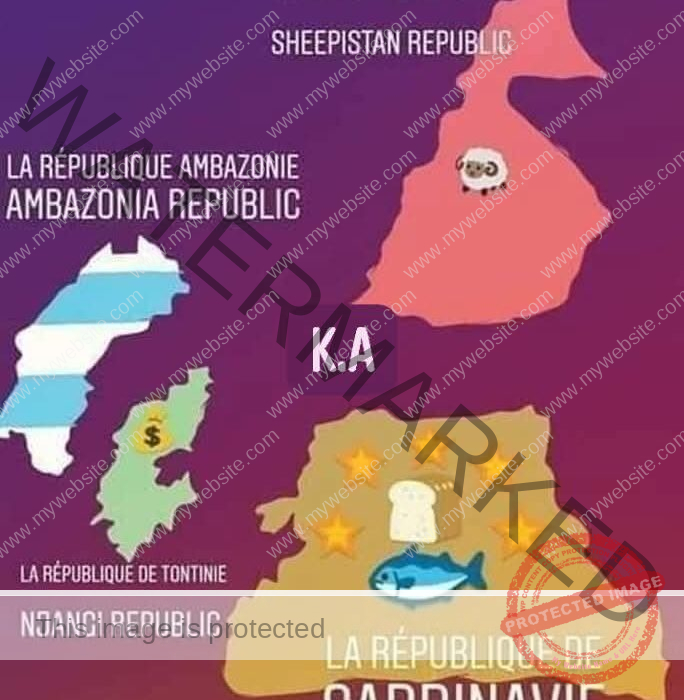
Africa’s borders were drawn by colonial rulers who never asked the people what they wanted. These borders are not sacred. They are political accidents. And because they are political accidents, they change. Ambazonia is simply the next chapter in this unfolding story.
Why Ambazonia’s Case Is Not Just Legitimate — It Is Unavoidable
Those who try to smear Ambazonia’s cause as radical or unrealistic should study history. Every nation that separates follows the same pattern. Ambazonia checks every box.
- The union never legally existed in the first place: The so-called union of 1961 between British Southern Cameroons and La République du Cameroun was never completed, never signed, never ratified.
- International law is clear. Without a treaty, there is no union: Ambazonia is not breaking away. It was never legally joined. The federal promise was destroyed by Yaoundé The 1972 referendum was illegal.
- The 1984 name change was a constitutional divorce initiated by La République du Cameroun itself. If anyone seceded, it was Yaoundé.
- For decades, Ambazonians have been treated as subjects, not citizens: Discrimination. Erosion of rights. Erasure of identity. Economic exploitation. Political exclusion. And since 2016, open warfare unleashed on civilians: burned villages, mass arrests, disappearances, killings, torture, and millions displaced. No nation on earth remains in such a union voluntarily.
- The people of Ambazonia have made their decision: A nation is not defined by someone else’s permission. A nation is defined by the will of its people. Ambazonians have spoken, resisted, endured, and insisted. The decision has already been made. The question is not whether Ambazonia wants freedom. The question is how long the world will pretend not to notice.
History Favors Those Who Choose Dignity Over Submission
Every nation that ever separated faced hostility, resistance, propaganda, and denial. At the beginning, they were called rebels, terrorists, separatists, radicals, or dreamers. By the end, they were called independent states.
Those who oppose Ambazonia’s liberation are on the wrong side of history, just like those who opposed the independence of Eritrea, South Sudan, Kosovo, Bangladesh, and every other nation that fought for its dignity. The world has a short memory. Ambazonians do not.
Conclusion: A Failed Union Cannot Be Saved by Force
Political unions are like marriages. They survive only when built on consent, equality, respect, and shared vision. When one side imposes domination, erases identity, and uses violence to hold the other hostage, the union is already dead.
Ambazonia is not an anomaly. It is not a rebellion. It is not an inconvenience to be managed. Ambazonia is a nation reclaiming what was stolen. A people repairing what was broken. A sovereignty reasserting itself after decades of suffocation.
The world must accept what history has already confirmed: Ambazonia is not leaving Cameroon. Ambazonia was never part of Cameroon. The truth is simple. Some partnerships collapse on their own. Others collapse because the oppressed finally rise. Either way, the result is the same. A free nation.
Kemita Ashu