

If the African Union seeks moral authority on the global stage, it must demonstrate that African lives are defended not only in speeches about history, but in decisions taken in real time. A house divided between memory and responsibility cannot endure
By Timothy Enongene
Guest Editor-in-Chief, Independentistnews
A United Voice Abroad, A Quiet Room at Home
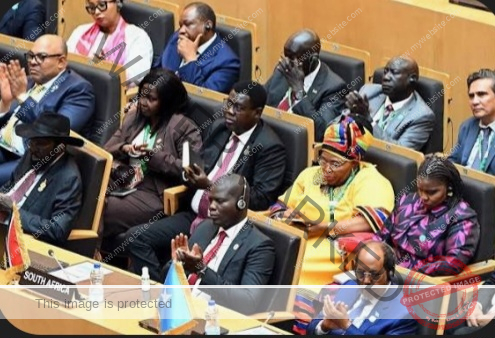
A painful irony is unfolding at the heart of Africa’s diplomacy. At the 39th African Union Summit, leaders spoke with rare unity in demanding reparations for colonial exploitation, enslavement, and genocide. Their call for global accountability was clear, confident, and unapologetic.
Yet when attention turns to ongoing crises within the continent, that same unified voice grows noticeably subdued. The contrast invites an uncomfortable but necessary question: can Africa demand justice for the wounds of history while hesitating to confront the suffering of the present?
The War That Rarely Reaches the Podium
The conflict in the North-West and South-West regions of Cameroon—described by its supporters as the Ambazonian War of Independence—has now entered its tenth year. Humanitarian organizations and rights groups have documented allegations of extrajudicial killings, village burnings, mass displacement, and prolonged insecurity affecting civilians on multiple sides of the conflict.
Despite its duration and human cost, the crisis has struggled to secure sustained prominence on continental agendas. It surfaces occasionally, but rarely with the urgency its humanitarian dimensions appear to demand. For many observers, it feels less like a continental emergency and more like a delicate subject to be managed cautiously.
Institutional Solidarity or Institutional Paralysis?
Over the past decade, critics have suggested that the African Union often prioritizes institutional cohesion over difficult confrontation. Member states remain cautious about setting precedents that could later be turned inward. Sovereignty, after all, is a foundational principle of the Union.
But when sovereignty becomes an unquestioned shield, it risks evolving into paralysis. Cameroon’s re-election to the Peace and Security Council while remaining a party to an active internal conflict has reinforced perceptions that political considerations may outweigh moral clarity. Whether fully justified or not, such perceptions weaken public confidence in continental institutions.
The African Union was conceived not only as a forum of governments, but as a custodian of peoples.
A Question for the Continent—and the Diaspora
To fellow Africans and to the global Black diaspora, this moment calls for honest reflection. Around the world, we mobilize against racial injustice and state violence. We speak forcefully when Black lives are lost abroad. We demand accountability in the name of dignity. But do we sustain the same urgency when violence unfolds within our own borders?
This is not a competition of suffering, nor a dismissal of historical injustice. Reparations matter. Historical truth matters. But justice must be consistent to remain credible. When African lives are lost in prolonged internal conflicts, silence—or procedural restraint—can feel dangerously close to indifference.
Justice Must Face Both Directions
Justice cannot look only backward to recover what was stolen centuries ago. It must also look forward—and inward—to protect those at risk today.
As long as the Ambazonian crisis, and similar conflicts across the continent, are treated strictly as “internal matters” beyond robust continental engagement, the vision of African dignity remains unfinished.
If the African Union seeks moral authority on the global stage, it must demonstrate that African lives are defended not only in speeches about history, but in decisions taken in real time. A house divided between memory and responsibility cannot endure.
Timothy Enongene
Guest Editor-in-Chief, Independentistnews