










Commentary

We are home to news on Cameroon and the CEMAC region. We are dedicated to honest and reliable reporting. We are the voice of the Cameroonian people and their fight for freedom and democracy at a time when the Yaoundé government is silencing dissent and suppressing democratic voices.

If Africa’s largest democracy is willing to learn from one of Africa’s most efficient administrations, then perhaps the continent is witnessing the emergence of a new political maturity—one based not on pride, size, or ideology, but on results, competence, and institutional excellence. That would be good news not only for Nigeria and Rwanda, but for Africa as a whole.
By Ali Dan Ismael
Editor-in-Chief, The Independentist News
The growing relationship between Nigeria and Rwanda may signal an important shift in African diplomacy: the recognition that influence and size are no longer substitutes for institutional efficiency and state capacity.
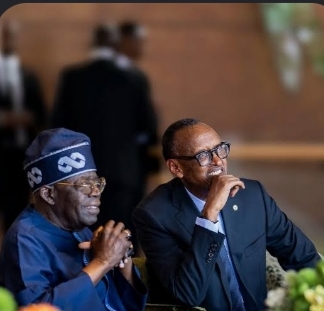
Less than a year ago, few observers would have predicted that President Bola Ahmed Tinubu and President Paul Kagame would emerge as one of Africa’s most closely watched diplomatic pairings. Yet reports of a discreet meeting in Paris and growing cooperation between their respective administrations suggest that something more significant than routine diplomacy may be taking shape. The relationship deserves attention not because of personalities but because of what it may reveal about the future direction of African governance and inter-African cooperation.
Nigeria and Rwanda represent two very different African realities. Nigeria is Africa’s demographic giant, one of the continent’s largest economies, and an undisputed diplomatic heavyweight within Economic Community of West African States and the wider continent. Its influence in African affairs is immense, and its economic and cultural reach extends well beyond its borders. Rwanda represents something different. It is relatively small in territory and population but has developed an international reputation for administrative discipline, policy execution, digital governance, public sector efficiency, and institutional coordination.
One country possesses scale. The other possesses speed. One offers markets and capital. The other offers management and implementation capacity. Increasingly, it appears that both recognize the value of learning from one another.
Perhaps the most interesting aspect of this emerging relationship is psychological rather than economic. For decades, Nigeria often viewed itself as Africa’s political teacher and diplomatic anchor. As Africa’s largest population center and one of its largest economies, Nigeria traditionally projected influence outward rather than looking outward for lessons. Yet mature nations understand that learning is a permanent requirement of leadership rather than a sign of weakness.
The strongest states are not those that believe they possess all the answers. They are the ones willing to ask difficult questions. Who is doing something better than us? What can we learn from them? How can we adapt successful models to our own circumstances without abandoning our own strengths? If Nigeria is genuinely studying aspects of Rwanda’s administrative experience, this would represent not weakness but strategic maturity.
For much of Africa’s post-independence history, size was often mistaken for strength. Large populations were assumed to guarantee influence. Natural resources were expected to generate prosperity. Military size was associated with security and stability. Experience has shown that these assumptions are often incomplete. The twenty-first century increasingly rewards states that can deliver services efficiently, execute policies effectively, manage public finances responsibly, attract investment confidently, and maintain institutional credibility over time.
State capacity matters. Implementation matters. Institutions matter. The modern contest between nations is increasingly a contest of competence rather than geography. The growing relationship between Abuja and Kigali may therefore carry a broader lesson for the continent. No single African country possesses a monopoly on good governance or successful public policy. Nigeria can offer lessons on entrepreneurship, finance, cultural influence, and continental diplomacy. Rwanda can provide lessons on administrative efficiency, digital government, and institutional discipline. Botswana offers valuable experience in resource governance and fiscal management. Mauritius demonstrates the benefits of strong institutions and investor confidence. Kenya continues to provide important lessons in technology, innovation, and entrepreneurship.
Africa’s future success story may emerge not from copying any single national model but from combining the best lessons from many different experiences. Perhaps the most encouraging aspect of this development is that the learning appears to be taking place within Africa itself. For too long, African governments looked almost exclusively to Europe, North America, or Asia for policy inspiration. Increasingly, some of the most relevant lessons for African development may come from neighboring African states facing similar historical, demographic, institutional, and economic realities.
That may ultimately prove to be one of the most important developments of all. The era in which African states looked outward for every answer may gradually be giving way to an era in which Africa increasingly looks inward for solutions that are better adapted to African realities.
History rarely rewards nations that cling stubbornly to old assumptions. It rewards those willing to adapt, innovate, and learn continuously. If the growing relationship between Abuja and Kigali reflects a broader willingness among African governments to learn from one another rather than lecture one another, then this quiet diplomatic relationship may prove far more important than it currently appears.
The strongest nations are not those that never learn. They are those that never stop learning. Perhaps that is the lesson Africa needs most as it enters the second quarter of the twenty-first century. If Africa’s largest democracy is willing to learn from one of Africa’s most efficient administrations, then perhaps the continent is witnessing the emergence of a new political maturity—one based not on pride, size, or ideology, but on results, competence, and institutional excellence. That would be good news not only for Nigeria and Rwanda, but for Africa as a whole.
Ali Dan Ismael
Editor-in-Chief, The Independentist News
Share This Post:
IS LA RÉPUBLIQUE DU CAMEROUN FINALLY LEARNING? SOSUCAM AND THE LIMITS OF THE CENTRALIZED STATE
WILL BRITAIN’S AFRICA POLICY SURVIVE KEIR STARMER? WHY POLITICAL INSTABILITY IN LONDON MATTERS FOR AFRICA
Related Post
THE SECOND RETURN: FROM THE PAIN OF SEPARATION TO
WHEN THE REGULATOR BENDS: WHAT THE VISION 4 AFFAIR
PROPHECY, POLITICS, AND THE AMBAZONIAN QUESTION (PART II) :
IF SOMALILAND MATTERS TO WASHINGTON, WHY NOT SOUTHERN CAMEROONS?
A CALL FOR GENERATIONAL RENEWAL: From Individual Leadership to
The Government of the Federal Republic of Ambazonia (in