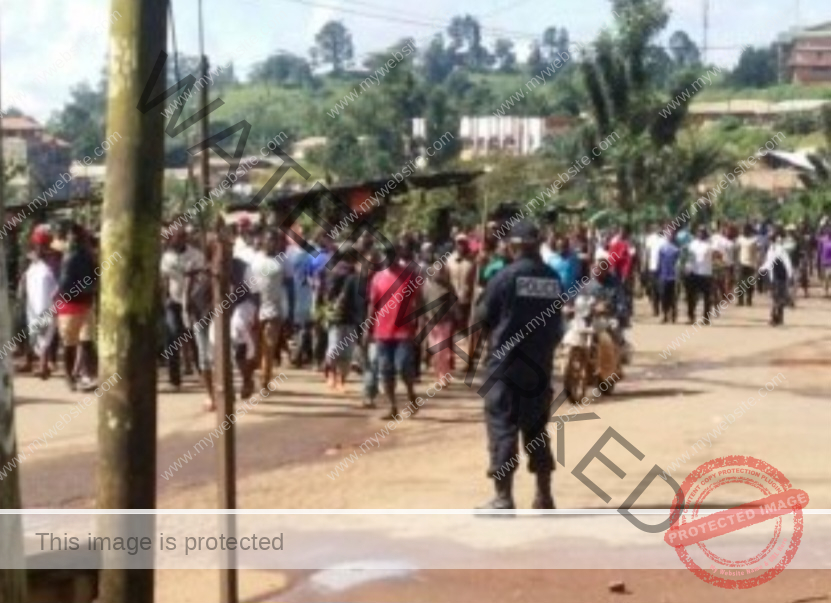


Cameroon may still control territory by force. It may still benefit from international inertia. But legitimacy cannot be maintained at gunpoint. A government that wages war on civilians forfeits the moral and legal basis to rule them. In Southern Cameroons, the crisis is no longer about reform—it is about whether a people can be governed by a state that has turned against them.
By Ali Dan Ismael and Kemi Ashu
For years, the conflict in Southern Cameroons—also known as Ambazonia—has been described as a political dispute, an internal security problem, or a separatist crisis. But recent developments force a more basic question: Can a state that governs through fear and violence still claim legitimate authority? Increasingly, the answer is no.
What Legitimacy Really Means
A government is not legitimate simply because it has a flag, an army, or international recognition. Legitimacy comes from three basic responsibilities: protecting civilian life, enforcing the law fairly, and holding its own officials accountable. When these duties collapse, what remains is not governance—but coercion.
A Critical Turning Point: Dissent from Within
A recent open letter by a group identifying itself as the United Front of Loyal Defense and Security Forces is significant not because of its tone, but because of who it claims to represent: members of Cameroon’s own defense and security institutions. The group publicly accused senior authorities of transforming the security forces into tools for political and clan interests, rather than instruments of public protection. It named specific officials and linked them to patterns of abuse against civilians. This matters because state legitimacy begins to collapse the moment a government’s own security professionals disavow its actions.
From Law Enforcement to Organized Repression
According to consistent reports from civilians, churches, journalists, humanitarian workers, and now insiders, security operations in Southern Cameroons have included extrajudicial killings, arbitrary arrests and torture, collective punishment of communities, enforced disappearances, and total impunity for perpetrators. These are not accidental excesses. They reflect a system where violence replaces law. When repression becomes routine, the state ceases to act as a neutral authority and instead behaves like an occupying force.
Naming Responsibility Ends Denial
One reason abuse persists is anonymity—“the system,” “the government,” “security forces.” But legitimacy erodes rapidly when responsibility is personal and visible. The internal dissent explicitly associates repression with senior officials, including Paul Atanga Nji, whose ministry oversees administrative and security measures affecting civilian life; Martin Mbarga Nguele, responsible for police units repeatedly implicated in lethal abuse; and Galax Etoga, linked to intelligence and security coordination associated with serious violations. When crimes are named, documented, and attributed, plausible deniability disappears—and with it, legitimacy.
Why This Matters for Southern Cameroons (Ambazonia)
Southern Cameroons is not simply dissatisfied with governance. It is experiencing rule by force from a state that increasingly fails even its own legal standards. A simple principle applies: a state that cannot protect civilians cannot claim their consent. When authority is maintained only through military presence and fear, governance has already failed. Under such conditions, claims of sovereignty become hollow.
Self-Determination: Not a Preference, but a Remedy
International law recognizes the right of peoples to self-determination when they face systematic violence, denial of political participation, and governance through repression rather than consent. In this context, Ambazonia’s demand is not about ideology or ambition. It is about survival, protection, and lawful governance. Self-determination becomes a remedy when the existing state structure has become the source of harm.
A Message to the Public and the World
This is not a call for chaos. It is a call for clarity. Stability without justice entrenches abuse. Silence in the face of documented crimes becomes complicity. Treating a coercive state as normal prolongs suffering. When even members of the state’s own security services declare that the system has crossed into criminality, the international community must listen.
The Bottom Line
Cameroon may still control territory by force. It may still benefit from international inertia. But legitimacy cannot be maintained at gunpoint. A government that wages war on civilians forfeits the moral and legal basis to rule them. In Southern Cameroons, the crisis is no longer about reform—it is about whether a people can be governed by a state that has turned against them. Public understanding is the first step toward accountability.
Ali Dan Ismael and Kemi Ashu