









News commentary

We are home to news on Cameroon and the CEMAC region. We are dedicated to honest and reliable reporting. We are the voice of the Cameroonian people and their fight for freedom and democracy at a time when the Yaoundé government is silencing dissent and suppressing democratic voices.

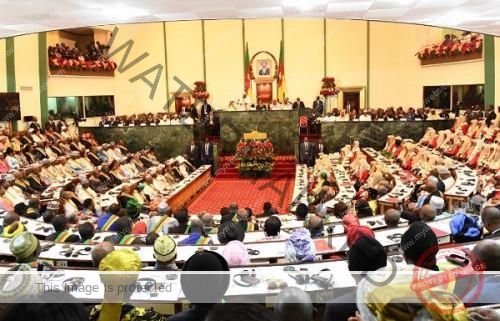
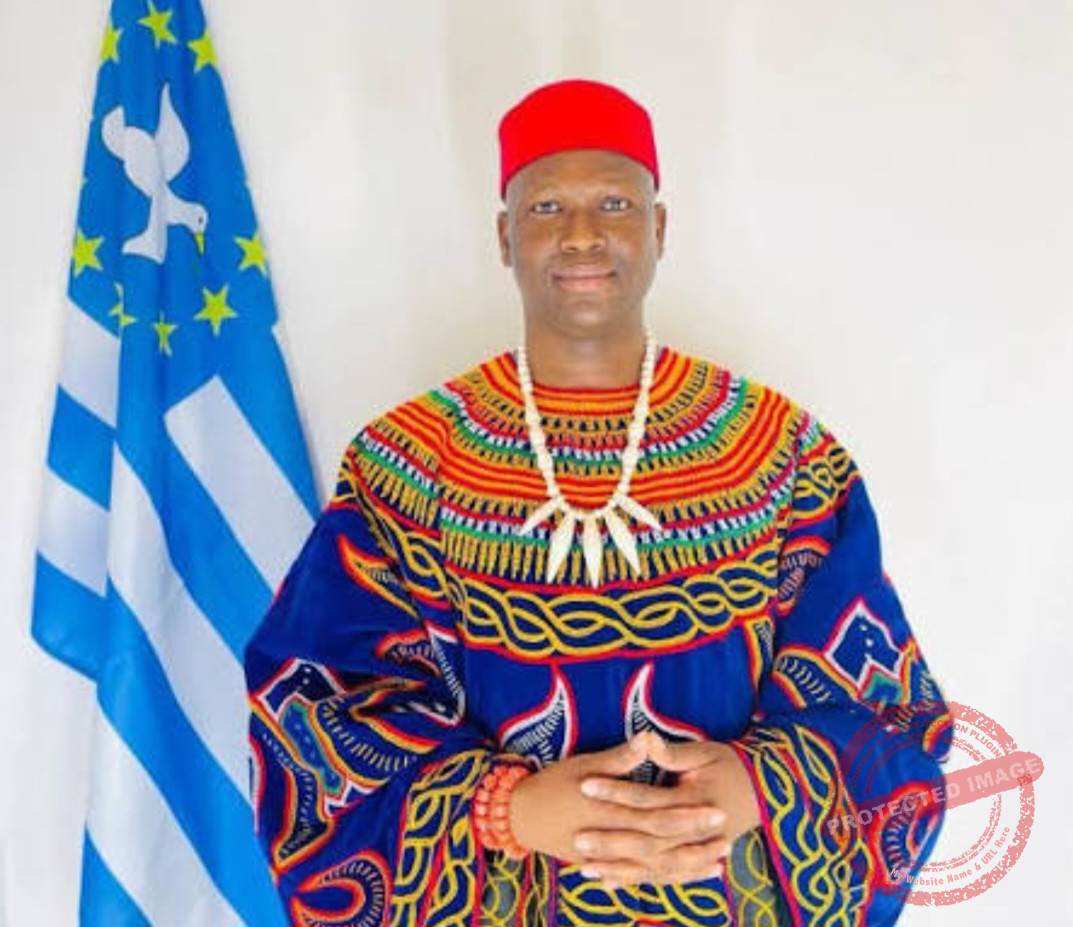
The public recognition and favourable treatment reportedly received by Tita Emmanuel Nji from pro-government commentators and media platforms aligned with the Yaoundé establishment has sparked considerable discussion among supporters of the Ambazonian cause.
By Timothy Enongene
Associate Editor-in-Chief, The Independentist News
THE STRUGGLE WITHIN THE STRUGGLE
Every liberation movement fights on two fronts. The first is against the external force it seeks to challenge. The second is the internal struggle over strategy, leadership, legitimacy, and direction. History teaches that many liberation movements have suffered not because their adversaries were invincible, but because internal divisions consumed energy that should have been directed toward the larger objective.
The Ambazonian struggle has been no exception. Over the years, various organisations, factions, and personalities have emerged claiming to represent different visions of the path to freedom. Some have emphasised diplomacy. Others have prioritised resistance. Some have sought institutional reforms. Others have advocated complete disengagement from the political structures of La République du Cameroun. Such differences are inevitable within any national movement. The challenge arises when disagreement evolves into persistent disruption.
Within this context, the activities of the group known as the “Friends of Ambazonia” have generated growing controversy and renewed debate throughout the Ambazonian community.
A QUESTION OF POLITICAL CONSISTENCY
For years, critics of the Friends of Ambazonia have argued that the group’s interventions have frequently coincided with periods when the broader movement was attempting to consolidate its political, diplomatic, and organisational efforts. According to these critics, the group’s public messaging has often appeared more focused on challenging fellow Ambazonians than confronting the policies and actions of Yaoundé.
Supporters of the group reject such criticisms. They argue that accountability, criticism, and debate are necessary elements of any democratic movement and that no organisation or leader should be immune from scrutiny. Their opponents counter that there is a fundamental difference between constructive criticism and actions that repeatedly undermine collective political objectives.
The debate has continued for years without resolution. Yet recent developments have intensified public attention and raised new questions about the group’s role and long-term political impact.
THE CONTROVERSY OF REGIME RECOGNITION
The public recognition and favourable treatment reportedly received by Tita Emmanuel Nji from pro-government commentators and media platforms aligned with the Yaoundé establishment has sparked considerable discussion among supporters of the Ambazonian cause.
In a conflict where state institutions and pro-regime media have consistently opposed the objectives of Ambazonian self-determination, any apparent endorsement of individuals who identify with the struggle inevitably attracts attention.
Many activists are therefore asking a straightforward question. Why would media platforms generally hostile to Ambazonian independence choose to celebrate, elevate, or publicly praise figures who claim to be part of the Ambazonian political space?
Different observers have offered different explanations. Some believe such recognition demonstrates that certain individuals have become useful to the interests of the state by directing their criticism primarily toward fellow Ambazonians rather than toward the structures they claim to oppose. Others caution against drawing conclusions without direct evidence and argue that media recognition alone does not prove collaboration.
Nevertheless, politics is often shaped as much by perception as by fact. In highly polarised conflicts, public endorsements carry consequences. They influence credibility, alter public opinion, and inevitably raise questions about political alignment.
THE POLITICS OF DISTRACTION
One of the most persistent criticisms directed at the Friends of Ambazonia concerns what opponents describe as a pattern of political distraction. According to these critics, internal disputes have too often overshadowed discussions about diplomacy, humanitarian concerns, international advocacy, institutional development, and long-term strategy.
Rather than concentrating public attention on the larger political conflict, critics argue that energy has repeatedly been diverted toward internal controversies and leadership disputes. Whether intentional or not, the result has been the consumption of valuable political capital and the fragmentation of public discourse.
For many supporters of the independence movement, this raises an uncomfortable but necessary question. Who benefits when Ambazonians spend more time attacking one another than advancing their national objectives?
Who benefits when internal conflicts dominate headlines while larger strategic challenges remain unresolved? Who benefits when division becomes the defining feature of a liberation movement? These questions continue to resonate throughout the Ambazonian political landscape.
THE BURDEN OF CREDIBILITY
Political leadership inevitably invites scrutiny. Public figures who seek influence, authority, and legitimacy must accept that their actions, associations, and public statements will be carefully examined.
Credibility is not established through declarations alone. It is established through consistency. It is built through sacrifice. It is strengthened through transparency and through a demonstrated commitment to the objectives one claims to support.
Every political actor eventually faces the same test. People may disagree about intentions, but they often judge leaders by outcomes. Over time, history examines not what individuals said, but what their actions accomplished. This principle applies equally to governments, political parties, advocacy groups, and liberation movements.
THE LESSON FOR THE REVOLUTION
The most important lesson emerging from this controversy is not about any single individual, organisation, or political faction. It is about the importance of strategic focus.
Successful liberation movements understand that internal disagreements are inevitable. They recognise that debate is healthy. They acknowledge that criticism has a legitimate place within political life. At the same time, they understand that endless internal conflict can become a weapon against the movement itself.
The struggle for Ambazonia ultimately requires more than identifying opponents. It requires building institutions, maintaining credibility, strengthening diplomatic engagement, supporting affected communities, and advancing clear political objectives.
History will eventually render its judgment on every actor involved in this conflict. It will evaluate leaders, organisations, governments, and movements alike. The question facing Ambazonians today is whether political energy will continue to be consumed by internal battles or directed toward the larger challenge that continues to define the future of the nation. That choice remains in the hands of the movement itself. And the answer may determine not only its unity, but its destiny.
Timothy Enongene
Associate Editor-in-Chief, The Independentist News
Share This Post:
THE “MOULINEX” ON A MISSION: WHAT IS PAUL ATANGA NJI PLOTTING IN THE BIYA TWILIGHT?
The Yaoundé Military Tribunal: A Mirror to Cameroon’s Unseen Horrors
Related Post
WHO SIGNED? WHO PAYS? SONARA, OLEMBÉ, and the Price
SPIRITUAL CHOKE POINT, Guidance, Gatekeeping, and the Recovery of
WHEN INDEPENDENCE BECOMES STATECRAFT: What Scotland, Wales and Ireland’s
Dr. Martin Mungwa publishes Southern Cameroons 2050 : why
Adelle Nazarian of the Western Journal calls on the
NKAMOUNA, WASHINGTON, AND THE NEW POLITICS OF AFRICA’S STRATEGIC