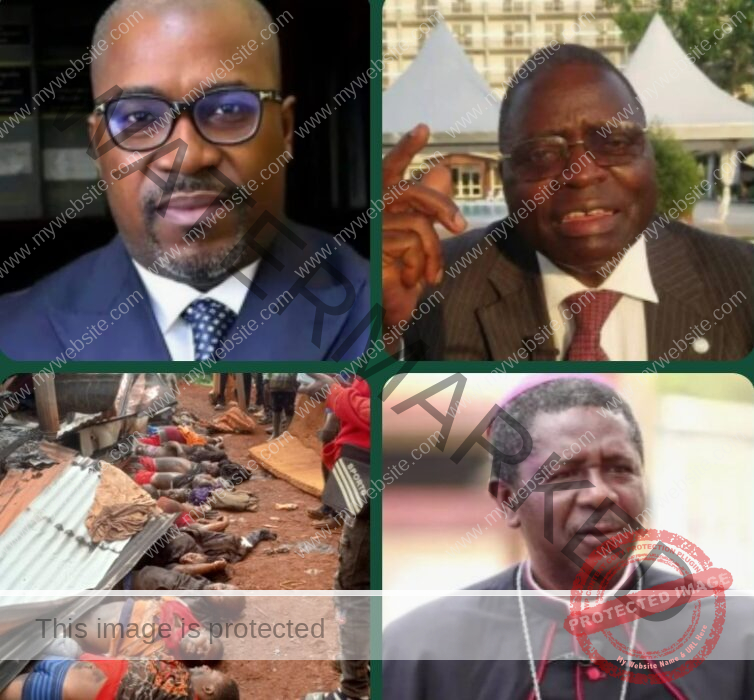


There comes a point in every conflict where language can no longer carry the weight of reality. That point is not marked by louder speeches or more conferences, but by the simple, undeniable test of outcomes. If violence persists while peace is proclaimed, if civilians remain exposed while dialogue is celebrated, then the problem is no longer the absence of conversation—it is the absence of consequence.
By Timothy Enongene Guest Editor-in-Chief The Independentist News
A Script the Public Already Knows
History is rarely fooled by performance. It measures not what is said, but what is done—and more importantly, what continues to happen while words are being spoken.
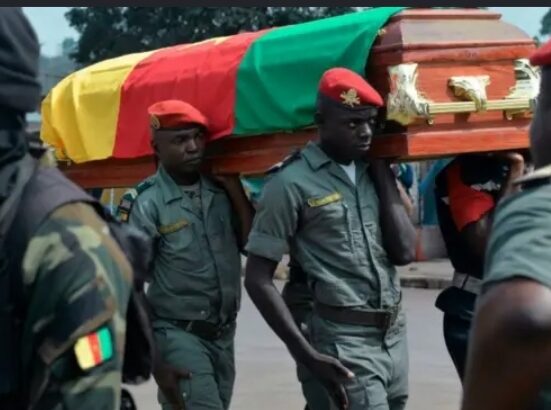
Today, as reports of violence, displacement, and civilian insecurity continue to emerge from parts of the Anglophone regions, a familiar script is once again being staged in Yaoundé: the language of peace, the architecture of dialogue, and the promise of yet another conference.
At the center of this renewed push are figures such as Simon Munzu, Felix Agbor Balla, and Andrew Nkea—advocates of structured engagement through mechanisms like an All Anglophone Conference. The proposition is simple. The reality is not.
When Reality Refuses to Follow Rhetoric
For years, the language of resolution has moved ahead of the conditions required to sustain it. Calls for dialogue have multiplied. Frameworks have been proposed. Conferences have been imagined. Yet on the ground, the fundamental indicators of peace—security, civilian protection, and accountability—remain deeply contested.
Local reports and humanitarian observations continue to point to a pattern that cannot be ignored: civilian communities caught in cycles of violence, allegations of reprisals following clashes, and the continued vulnerability of gatherings that, in any normal context, would be considered safe. The result is a widening gap between what is being promised and what is being experienced.
Dialogue Without Conditions: A Cycle, Not a Solution
Dialogue, in principle, is not the problem. It is necessary. It is unavoidable. But dialogue without conditions—without enforceable guarantees, without a defined scope, without clarity on outcomes—risks becoming something else entirely: a mechanism that absorbs pressure without producing change. This is not a theoretical concern. It is a pattern.
From earlier conferences to more recent initiatives, the sequence has been consistent: engagement is initiated, expectations are raised, attention is temporarily redirected—and then the underlying structure remains intact. When this cycle repeats, it no longer signals progress. It signals containment.
Selective Outrage and the Question of Credibility
In any conflict, credibility is not built on statements alone, but on consistency. A recurring concern among observers is the perception of asymmetry in public responses. Alleged abuses by non-state actors often receive immediate and visible condemnation. Allegations involving state forces, by contrast, are sometimes addressed with greater restraint or delay. Whether intentional or not, this imbalance carries consequences.
In environments where trust is already fragile, selective emphasis can be interpreted as selective accountability. And selective accountability, in turn, erodes the very legitimacy required to mediate or influence outcomes.
Moral Authority Under Pressure
Religious and civic leaders occupy a uniquely sensitive space in moments of crisis. Their words carry weight—not only spiritually, but politically and socially. Appeals for peace, especially those linked to high-profile moments or international attention, can create a powerful narrative. But narrative alone cannot substitute for conditions.
When calls for peace are not matched by observable changes—when violence persists, when accountability remains unclear, when civilian insecurity continues—the message risks losing its grounding. Hope, when disconnected from reality, becomes difficult to sustain.
The Structural Fault Line That Will Not Disappear
At the heart of the crisis lies a question that has not been resolved, only deferred. For some, the path forward lies in reform—decentralization, federalism, administrative adjustment. For others, the issue is more fundamental: a question of historical status, political origin, and self-determination. These are not minor differences in policy. They are competing frameworks.
Any process that attempts to move forward without clearly addressing this divergence risks producing not resolution, but another iteration of managed disagreement.
The Cost of Repetition
There is a point at which repetition ceases to be strategy and becomes inertia. Another conference, another framework, another declaration—without structural guarantees—does not represent movement. It represents continuity.
And continuity, in the context of an unresolved conflict, carries a cost that is not measured in statements, but in lived reality. Communities do not experience policy debates. They experience outcomes.
Conclusion: The Test That Cannot Be Avoided
The central question is no longer whether dialogue should occur. It is whether dialogue can produce change under current conditions. If the answer remains unclear, then the credibility of the process itself comes into question. Peace cannot be built on language alone. It requires alignment between words and reality—between intention and outcome.
Until that alignment is visible, the distance between promise and experience will continue to define the moment. And history will record, with precision, who sought to close that gap—and who learned to operate within it.
Final Word: Where Words End and Reality Begins
There comes a point in every conflict where language can no longer carry the weight of reality. That point is not marked by louder speeches or more conferences, but by the simple, undeniable test of outcomes. If violence persists while peace is proclaimed, if civilians remain exposed while dialogue is celebrated, then the problem is no longer the absence of conversation—it is the absence of consequence.
No framework, no platform, no carefully constructed narrative can substitute for change that is visible, measurable, and real. Until that change occurs, every new promise will be judged not by its intent, but by the reality it fails to alter—and by the lives that continue to bear the cost.
Timothy Enongene Guest Editor-in-Chief The Independentist News