






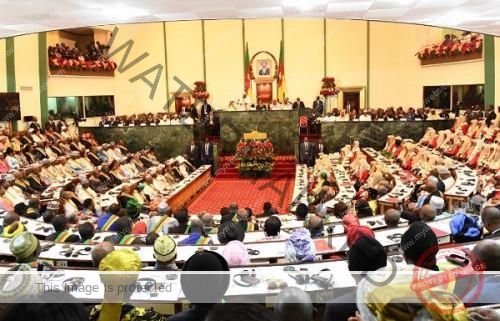





This is not only a political or military confrontation. It has evolved into an economic ecosystem where soldiers, officers, politicians, contractors, and security chiefs derive daily income from the continuation of war. Instead of improving the welfare of citizens, state resources and local revenues are being diverted into maintaining military operations and the countless checkpoints that dot the landscape.
By Eposi Lum, Editor, Economics Desk, The Independentist
The Economic Logic Behind a Prolonged Conflict
When discussing why President Paul Biya’s regime endures despite the country’s deepening poverty and insecurity, one explanation stands out: the war in Southern Cameroons, also known as Ambazonia, has turned into a profitable enterprise for many within the state system.
This is not only a political or military confrontation. It has evolved into an economic ecosystem where soldiers, officers, politicians, contractors, and security chiefs derive daily income from the continuation of war. Instead of improving the welfare of citizens, state resources and local revenues are being diverted into maintaining military operations and the countless checkpoints that dot the landscape.
The Checkpoint Economy
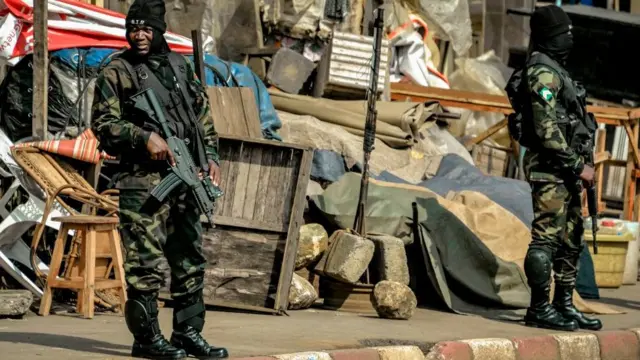
Across the territories affected by the conflict, checkpoints have multiplied. At each one, those in uniform collect what they call “security contributions” from traders, drivers, and ordinary citizens.
Even if each checkpoint collects only a modest sum, the combined proceeds across hundreds of them generate an enormous flow of unrecorded cash every single day. Over time, this creates a steady stream of income that far exceeds official salaries.
For many soldiers and officers, this informal revenue has become their true livelihood. It explains why the checkpoints remain — not as a strategy of defense, but as a system of extraction. The conflict has effectively become a source of personal and institutional enrichment.
The Incentive to Continue the War
Economists describe this pattern as a war dividend — the financial reward certain actors receive from the perpetuation of conflict. Because of that reward, peace becomes less attractive than war.
A lasting solution would require dismantling a vast network of interests built around these gains. For those benefiting from it, peace threatens their income. In consequence, the conflict is managed rather than resolved. It is allowed to simmer at a level that justifies continuous military spending while keeping the spoils flowing.
Recent public remarks have exposed how deeply this culture of profit is entrenched.
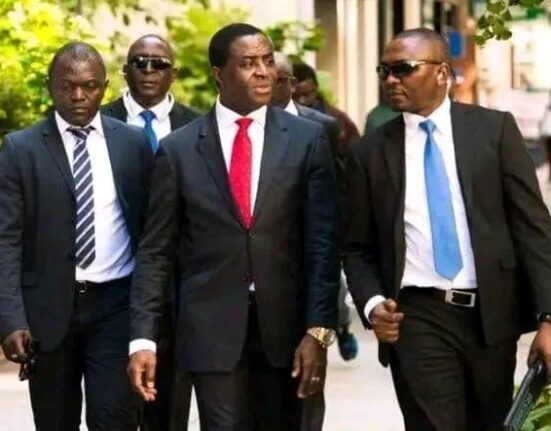
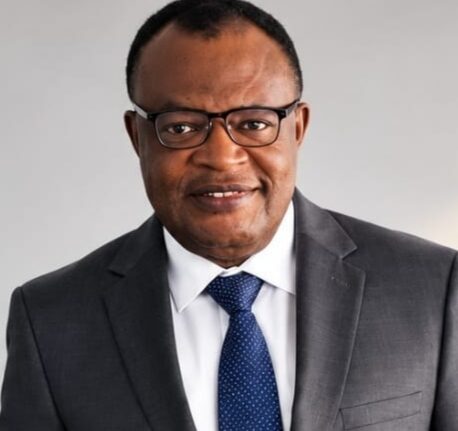
In an interview on an online television program featuring Chris Anu, Émile Bamkoui, the former head of French Cameroon’s military intelligence — notoriously known as “the Butcher of Ambazonia” — proudly declared that he is now retired and working as an oil merchant.
His words, broadcast without shame, illustrate how those who once orchestrated military operations in Ambazonia have seamlessly transformed wartime power into private wealth.
There are thousands of such illicitly enriched officers within the system — individuals who view the conflict not as a national tragedy, but as a personal fortune. This reality reveals why the war is no longer about unity or security, but about sustaining a lucrative order that benefits a select few.
What the Country Loses
Every franc spent on war or stolen at a checkpoint is a franc denied to schools, hospitals, farmers, and communities. The resources consumed by the conflict could have repaired rural roads, expanded healthcare, supported small enterprises, and created jobs for the nation’s restless youth.
Instead, the war has drained energy and capital from the productive sectors that sustain growth. The opportunity cost is staggering: a generation is losing access to education, employment, and hope while the national budget remains hostage to an endless security campaign.
Resources Under the Shadow of War
Southern Cameroons is rich in petroleum, minerals, timber, and agricultural commodities. Because the conflict areas are under heavy military control, these resources are now extracted without transparency or fair redistribution.
The same war that destroys livelihoods has created cover for uncontrolled exploitation. Oil, rubber, palm, and mineral wealth continue to flow, but little of it reaches the people who live on that land. In economic terms, this is resource capture under conflict — a silent transfer of wealth from a war-torn region to those who manage the war.
The Broader Economic Impact
The consequences of this system are far-reaching. Private investors hesitate to enter a country trapped in conflict. Inflation rises as supply chains are disrupted. Agricultural output declines. Youth unemployment worsens. Public debt grows while the productive base shrinks.
The result is a parasitic economy sustained by rent-seeking, corruption, and coercion rather than by innovation and productivity. The state becomes a mechanism for distributing spoils instead of a catalyst for development.
Acknowledging the Official View
Supporters of the government sometimes argue that a strong military presence is necessary to preserve national unity and prevent chaos. It is true that a state must maintain order. Yet when order itself becomes an instrument of profit, the purpose of security is lost.
An economist looking at the situation sees that what began as a security operation has transformed into a marketplace — one that trades fear for money and peace for power.
The Road to Recovery
Ending the war is therefore not only a moral duty but an economic reform. Restoring peace would unlock reconstruction funds, attract investors, and allow the nation to rebuild trust in its institutions.
The resources currently consumed by conflict could be redirected to productive use — to education, energy, agriculture, and technology. In doing so, Cameroon could once again set its citizens on a path toward prosperity instead of survival.
Conclusion
A system that earns more from war than from work has no incentive for peace. The war in Southern Cameroons has become a machine that feeds itself — enriching the few while destroying the future of the many.
As long as this war economy endures, poverty will deepen, corruption will expand, and the moral foundations of the state will continue to erode.
True stability will come only when the wealth of the nation is created by productivity and fairness, not by checkpoints and conflict.
A war economy can never build a peaceful nation — it merely feeds the few while the many sink deeper into despair.
Eposi Lum, Editor, Economics Desk, The Independentist




Leave feedback about this