

History is often shaped not only by what happens on the battlefield but also by how those events are understood beyond it. When narratives are mismanaged, they can become Trojan horses—appearing to advance a cause while quietly strengthening its opponents.
By Timothy Enongene, Guest Editor-in-Chief
The Independentistnews
March 11, 2026
In the early days of the Ambazonian conflict, the Ambazonia Defence Forces (ADF) appeared to dominate both the battlefield and the information space. Their presence was highly visible not only in the forests and villages where clashes occurred but also in the global media arena. Interviews, videos, and even appearances involving international broadcasters such as France 24 projected an image of a movement presenting itself as the principal defender of Ambazonian communities.
Yet over time, questions began to surface among observers and within sections of the Ambazonian public about whether this media strategy was ultimately strengthening—or undermining—the broader political cause.
A pattern emerged that many critics now argue unintentionally served the interests of the government in Yaoundé.
A Narrative That Benefited the State
Throughout the conflict, the Cameroonian government has consistently framed the crisis in the North West and South West as a battle against terrorism rather than a political dispute rooted in the historical status of the former British Southern Cameroons.
In this context, every public claim of responsibility for violent incidents became a powerful piece of evidence supporting that narrative.
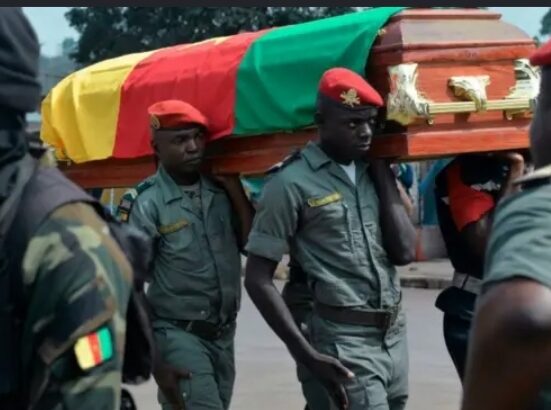
Critics argue that some ADF statements—particularly those in which the group publicly claimed responsibility for attacks involving soldiers or civilians—effectively reinforced the government’s messaging to international audiences. The tragic 2023 killings of CDC workers in Tiko, widely condemned across the region, became one of the most controversial examples.
While competing accounts circulated locally regarding what truly occurred, the rapid public claim associated with the ADF helped cement a narrative that the Cameroonian authorities had long sought to promote: that the conflict was driven primarily by armed extremists rather than by political grievances.
The Information War
Modern conflicts are fought as much through narratives as through weapons. International perception often determines whether a movement is seen as a legitimate political actor or as a security threat. In that arena, messaging can be as decisive as events on the ground.
Critics of the ADF’s approach argue that highly publicized claims of responsibility, aggressive rhetoric, and the glorification of violence created an environment in which the Cameroonian government could present itself internationally as a state confronting terrorism rather than as a government facing a complex political crisis.
From this perspective, what appeared to be bold declarations of resistance sometimes functioned—intentionally or not—as a strategic advantage for Yaoundé.
The Collapse of Mediation Efforts
Another point of controversy emerged during attempts at international mediation, particularly the Swiss-facilitated dialogue initiative that sought to bring representatives of the Cameroonian government and Ambazonian actors to the negotiating table. While some Ambazonian groups expressed cautious support for the process, others rejected it outright.
Statements dismissing the initiative—sometimes derisively referred to as “Swiss cheese” by critics—contributed to divisions within the broader movement. When the process ultimately stalled, many observers concluded that internal disagreements among Ambazonian factions had weakened the possibility of a unified negotiating position.
For critics of the ADF, this moment reinforced the perception that certain actors were more invested in maintaining confrontation than in exploring political pathways toward resolution.
The Lesson for the Movement
The Ambazonian struggle has always been fought on multiple fronts: military, diplomatic, and informational. As the conflict enters its second decade, many within the movement are increasingly aware that success in the diplomatic arena may depend on presenting a coherent and disciplined narrative to the international community.
In that sense, the debate surrounding the ADF’s past messaging reflects a broader question confronting the movement today: how to ensure that the story of Ambazonia is defined by its political aspirations rather than by the imagery of violence.
The Road Ahead
The path toward any durable resolution—whether through negotiation, reform, or eventual political settlement—will require clarity, unity, and strategic communication.
For Ambazonians reflecting on the past decade, the lesson may be that narratives can become weapons, sometimes wielded unintentionally against the very cause they are meant to advance.
As the struggle continues, many believe the movement must ensure that its message to the world remains firmly anchored in the principles of justice, historical legitimacy, and the aspirations of the people themselves.
Only then can the story of the conflict move beyond the noise of competing factions and return to the central question that began it all: the future of the land once known as the Southern Cameroons.
Final Reflection
History is often shaped not only by what happens on the battlefield but also by how those events are understood beyond it. When narratives are mismanaged, they can become Trojan horses—appearing to advance a cause while quietly strengthening its opponents. For Ambazonians looking toward the future, the challenge is therefore not only to confront the realities of conflict but also to reclaim the story of their struggle before others define it for them.