

Britain and France should therefore ask themselves whether preserving inherited political arrangements is still worth the cost. They must grow beyond the greed and reflexes of empire before the world grows beyond them. Otherwise, one day they may discover that they have lost on both fronts: diminishing influence in an Africa that increasingly rejects the old bargain, and growing domestic pressure from humanitarian and migration consequences associated with political systems they helped preserve.
By Ali Dan Ismael
Editor-in-chief The Independentist News with insights from the Ambazonia Intelligence Service
As Amazon associate this site earns from qualifying purchases
Get you back to school essentials via Amazon
YAOUNDÉ – 20 August 2026 – When the State Signs, Does the Signature Still Mean Something?
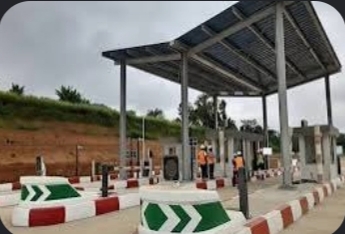
A government may proclaim sovereignty, command an army, collect taxes and sign international contracts. But one of the simplest tests of whether a state is institutionally serious is far less dramatic: when it signs an agreement, does its signature still mean something when the bill arrives? That question now hangs over Yaoundé as the dispute between the Cameroon government and Tollcam, the road-toll company established by French infrastructure groups Egis and Fayat, refuses to disappear.
Africa Intelligence reported on August 20 that, despite what it described as a €54 million agreement concluded with Tollcam, the Cameroonian presidency is still delaying payment and has referred the matter back to the Road Fund, the public agency associated with road-maintenance financing. The publication warned that the continuing dispute could again end in international arbitration. On the surface, this is a commercial disagreement over toll plazas. Look more closely and it becomes something much larger. It is a test of contract credibility, public financial management, investor confidence, institutional accountability and the ability of a government to assume responsibility for decisions made in its own name.
The Tollcam affair therefore deserves attention far beyond the barriers of Cameroon’s toll stations. It illustrates what happens when infrastructure projects are announced with ceremony, financed through sophisticated arrangements, changed through political decision and then allowed to drift into uncertainty over who will ultimately pay. Tollcam was established by Egis and Fayat for the modernization, operation and maintenance of 14 toll plazas across Cameroon under a long-term public-private partnership with the government. The financing involved banks, guarantees, long-term debt, government agencies, revenue assumptions, operating projections and contractual obligations. This was not a minor road-maintenance agreement casually entered into by local officials.
A Government Can Change Policy, But It Cannot Cancel Arithmetic
A sovereign government certainly has the authority to change course when it concludes that an infrastructure model no longer serves the public interest. Contracts can be amended. Public-private partnerships can be terminated. Policies can change. But changing policy does not make financial consequences disappear. That is where the Tollcam dispute becomes a governance question. If a government terminates or restructures a project after private investors have mobilized financing, undertaken work, incurred costs and assumed debt, someone eventually has to absorb the consequences. This is not an ideological argument. It is arithmetic.
The latest reporting says an agreement valued at €54 million has been reached, yet payment remains unresolved. The important question is therefore not whether Yaoundé had sovereign authority to change the project. It did. The more important question is whether the government calculated the lifecycle cost before taking that decision. Who authorized the change? What termination exposure existed? What compensation was anticipated? Was that liability entered into the budget? Which institution was designated to pay? What assets were completed? What debt remained outstanding? If the state later negotiated a settlement, why should the creditor continue chasing the government after agreement has supposedly been reached?
These are not hostile questions. They are the minimum questions taxpayers, lenders and investors should ask whenever public money is involved. The most politically revealing element of the latest reporting may therefore be the suggestion that the presidency has referred the matter back to the Road Fund. There may be legitimate administrative reasons for involving that institution. Road infrastructure, toll revenues and maintenance clearly fall within its field. But administrative routing cannot become a substitute for sovereign responsibility.
Passing the File Does Not Transfer the Liability
If a contract was executed on behalf of Cameroon, if government institutions changed the policy under which it operated, and if a settlement has now been negotiated to resolve the consequences, international investors will not ultimately distinguish between the presidency, Ministry of Public Works, Ministry of Finance or Road Fund when evaluating sovereign risk. They see Cameroon. Banks see Cameroon. Infrastructure companies see Cameroon. Insurers see Cameroon. Arbitrators see Cameroon. Future investors see Cameroon. That is why a bureaucratic delay can cost a country far more than the amount on an unpaid invoice.
The irony is considerable. The toll-plaza program was designed partly to improve revenue collection and modernize road infrastructure. The dispute now threatens to collect another kind of toll from Cameroon: a credibility toll. Long-term infrastructure finance depends heavily on confidence that public contracts will remain meaningful after political priorities change. Investors commit money today because they expect contractual rules to continue functioning tomorrow. If a government can terminate a project and then delay compensation already negotiated with affected investors, lenders do not necessarily stop lending. They may simply change the price.
Risk has a price. Political unpredictability has a price. Delayed payment has a price. Arbitration has a price. Sovereign guarantees have a price. A reputation for making investors chase agreed payments eventually enters the cost of future infrastructure. In the end, the taxpayer pays that toll. This is why governments should not measure infrastructure competence merely by how many projects they announce. The more important questions come later. Who signed? Who pays? Who assumed the liability? Who approved the change? Who owns the completed asset? Who maintains it? Who controls the revenue? What happened when actual operating conditions no longer matched the assumptions contained in the original agreement? And where was the single point of failure?
A Commercial Dispute or a Governance Problem?
The existence of a Tollcam dispute does not by itself prove corruption, fraud or criminal misconduct by Cameroonian officials. Nor does it establish that every claim advanced by Tollcam is necessarily correct. Contract disputes occur even in well-governed countries. Governments and contractors disagree over performance, delays, compensation, financing costs, variation orders, changed conditions and termination rights. The institutional test is not whether disputes occur. The test is how they are resolved. Is the basis of the government’s decision documented? Are liabilities independently evaluated? Does the treasury know the exposure? Does Parliament understand the contingent liability? Is the settlement reflected transparently in public accounts? Is there a clear chain of responsibility? Once a settlement is reached, does the state honor it? Or does the obligation continue circulating through administrative offices until international arbitration again becomes likely? That is the difference between a commercial dispute and a governance problem.
If the Tollcam dispute eventually returns to international arbitration, Yaoundé should also resist portraying external dispute resolution as an assault on sovereignty. Arbitration mechanisms exist partly because contracts between governments and private investors contain an obvious imbalance. The government is not merely another corporation. It controls ministries, regulation, taxation, licensing and domestic public institutions. It can alter policy. It can terminate programs. It possesses powers unavailable to the private counterparty. Neutral dispute-resolution mechanisms attempt to manage that imbalance. A government that voluntarily signs an arbitration provision cannot logically argue that the use of that mechanism is inherently incompatible with sovereignty. Sovereignty includes the power to sign. It also includes responsibility for what was signed.
The Larger Diplomatic Protection Around Yaoundé
But the Tollcam affair raises another question that extends beyond infrastructure contracts. Why has a political system capable of producing recurring governance controversies faced comparatively limited international pressure for deeper political transformation? One explanation is that Yaoundé operates inside an unusually favorable diplomatic architecture. Cameroon belongs to both the Commonwealth and La Francophonie. That places it inside two major international networks historically connected with Britain and France.
This does not mean London secretly controls the Commonwealth or Paris secretly dictates La Francophonie. It does not mean Britain and France approve every decision taken by President Paul Biya’s government. Britain has, at times, publicly expressed concern about violence and human-rights conditions. The more defensible conclusion is subtler: the existing international architecture provides diplomatic insulation for the continuity of the Cameroonian state.
The Commonwealth has repeatedly emphasized peace, dialogue, national cohesion and unity. International initiatives involving the Commonwealth, La Francophonie and the African Union have generally proceeded within a framework that assumes the continued territorial integrity of Cameroon and seeks solutions through dialogue, decentralization, special status or reforms within the existing state. Britain itself continues to describe the conflict largely as an “Anglophone crisis” and has supported a Cameroonian-led dialogue.
None of this proves a conspiracy. It demonstrates something more consequential. The international policy framework generally begins from the assumption that the Cameroonian state remains the political container within which the Southern Cameroons conflict must be resolved.
When “Unity” Predetermines the Negotiation
Once “national unity” becomes the assumed destination, the range of acceptable solutions becomes predictable. Decentralization can be discussed. Special status can be discussed. Bilingualism can be discussed. Legal reforms can be discussed. Humanitarian assistance can be expanded. Development programs can be announced. But the constitutional status of the Former British Southern Cameroons is effectively pushed outside the room before negotiation begins.
That is the value of diplomatic insulation. The regime can be criticized without the underlying state architecture being seriously questioned. Security forces can be criticized. Human-rights concerns can be raised. Administrative reforms can be requested. Dialogue can be encouraged. But international engagement remains overwhelmingly organized around preservation and reform of the existing state. The result is not immunity from criticism. It is protection of the underlying status quo from meaningful diplomatic reconsideration.
Ambazonia 2050 & Beyond Carries a Different Message
This is where Ambazonia 2050 & Beyond carries a fundamentally different message. Its argument is not that Britain and France should abandon Cameroon because Southern Cameroonians have suffered. It is not that America should rescue Ambazonia because its people deserve sympathy. It is not even that historical injustice alone will persuade foreign governments to overturn present policies. Its message is more strategic: look at what Southern Cameroons–Ambazonia can become.
The challenge is to change the international calculation itself. A future Ambazonia must demonstrate that it can offer something more credible than permanent conflict: a peaceful, constitutional, economically productive, internationally responsible and strategically valuable state. That requires moving beyond the question, “Why should we be free?” The equally important question is, “What will we do with freedom?”
Who governs? Who signs? Who pays? Who protects the citizen from government? Who protects government from capture? Who owns the productive source? Who controls strategic infrastructure? Who maintains it after construction? Who controls technology and intellectual property? Who receives recurring economic returns? Does capital circulate through the economy and create productive capacity, or does it disappear through another extractive system? These are nation-building questions, but they are also foreign-policy questions.
Liberation Capacity Is Not Governing Capacity
An independence movement may demonstrate liberation capacity. A functioning republic must demonstrate governing capacity. That is why Ambazonia 2050 & Beyond evaluates readiness through five tests: constitutional legitimacy, administrative effectiveness, civilian protection, productive capacity and external relations. A future Ambazonia that cannot pass those tests risks replacing one institutional failure with another.
Independence should not mean transferring centralized power from Yaoundé to a different elite operating beneath another flag. It should mean constitutional government, independent courts, professional administration, transparent public finance, civilian control of security institutions, protected property rights, accountable local government, educational excellence, competitive enterprise, minority protections and peaceful transfers of power. Institutions must be strong enough to survive the president.
That is one of the central lessons of Tollcam. Public administration cannot depend upon who occupies the palace. Contracts cannot depend upon personal relationships. Budgets cannot depend upon improvisation. Institutions must carry obligations across changes in government. That is what state capacity means.
Productive Sovereignty Instead of Another Extractive Republic
The economic argument is equally important. Africa already has too many countries that achieved juridical sovereignty while remaining economically dependent. They possess flags, presidents and seats at the United Nations, yet export raw value, import processed value, borrow development capital and surrender large portions of recurring economic returns to external systems. That is juridical sovereignty without productive sovereignty.
Ambazonia 2050 & Beyond proposes a different model. Natural resources should build domestic capability. Infrastructure investment should transfer engineering and technical knowledge. Foreign capital should help create domestic enterprise. Strategic minerals should be developed through transparent arrangements that produce local processing, skills, revenue, ownership and reinvestment. Ports should connect Ambazonia to world markets. Energy systems should support domestic production. Agriculture should move up the value chain. Education should create innovators rather than merely export graduates. The decisive question is simple: after the foreign investor, commodity boom or development program leaves, what remains productive? If nothing remains, development has failed.
A Different Message to London and Paris
This is why Ambazonia 2050 & Beyond also carries a different message for Britain and France. It does not ask them to act against their interests. It asks them to reconsider what their long-term interests actually are.
London and Paris confront major political pressures involving migration, asylum, displacement, insecurity and instability across parts of Africa and neighboring regions. Southern Cameroons alone does not cause those pressures, and it would be irresponsible to suggest otherwise. But the broader principle is undeniable. Conflict pushes people from their homes. Economic stagnation pushes people toward opportunity elsewhere. Weak institutions destroy confidence in the future. Political exclusion makes migration appear rational. A young person who can build a business, find productive employment, own property, educate children and trust institutions at home has fewer reasons to risk everything on dangerous migration routes.
A prosperous community is therefore one of the strongest long-term forms of migration policy. Britain and France cannot sustainably fight humanitarian and migration pressures only at Calais, in the English Channel, at Mediterranean ports, in airports or through asylum offices. The causes must also be addressed where displacement begins. Peace matters. Opportunity matters. Good government matters. Productive economies matter. Human dignity at home matters. A peaceful and economically viable Ambazonia could contribute to that wider solution.
A Message for the Wider International Community
Ambazonia 2050 & Beyond will therefore not only help London and Paris reconsider their relationship with Southern Cameroons. Its developmental message speaks to the wider international community. A prosperous, secure and institutionally credible Ambazonia could contribute to Gulf of Guinea stability, responsible development of strategic resources, maritime security, regional trade, supply-chain resilience, food security and reduced humanitarian displacement. That would benefit Britain and France, but also the United States, Nigeria, the European Union and other international partners.
There is consequently a difficult question London and Paris themselves must confront: can they grow beyond the old greed of empire? The phrase is deliberately uncomfortable. It does not accuse every British or French official of colonial intent, nor does it require belief in a secret committee directing African politics from Europe. It identifies an enduring strategic temptation: prefer access over accountability, extraction over productive local ownership, familiar rulers over legitimate institutions and short-term geopolitical convenience over long-term political stability.
That model may once have served empire. It is increasingly dangerous in the twenty-first century. Africa’s younger generations are better educated, more connected and increasingly unwilling to accept relationships they regard as paternalistic or extractive. Other international powers are competing aggressively for African partnerships. Europe itself is confronting political consequences arising from instability beyond its borders.
Britain and France Risk Losing on Both Fronts
Britain and France therefore risk losing on two fronts if they remain prisoners of the imperial reflex. They may lose influence in Africa because Africans increasingly demand relationships built around sovereignty, ownership, mutual benefit and respect. At the same time, they may face growing domestic pressure associated with humanitarian and migration crises rooted partly in weak political and economic systems abroad. Protecting yesterday’s arrangements may eventually undermine tomorrow’s interests.
Prosperity in Africa should not be understood as a threat to Europe. It could become one of Europe’s greatest long-term strategic assets. Prosperous societies trade. Stable societies attract investment. Productive societies create customers. Governed territory supports security. People who believe they possess a future at home are less likely to abandon that home.
A productive Ambazonia therefore need not be an anti-British or anti-French project. It could become a British partner. It could become a French partner. It could become an American partner. It could become a Nigerian partner. It could become an Atlantic and Gulf of Guinea partner. The objective is not to replace one dependency with another. It is to replace dependency with mutually beneficial interdependence.
The Message to America: Do Not Rescue Ambazonia—Partner With It
The message to America is equally clear. The United States does not need another permanently dependent client state. It needs capable partners. A peaceful Southern Cameroons–Ambazonia could seek cooperation around Gulf of Guinea maritime security, energy, strategic minerals, infrastructure, agriculture, technology, resilient supply chains and trade. The proposition should rest on property rights, secure contracts, private enterprise, transparent government, local ownership, individual responsibility, productive employment and the rule of law. Investment should generate returns while leaving productive capacity behind. That is a far stronger case for American engagement than another request for indefinite aid. Do not rescue Ambazonia. Partner with it.
Tollcam Is a Warning About the State Ambazonia Must Never Become And this returns us to Tollcam. The dispute is not merely a story about a French consortium trying to collect money from Yaoundé. It is an institutional lesson about the country Southern Cameroons–Ambazonia must refuse to become. A future Ambazonian government must not sign contracts it does not understand. It must not terminate infrastructure agreements without knowing the lifecycle financial consequences. It must not conceal contingent liabilities. It must not treat public agencies as warehouses for politically inconvenient obligations. It must not allow a president to substitute personal authority for institutional process. It must not invite foreign investors merely to extract value. And it must never believe that sovereignty means freedom from accountability.
Sovereignty means responsibility.
Publish the Tollcam Settlement. For Cameroon, the immediate response to Tollcam should therefore be straightforward. Publish the settlement. State the final amount. Explain the basis of compensation. Identify which institution is responsible for payment. Explain the Road Fund’s role. Clarify the status of international arbitration. Disclose what infrastructure has been completed and transferred. Explain the fiscal consequences to taxpayers. If the government’s position is sound, transparency will strengthen it. If Tollcam’s demands are excessive, transparency will help demonstrate that too. But moving a file from office to office is not financial management. Delay is not a payment strategy. Institutional ambiguity is not sovereignty.
The Bill Always Arrives
The Tollcam affair is ultimately about more than toll booths. It is about whether the signature of a state means something. It is about whether governments calculate consequences before making decisions. It is about whether institutions remain responsible after political priorities change. And for Southern Cameroons–Ambazonia, it is a warning about what independence must never become.
Ambazonia 2050 & Beyond therefore carries a message very different from traditional liberation politics. It does not say, “Save us.” It says: study us. Evaluate what we intend to build. Examine our institutions, geography, resources, human capital and strategic position. Determine whether a peaceful, productive and democratic Ambazonia can become a better partner than an indefinitely managed conflict.
That proposition extends beyond London and Paris. It is a message to Washington, Abuja, Brussels and the wider international community. A successful Ambazonia could help replace conflict with production, displacement with opportunity, humanitarian dependency with economic participation and geopolitical instability with strategic partnership.
Britain and France should therefore ask themselves whether preserving inherited political arrangements is still worth the cost. They must grow beyond the greed and reflexes of empire before the world grows beyond them. Otherwise, one day they may discover that they have lost on both fronts: diminishing influence in an Africa that increasingly rejects the old bargain, and growing domestic pressure from humanitarian and migration consequences associated with political systems they helped preserve.
The future does not require Britain and France to disappear from Africa. It requires them to return differently: as partners rather than patrons, as investors rather than extractors, and as supporters of negotiated peace rather than defenders of predetermined political outcomes.
Southern Cameroons–Ambazonia must be prepared to offer something equally different in return: not another flag over another weak state, but a republic capable of governing, producing, protecting, prospering and enduring. The toll road may have barriers. Sovereign responsibility does not. And history eventually presents every government—and every former empire—with its bill.
As Amazon associate this site earns from qualifying purchases
Get your back to school essentials via Amazon
Ali Dan Ismael, Editor-in-chief The Independentist News