






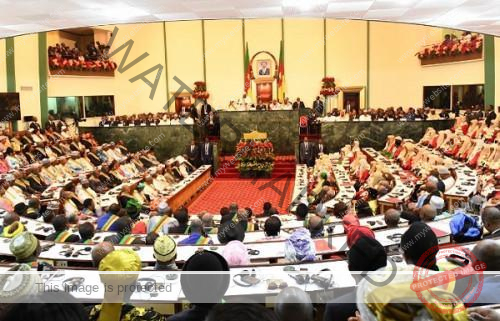






History will not judge a political settlement solely by the signatures at the bottom of the document. It will judge the freedom, security, dignity, and economic prospects of the generations who must live with its consequences. The most frightening betrayal is not always the agreement signed in secret. It is the future surrendered without the knowledge of those who will inherit it.
By Ali Dan Ismael, Senior Editor-in-chief The Independentist News
As Amazon associate this site earns from qualifying purchases
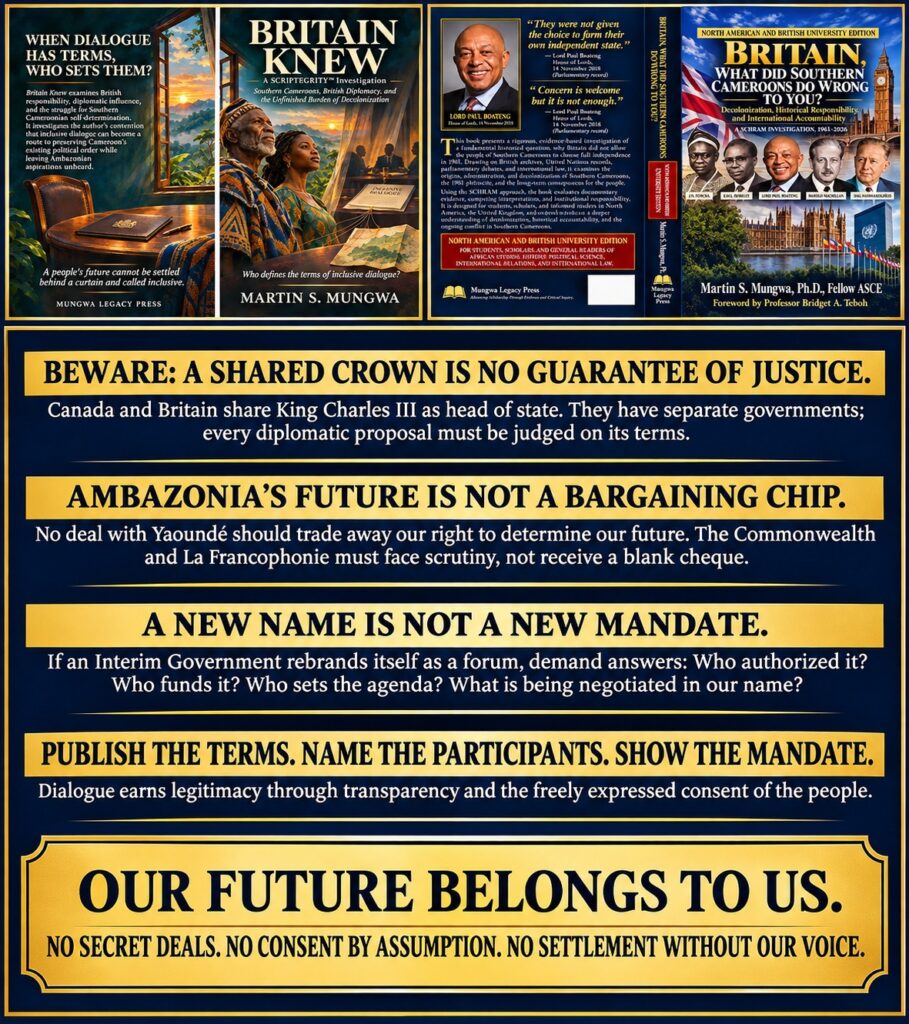
Follow the Amazon link below to get your copies of publications that touch on the Ambazonian revolution By Martin Mungwa
There is something more frightening than a war fought in the open: a nation’s future negotiated behind closed doors, while the people whose lives are at stake remain outside the room.
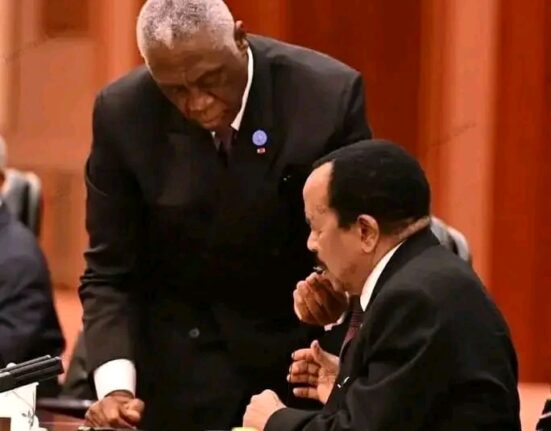
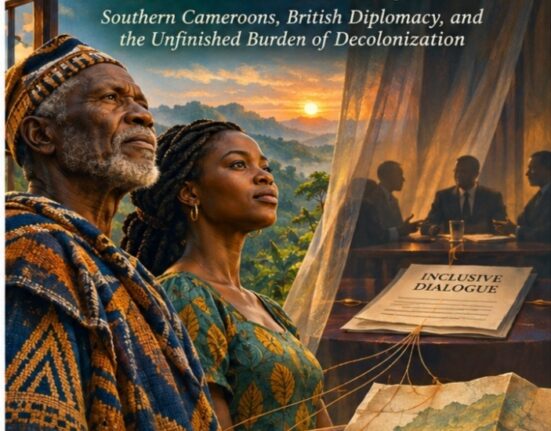
The illustration presents a disturbing political question: Could the language of peace, inclusive dialogue, diplomacy, and international cooperation become a respectable disguise for arrangements that preserve political domination and unequal control over natural resources?
Its central warning is stark. A settlement described as peace is not necessarily justice. A negotiation described as inclusive is not necessarily representative. And an agreement signed by powerful officials is not necessarily an agreement freely accepted by the people.
At the heart of the illustration stands Britain, the former administering power of Southern Cameroons, whose historical responsibilities remain central to debates about the territory’s decolonization. Beside it stands the Republic of Cameroon, whose relationship with Southern Cameroons continues to raise profound questions about constitutional legitimacy, self-determination, governance, and the consequences of the 1961 settlement.
Now imagine the darkest possible outcome: a diplomatic arrangement in which the political future of Southern Cameroons is determined without meaningful public consent, while access to its agricultural wealth, petroleum, and natural gas becomes part of a wider bargain.
The bananas leave. The oil flows. The gas is extracted. The revenues accumulate elsewhere. Yet the communities living above those resources remain politically marginalized, economically vulnerable, and excluded from decisions about their own future. That is the nightmare this illustration asks its audience to confront.
But an essential distinction must be preserved: the illustration does not itself establish that Britain and Cameroon have concluded, or are preparing, such a secret agreement. Nor does it prove that either government is exchanging political concessions for cheap bananas, oil, or free gas. Those are serious allegations requiring documentary evidence.
The historical lesson remains powerful without presenting suspicion as established fact: when negotiations concern the political rights, territory, and natural resources of a people, secrecy creates the conditions in which exploitation can flourish.
The evidence that makes the warning urgent
There are documented diplomatic and economic relationships that deserve careful examination. – In May 2025, Britain published its economic partnership agreement with Cameroon. The agreement emphasizes trade, development, human rights, and good governance.
(GOV.UK) – On September 8, 2026, the British government confirmed that it continued engaging authorities in Yaoundé and calling for inclusive dialogue to resolve the Anglophone conflict. ( UK Parliament ) – And in September 2026, Cameroon’s Ministry of External Relations publicly reported discussions with British diplomats about bilateral cooperation, Commonwealth activities, and international institutional matters. ( MINREX )
These facts establish continuing cooperation, not evidence of a clandestine sovereignty-for-resources bargain. But they provide legitimate grounds to scrutinize the transparency and implications of diplomatic proposals affecting Southern Cameroons.
The darkest possibility: economic extraction without political freedom
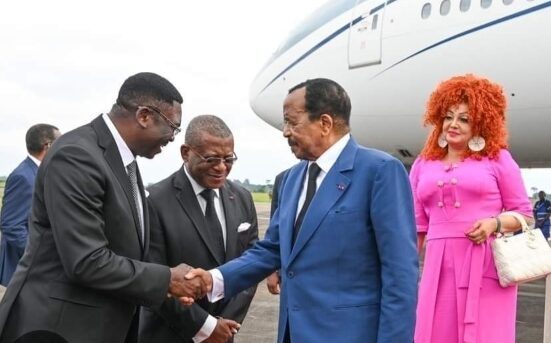
The most disturbing image is not simply a foreign diplomat shaking hands with a government official. It is a future in which successive generations discover that decisions about their homeland were made without their knowledge, meaningful representation, or consent.
Picture fertile plantations producing wealth for distant markets while surrounding villages lack essential infrastructure. Picture offshore petroleum and natural gas contributing to national revenues while communities closest to the extraction sites struggle to obtain reliable electricity, healthcare, education, and employment.
Picture young people asking their parents why their territory possesses extraordinary resources but has so little control over the benefits. And imagine the answer: because those who negotiated the political settlement never required the economic settlement to protect the people. That is the danger of permanent economic dependency, a condition that can outlast any particular government or diplomatic agreement.
The question Britain cannot escape
Britain’s historical involvement in the political future of Southern Cameroons gives this debate an especially consequential dimension. If British diplomacy supports an inclusive settlement, the meaning of inclusive deserves precise definition. – Who selects the participants? – Who determines their authority? – Are competing constitutional proposals genuinely considered? – What guarantees protect civil liberties? – How will the population’s freely expressed preferences be established? – And if commercial arrangements involving agriculture, petroleum, or natural gas accompany political negotiations, what mechanisms will disclose the beneficiaries, revenues, concessions, and long-term obligations? These are not unreasonable demands. They are fundamental tests of accountable diplomacy.
The final warning
A secret agreement need not contain the word slavery to create enduring conditions of subordination. It need only deny meaningful participation, concentrate decision-making power, and establish economic dependencies from which future generations struggle to escape.
The illustration’s most chilling message is therefore not that a conspiracy has already been proved. It is that the cost of discovering an unjust arrangement after it has become politically entrenched may be far greater than the cost of demanding transparency before it is accepted.
For Britain, Cameroon, international institutions, and every organization claiming to represent Southern Cameroons, the standard should be unmistakable: – Publish the terms.– Identify the participants. – Disclose the economic interests.– Demonstrate the mandate. – Establish how public consent will be obtained.
History will not judge a political settlement solely by the signatures at the bottom of the document. It will judge the freedom, security, dignity, and economic prospects of the generations who must live with its consequences. The most frightening betrayal is not always the agreement signed in secret. It is the future surrendered without the knowledge of those who will inherit it.
As Amazon Associate this site earns from qualifying purchases
Follow the Amazon link below and get your copies of publications that touch on the Ambazonian revolution By Martin Mungwa
Ali Dan Ismael, Senior Editor-in-chief The Independentist News



Leave feedback about this