

Ultimately, this moment invites reflection on the relationship between law, legitimacy, and national reconciliation. Courts can interpret statutes and review evidence, but they cannot alone resolve conflicts rooted in history, identity, and political aspiration.
By Timothy Enongene
Guest Editor-in-Chief, The Independentistnews
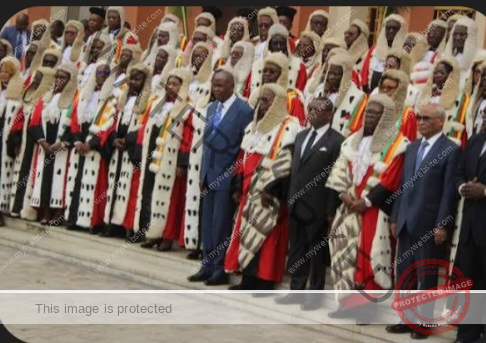
YAOUNDE SUPREME COURT – March 19, 2026 – Where, in established legal tradition, does a Supreme Court acknowledge a fundamental legal flaw yet choose to return the matter to the very forum where the disputed error first emerged?
Ordinarily, the highest court is expected to provide clarity, correction, and finality. Its authority lies in resolving uncertainty, not prolonging it. Yet the recent decision to quash an earlier judgment and remit the case for a fresh hearing before a newly constituted panel raises difficult questions about the direction and pace of justice.
Many observers see this move not as resolution, but as delay. Instead of delivering a definitive outcome, the process appears to have entered another cycle of procedural reconsideration. For families, supporters, and those who have followed the matter closely for years, this development risks reinforcing the perception that justice remains distant.
The Appearance of Legality
States often emphasise the importance of institutional credibility and adherence to due process. Courts, in particular, serve as symbols of stability and fairness. However, when legal proceedings extend over many years with repeated reversals or rehearings, public confidence can weaken.
The question being asked in many quarters is straightforward: if a higher court recognises significant flaws in earlier proceedings, why not provide a decisive remedy? Returning the matter for reconsideration may be lawful within procedural rules, yet it also prolongs uncertainty and leaves unresolved the deeper concerns that have surrounded the case from its inception.
A Long-Running Legal and Political Story
The origins of this case date back several years and have since become intertwined with broader national tensions and competing political narratives. At different moments, some believed that decisive action would bring closure to a complex conflict. Instead, the passage of time has shown that underlying grievances and aspirations cannot be settled through courtroom decisions alone.
What has emerged over the years is a reality shaped by endurance. Communities continue to adapt, mobilise, and redefine their expectations. Legal processes that move slowly or appear inconclusive risk being interpreted not merely as technical steps, but as reflections of deeper structural challenges.
Between Justice and Perception
For any judicial system, perception matters as much as procedure. Even when actions are legally defensible, they must also inspire confidence that justice is both being done and seen to be done.
Repeated delays, retrials, or procedural resets can create the impression of uncertainty or hesitation. Whether fair or not, such impressions influence domestic opinion and shape how external observers assess the strength of institutions.
The Broader Question
Ultimately, this moment invites reflection on the relationship between law, legitimacy, and national reconciliation. Courts can interpret statutes and review evidence, but they cannot alone resolve conflicts rooted in history, identity, and political aspiration.
The call from many stakeholders is therefore not only for procedural correctness, but for meaningful resolution — one that reduces tensions rather than prolongs them.
Whether the current rehearing will provide that resolution remains to be seen. What is clear, however, is that time has become a central factor in the pursuit of justice. For those awaiting closure, each new stage in the process is both a sign of possibility and a reminder of how far there is still to go.
Timothy Enongene
Guest Editor-in-Chief, The Independentistnews