

A legal system derives legitimacy from consistency, proportionality, and independence. When punishment appears to depend on political context, emotional pressure, or diplomatic optics, the rule of law begins to fragment. Citizens lose confidence not only in verdicts but in the very idea of justice as an impartial standard.
By Ali Dan Ismael, Editor-in-Chief, The Independentistnews
The sentencing patterns emerging from French Cameroon’s justice system today reveal a troubling architecture of contradiction. Perpetrators of mass atrocity receive limited prison terms. Unarmed political protesters face life imprisonment. Civilian killers are handed death sentences that will likely never be executed. Now, with the renewed legal manoeuvring around the NERA Ten coinciding with a high-profile papal visit, the deeper logic behind these judicial actions appears increasingly political rather than juridical.
This is not merely a legal anomaly. It is a crisis of moral authority.
The Ngarbuh Atrocity and the Economy of Impunity
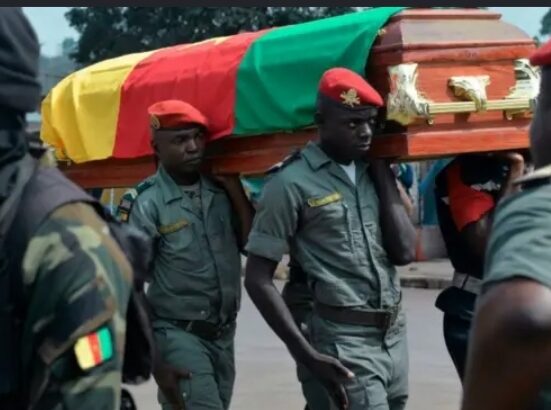
The massacre at Ngarbuh remains one of the most disturbing episodes of the ongoing conflict. Civilians — including women and children — were killed in what observers widely characterised as a coordinated security operation. Yet those found responsible have faced sentences of roughly ten years’ imprisonment.
Ten years for mass killing.
Such outcomes send a powerful signal: large-scale violence conducted under state authority may be treated as an unfortunate operational excess rather than a grave crime demanding the full weight of justice. The message is unmistakable — impunity can be negotiated when political stakes are high.
This is not accountability. It is damage control.
Life Sentences for the Defenceless
In sharp contrast, unarmed protesters and political detainees have faced harsh charges and prolonged incarceration. The legal system has demonstrated remarkable severity toward dissent, while appearing comparatively restrained toward allegations of systemic violence.
When peaceful political expression is punished more harshly than mass atrocity, the law ceases to function as a neutral arbiter. It becomes an instrument of control. Such disparities do not merely undermine confidence in the courts — they reshape public perception of the state itself.
Justice begins to look selective. Selective justice begins to look like repression.
The Death Penalty as Theatre
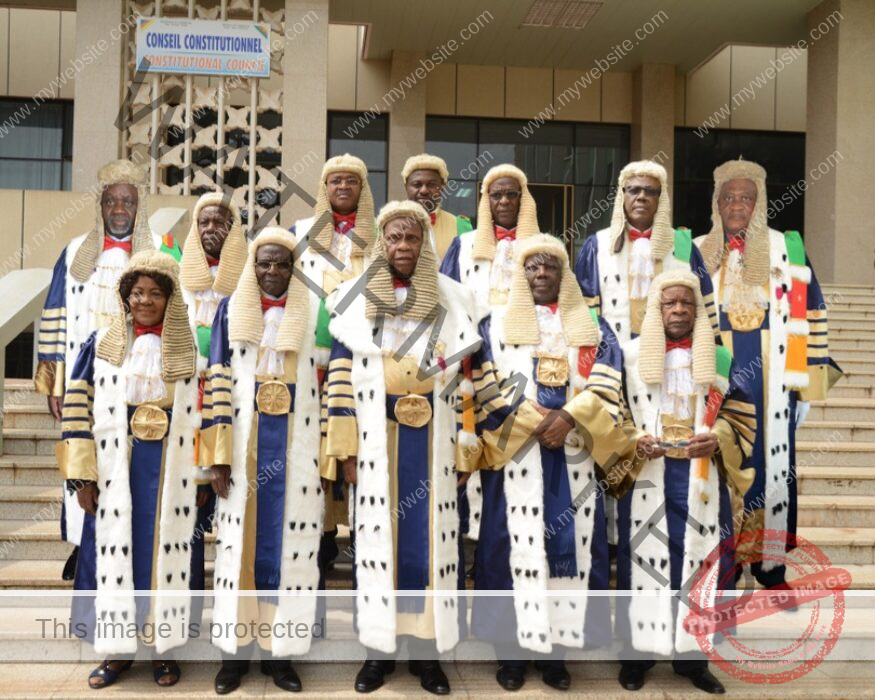
The recent death sentence pronounced in the Dagobert Nwafo case has further exposed the peculiar duality of Cameroon’s penal framework. The crime was horrific and rightly provoked national outrage. Yet the broader legal reality remains unchanged: Cameroon has operated under a de facto moratorium on executions since 1997.
Thus, the pronouncement of death often functions less as a practical sanction than as a symbolic performance of severity. Courts speak the language of ultimate punishment; the executive quietly moderates the outcome through pardon or commutation. This creates a justice system that appears dramatic but uncertain — severe in rhetoric, hesitant in enforcement.
The NERA Ten and the Optics of Power
The renewed attention on the NERA Ten — following the quashing of their earlier judgment and the decision to order a retrial rather than release — comes at a moment of intense international visibility. Reports that Pope Leo XIV has requested to visit both French Cameroon and Bamenda have elevated global scrutiny. In this context, legal decisions cannot be viewed in isolation from political timing.
After nearly seven years in detention, the expectation among many observers was that the collapse of a prior judgment might open the path to freedom. Instead, the process has been reset. The detainees remain in custody, their legal fate once again deferred into a new cycle of proceedings.
To critics, this sequence appears less like judicial correction and more like strategic postponement — a way to maintain the appearance of legal responsiveness while preserving the underlying machinery of repression. The timing invites uncomfortable questions:
Why revisit the case now, at a moment of international attention? Why quash a sentence without addressing the prolonged detention that has already occurred? Why initiate retrial rather than consider release, especially after years already served?
The perception that detainees are being used as instruments in a broader campaign of image management is difficult to dismiss. High-profile visits offer opportunities to project reform, dialogue, and institutional seriousness. Yet if the underlying conditions of repression remain unchanged, such gestures risk being interpreted as public relations rather than genuine transformation.
Justice Without Coherence Is Justice Without Authority
A legal system derives legitimacy from consistency, proportionality, and independence. When punishment appears to depend on political context, emotional pressure, or diplomatic optics, the rule of law begins to fragment. Citizens lose confidence not only in verdicts but in the very idea of justice as an impartial standard.
The tragedy extends beyond individual cases — whether in Ngarbuh, in overcrowded prisons, or in courtrooms issuing symbolic death sentences. It lies in the gradual erosion of trust between the state and its people. Without that trust, legal institutions may retain formal power but lose moral credibility.
A System at the Crossroads
French Cameroon’s judiciary now faces a defining choice. It can continue along a path where legal outcomes are shaped by expediency and perception. Or it can undertake the more demanding task of restoring coherence and fairness — ensuring that mass crimes are treated with gravity, political dissent is handled with restraint, and prolonged detention is not normalised under procedural pretexts.
True justice requires courage: the courage to confront impunity, to uphold fundamental freedoms, and to resist the temptation to use courts as instruments of political theatre.
Until such courage is demonstrated, the lingering question will remain: When justice is timed to optics rather than truth, who ultimately benefits — and who continues to suffer in silence?
Ali Dan Ismael, Editor-in-Chief, The Independentistnews