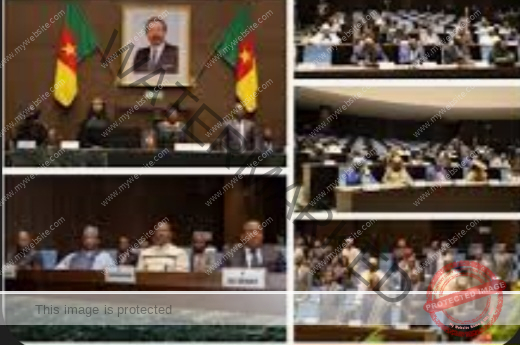


The recent changes in Cameroon’s National Assembly are not best understood as the beginning of a reform cycle. They are part of a succession architecture designed to ensure continuity within an established system of power. In such systems, disruption is often controlled, reform is frequently symbolic, and transition is carefully engineered.
By Timothy Enongene
Guest Editor-in-Chief, The Independentist News
Editor’s Note:
Timothy Enongene serves as Guest Editor-in-Chief for this special analysis series, bringing independent, policy-focused perspective to critical national developments.
5 May 2026
There are moments in centralized political systems when visible disruption is not a sign of change, but a method of control. The recent leadership changes within Cameroon’s National Assembly—presented as reformist “shockwaves”—should be understood within this framework. What appears to be administrative renewal is, in fact, a structured response to a far more consequential issue: the management of political succession.
The Logic of Controlled Disruption
In long-standing centralized regimes, leadership continuity is rarely left to open political contestation. Instead, it is managed through calibrated institutional adjustments designed to maintain stability at the center while projecting change at the surface. These adjustments often take familiar forms: the replacement of long-serving officials, highly visible administrative “cleanups,” and the elevation of new figures presented as reform-oriented. Such actions create the appearance of internal accountability. However, their primary function is not transformation—it is stabilization. The recent transition from Cavayé Yéguié Djibril to Théodore Datouo as Speaker of the National Assembly fits squarely within this pattern. While framed as a historic break, the transition reflects continuity within the same governing architecture rather than a departure from it.
Reform as Political Signaling
The early actions of the new leadership—particularly high-profile administrative measures—have been widely interpreted as evidence of reform. Yet such measures are characteristic of what may be termed reform as signaling. In this model, visible enforcement replaces structural change, symbolic acts substitute for institutional redesign, and public attention is directed toward manageable narratives of accountability. This signaling serves a dual purpose. Domestically, it reassures a population increasingly sensitive to governance failures. Internationally, it provides a narrative of responsiveness and renewal. However, signaling should not be mistaken for systemic reform. The underlying distribution of power remains intact.
The Central Question: Succession
Beneath these visible developments lies the central issue shaping Cameroon’s current political trajectory: the question of succession under Paul Biya. In systems where executive authority is highly concentrated, succession represents the most sensitive phase of governance. It carries inherent risks: elite fragmentation, institutional instability, and uncertainty over continuity. To mitigate these risks, regimes often construct mechanisms that ensure a controlled transfer of power. One such mechanism—frequently discussed in political and legal circles—is the potential consolidation of a vice-presidential or equivalent structure capable of facilitating a managed transition without exposing the system to open electoral unpredictability. Whether formalized or informally embedded, the logic remains the same: succession must be secured before it is publicly acknowledged.
Institutional Theater and Strategic Timing
Within this context, the changes in the National Assembly take on a different meaning. They are not isolated reforms. They are part of a broader strategy of institutional theater—a deliberate sequencing of visible actions designed to absorb public attention, demonstrate apparent dynamism, and reduce scrutiny of more consequential structural developments. By focusing attention on administrative reshuffling and internal discipline, the system effectively manages perception while preserving continuity at the highest levels of power. Timing is critical. Such displays often intensify as succession considerations become more immediate, creating a buffer between the public narrative and the underlying strategic adjustments.
Implications for Political Interpretation
Understanding this framework is essential for accurately interpreting developments within Cameroon. If leadership changes are viewed in isolation, they may appear as genuine reform. When situated within the broader architecture of succession management, however, they reveal a different reality: continuity through controlled adaptation. This distinction matters. It shapes how domestic audiences assess the prospects for change, how international observers evaluate governance signals, and how political actors position themselves within an evolving system.
Beyond Distraction: A Structural Reading
For observers of the ongoing crisis in the Northwest and Southwest regions, the implications are particularly significant. If visible institutional changes are primarily instruments of succession management, then they are unlikely to address deeper structural grievances related to governance, representation, and political inclusion. The risk, therefore, is not simply distraction—it is misinterpretation. A focus on surface-level developments can obscure the underlying dynamics that will ultimately determine the direction of the state.
The Bottom Line
The recent changes in Cameroon’s National Assembly are not best understood as the beginning of a reform cycle. They are part of a succession architecture designed to ensure continuity within an established system of power. In such systems, disruption is often controlled, reform is frequently symbolic, and transition is carefully engineered. Recognizing this pattern does not resolve the political challenges facing the country. But it does clarify the framework within which they are unfolding. And in moments of apparent change, clarity is the first requirement of serious analysis.
Timothy Enongene
Guest Editor-in-Chief, The Independentist News