









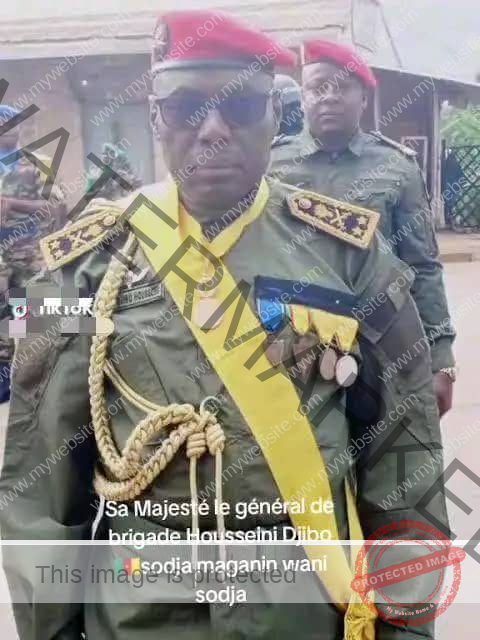
On Wednesday morning in Bamenda, Brigadier General Housseini Djibo, Commander of the 5th Gendarmerie Region, narrowly escaped death when an improvised explosive device (IED) detonated as his convoy passed. According to multiple security sources, the explosion occurred at the entrance of the GPIGN (Groupement Polyvalent d’Intervention de la Gendarmerie Nationale) camp, where the General’s vehicle was targeted during an operational movement.
By Ali Dan Ismael, Editor-in-Chief
A War They Call “Under Control”
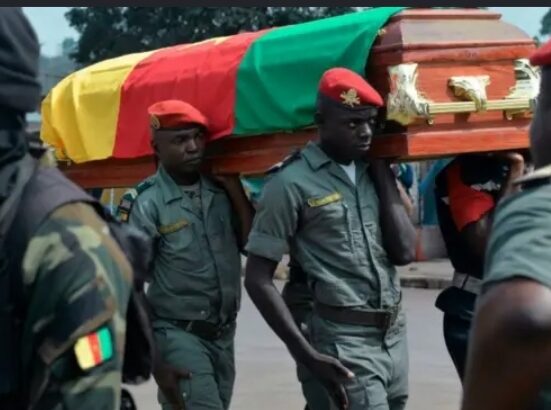
There are lies that whisper, and there are lies that rot. The Cameroonian state has perfected both. Between 3 November 2025 and 17 December 2025, at least 20 identified Cameroonian soldiers—young men—were killed in the English-speaking regions. That figure pushes the officially acknowledged death toll of defence and security forces to 1,802 since the war began. Not bandits. Not criminals. Soldiers. Dead. In a war Yaoundé still insists is “under control.” But this is not new. What is new is the exhaustion of pretending.
When Washington Finally Looked Away
In 2019, the United States suspended Cameroon from the African Growth and Opportunity Act (AGOA)—an economic lifeline designed to reward growth and respect for human rights. Washington did not act on sentiment. The suspension followed documented violations: massacres in English-speaking regions, the burning of hundreds of villages, mass abductions, and the imprisonment of political opponents. For Yaoundé, this was not a reckoning. It was an inconvenience.
The Diplomatic Lie That Aged Badly
To regain access, the regime sent a delegation to Washington led by Michel Monthe Tommo, Cameroon’s ambassador to the United Nations, engaging U.S. officials including Tibor Nagy, then Under-Secretary of State for African Affairs. Monthe Tommo told the meeting: “About 700 soldiers were killed in this war… We are doing everything to settle this conflict, and the accusations that the Cameroonian army targets civilians are false.” False then. Absurd now. Those figures—his own—were already misleading in 2019. Today, based on cumulative official statements, field reporting, and battlefield realities, the actual estimate of Cameroonian soldiers killed in the Anglophone war now approaches 3,500. That is not a contained operation. That is a sustained military hemorrhage.
The Real Cost the Regime Won’t Publish
Despite these losses, Yaoundé continues to deny that civilians are targeted, even as villages are erased, schools destroyed, and entire populations displaced. The state demands sympathy for fallen soldiers while dismissing civilian deaths as collateral, invented, or invisible. This contradiction has hollowed out the regime’s credibility at home and abroad.
Breaking News from Bamenda
The latest incident underscores that collapse. On Wednesday morning in Bamenda, Brigadier General Housseini Djibo, Commander of the 5th Gendarmerie Region, narrowly escaped death when an improvised explosive device (IED) detonated as his convoy passed. According to multiple security sources, the explosion occurred at the entrance of the GPIGN (Groupement Polyvalent d’Intervention de la Gendarmerie Nationale) camp, where the General’s vehicle was targeted during an operational movement. Images widely circulated on social media confirm the violence and precision of the attack. While General Djibo escaped unharmed, the human cost was severe.
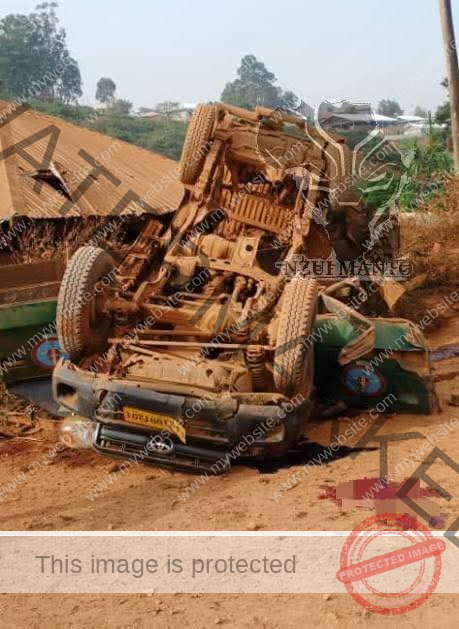
Three soldiers were killed, according to an anonymous military source, and several others were reportedly injured and evacuated for treatment. In an earlier related incident at the same location, Colonel Lansana, the General’s bodyguard, was killed instantly by an IED explosion while approaching the parked vehicle. The General survived. Colonel Lansana is dead. And the symbolism is unavoidable. Bamenda is where heroes go to perish—a city that has become the graveyard of denial, where rank offers no immunity and official narratives collapse under their own weight. As of publication, no official communication has been issued by military or government authorities regarding either incident.
Official Narrative Circulating Online (Translated)
Under the headline “Insecurity: Ambazonians attempted to eliminate General Housseini Djibo in Bamenda today,” a statement circulating on social media recalls that General Djibo was installed as Commander of the 5th Gendarmerie Region on 19 July 2022. It claims that on 17 December 2025, an improvised explosive device targeted the General’s official service vehicle near the GPIGN camp, killing three soldiers, including his bodyguard. The statement asserts that the perpetrators are “without faith or law,” alleges they are being instrumentalized to destabilize Cameroon through killings, and frames the attack as an attempt to humiliate the Cameroonian army at the highest level. It concludes by stating that officers, non-commissioned officers, soldiers, and police have been killed, and that the attempt on a General shows all limits have been crossed. The statement is signed Vincent Ela.
The War They Refuse to Name
This is the war French Cameroon refuses to name. A war it cannot win. A war it lies about abroad. A war it sanitizes at home. After 1,800 soldiers officially acknowledged dead, after thousands more likely uncounted, after entire regions reduced to graveyards and refugee corridors, the question is no longer whether the world will hear this story.
The Collapse of the Narrative
The question is how long Yaoundé believes it can keep telling it badly—and still be believed. The collapse of credibility is now so complete that even Emile Bamkoui now relies on The Independentist for the real news—a quiet but devastating admission of how hollow state narratives and compliant outlets have become. When adversaries, skeptics, and former defenders must turn to an independent platform to understand their own country, the information war is already lost.
The Stench That Crossed Borders
The stench of denial is no longer local. It is international. And it is no longer ignorable. French Cameroon may not want the world to hear this story. But the war, the deaths, and the lies are speaking loudly enough on their own.
Ali Dan Ismael, Editor-in-Chief


Leave feedback about this