

This is no longer a war defined by territory—it is a war defined by perception. And history has settled this question many times before: when a government must manufacture chaos to justify its presence, it has already lost the war it claims to be fighting.
By Timothy Enongene
Guest Editor-in-Chief, Independentist News
(With Eyewitness Accounts from the Ground in Ndzerem-Nyam)
28 April 2026
NDZEREM-NYAM — Where the War Has Changed Shape
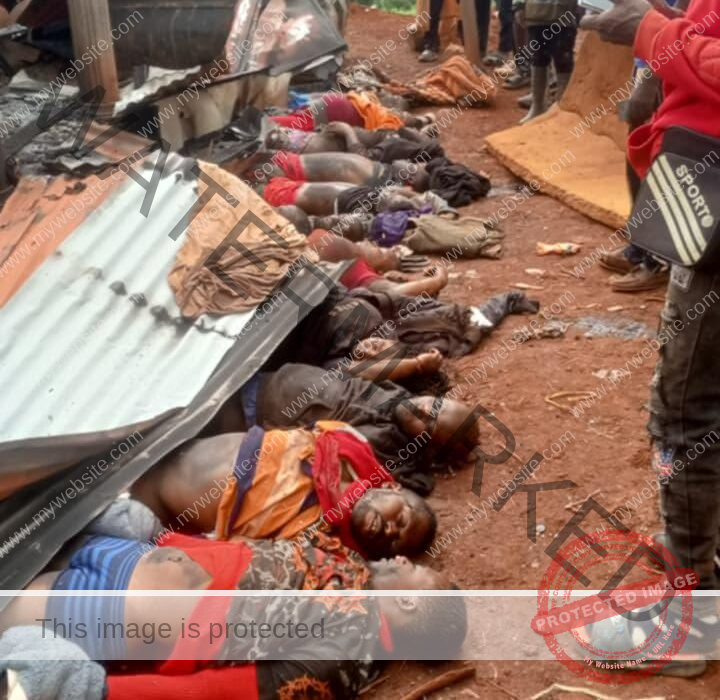
What happened in Ndzerem-Nyam on April 26 is already being rewritten. Official voices will call it a “communal clash.” State-aligned narratives will reduce it to a “traditional dispute.” And, as always, the familiar refrain will follow: “Amba is killing their own.”
But on the ground—among those who ran into the bushes, who watched homes burn, who buried the dead—a different reality is taking shape. This was not chaos. This was choreography.
The War the State Can No Longer Win
Across key zones, the conflict has entered a new phase. Direct confrontation has yielded diminishing returns. Engagements are no longer defined by clear frontlines, but by something more insidious: the migration of violence into civilian space.
Where the military once sought to defeat armed groups such as the Ambazonian State Army in open encounters, it now appears increasingly drawn into environments where distinctions collapse—between combatant and civilian, between conflict and community. And in that collapse, a new strategy emerges: When a battlefield cannot be controlled, it is relocated.
The Blueprint: Ignite, Observe, Strike
Eyewitness accounts from Ndzerem-Nyam do not describe intervention. They describe sequence. A zone already carrying dormant tensions—reportedly involving the Gwan Fondom—becomes active. Movement begins. Confusion spreads.
Then, the decisive moment: “They didn’t come to stop anything,” one resident recounted. “They waited. Then they opened fire toward the palace.” This is not the language of coincidence. It is the language of timing.
The pattern is stark:
Enter a fragile environment. Allow or exploit existing fractures. Intervene with overwhelming force. Control the narrative before the smoke clears Not peacekeeping. Not containment. Execution under cover of disorder.
The “Amba” Narrative: A Weaponized Label
Before the bodies are counted, the story is already written. The label appears—“Amba.” It arrives quickly. Predictably. Decisively. Where evidence is incomplete, it fills the gap. Where witnesses disagree, it overrides them. Where civilians fall, it reclassifies them.
In Ndzerem-Nyam, residents contest the official framing of the dead as “neutralized fighters.” They name them. They know them. They bury them. Yet in the public record, identity becomes elastic. In this war, the label is not a description—it is a decision.
Destruction as Evidence, Not Accident
The burning of dozens of motorbikes was presented as the dismantling of “terrorist logistics.” But for residents, these were livelihoods. Transportation. Commerce. Survival. Their destruction raises a deeper question:
Was this an act of neutralization—or an act of narrative construction? Because in modern conflict, destruction does not only remove assets. It creates visuals. And visuals create belief.
The Silence That Speaks
Perhaps the most unsettling dimension of the Ndzerem-Nyam tragedy is not only what was said—but what was omitted. The report issued by the Ndzerem-Nyam Cultural and Development Association (NYAMCUDA) has drawn quiet but intense scrutiny from within the community. Key allegations—particularly those involving military fire—are absent. This silence is not neutral. It exists within a reality where local institutions operate under extraordinary pressure—caught between survival, coercion, and expectation. And in that space: Silence becomes alignment—whether chosen or imposed.
The Real Battlefield: Perception
What Ndzerem-Nyam reveals is not only a local tragedy. It reveals a strategic transformation. The conflict is no longer confined to valleys, forests, or checkpoints. It now unfolds in: Reports, Headlines, Statements and Labels. Two wars are being fought simultaneously: The war on the ground The war for narrative control And increasingly, the second determines the outcome of the first.
The Reversal
The state claims fragmentation among its opponents. But what if fragmentation is not merely a condition— but a tool? What if the objective is not to eliminate disorder, but to weaponize it? Because a fragmented landscape offers something invaluable: Plausible deniability. Narrative flexibility. Operational cover In such an environment, truth is no longer contested. It is engineered.
The Verdict
Let there be no confusion about Ndzerem-Nyam. This was not simply a communal dispute that spiraled out of control. This was not an unfortunate convergence of tensions. This was a moment in a larger pattern—one in which violence, narrative, and timing intersect with unsettling precision.
The Nuclear Close
The tragedy of Ndzerem-Nyam is not confusion—it is design. When a state reaches the point where it can no longer impose control through direct confrontation, it adapts by dissolving the battlefield into the lives of civilians. Palaces become targets. Communities become cover. Death becomes explanation. What is presented as “communal violence” becomes a shield for force; what is labeled “terrorism” becomes a mask for indiscriminate action. This is no longer a war defined by territory—it is a war defined by perception. And history has settled this question many times before: when a government must manufacture chaos to justify its presence, it has already lost the war it claims to be fighting.
Timothy Enongene
Guest Editor-in-Chief, Independentist News