










Commentary

We are home to news on Cameroon and the CEMAC region. We are dedicated to honest and reliable reporting. We are the voice of the Cameroonian people and their fight for freedom and democracy at a time when the Yaoundé government is silencing dissent and suppressing democratic voices.

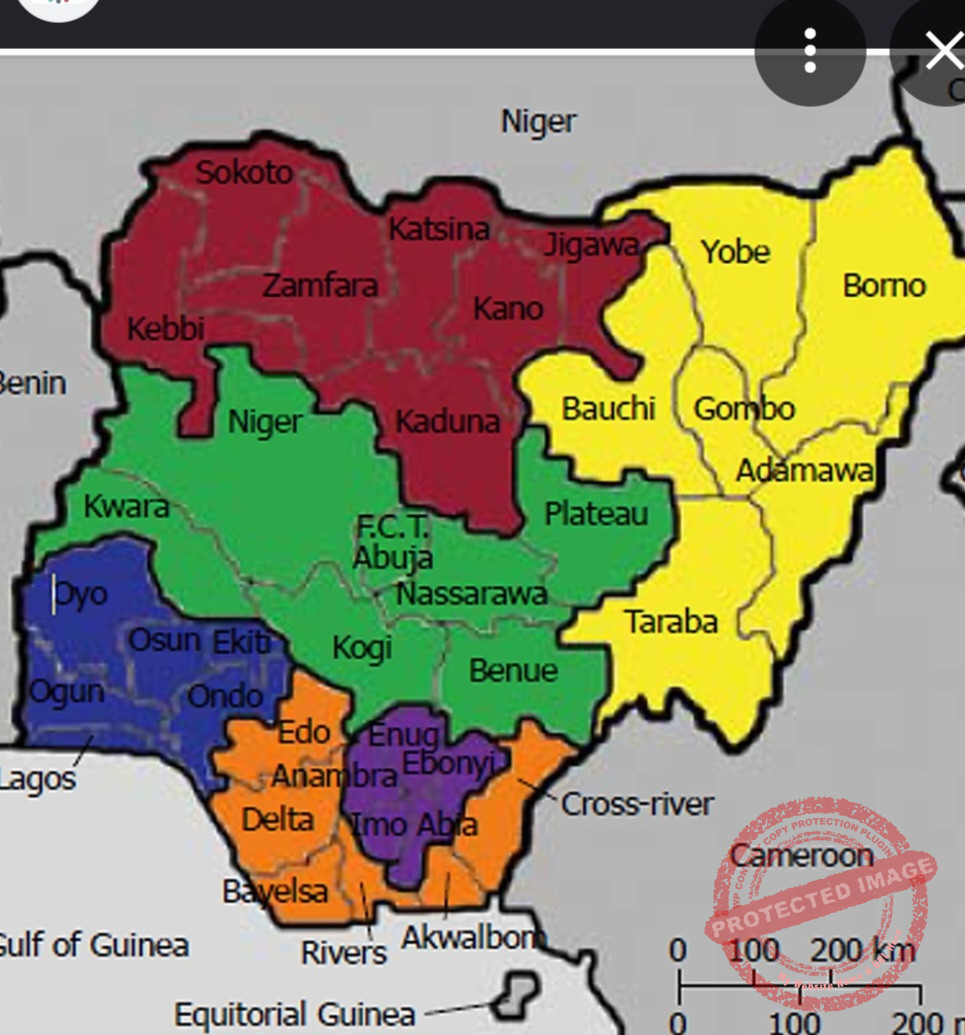
The six geopolitical zones may differ in culture, language, and history. Yet they share a common stake in the success or failure of the Nigerian project. If Nigeria is to rise beyond its current difficulties, it will require a national renewal rooted not in division, but in a shared determination to build a more accountable, prosperous, and stable republic.
By Timothy Enongene Associate Editor-in-Chief, The Independentist News
A Nation at a Crossroads
From the North-West to the South-East, from the commercial centers of Lagos and Onitsha to the rural communities of the Middle Belt and the Niger Delta, a common sentiment increasingly echoes across Nigeria: the country is not fulfilling its immense potential.
Despite possessing one of Africa’s largest economies, abundant natural resources, and a dynamic population exceeding 200 million people, Nigeria continues to struggle with persistent insecurity, inadequate infrastructure, chronic energy shortages, inflation, unemployment, and declining public confidence in state institutions.
For many citizens, these challenges are no longer viewed as isolated policy failures. They are increasingly seen as symptoms of a deeper structural crisis affecting the foundations of governance itself.
Beyond Ethnicity and Regional Politics
One of the most remarkable developments in contemporary Nigerian politics is the growing realization that economic hardship does not discriminate according to ethnicity, religion, or geography.
The rising cost of food affects families in Kano just as it affects households in Enugu. Unemployment frustrates young graduates in Port Harcourt as much as it does those in Kaduna. Electricity shortages disrupt businesses in Lagos no less than they affect communities in Maiduguri.
This shared experience of hardship is gradually challenging the traditional political narratives that have often divided Nigerians along regional and ethnic lines. Increasingly, citizens are asking a different question: not where leaders come from, but whether they can govern effectively.
The Legacy of the Buhari and Tinubu Years
The administrations of Muhammadu Buhari and Bola Ahmed Tinubu have become central to this national debate. Supporters point to various initiatives and reforms undertaken during these years. Critics, however, argue that the overall record has been characterized by persistent insecurity, economic instability, rising living costs, and declining public trust.
The removal of fuel subsidies, currency reforms, inflationary pressures, and continuing security concerns have intensified public frustration and raised broader questions about the direction of the country. Whether these challenges are temporary or indicative of deeper structural weaknesses remains a matter of political debate. What is undeniable is that millions of Nigerians are demanding a new approach.
The Search for Alternative Leadership
It is within this context that figures such as Peter Obi and Rabiu Musa Kwankwaso have gained increasing political relevance. For many supporters, Peter Obi represents fiscal discipline, administrative competence, and a commitment to economic restructuring. His political appeal has been particularly strong among younger voters, professionals, and citizens seeking alternatives to traditional political establishments.
Rabiu Musa Kwankwaso, meanwhile, brings extensive experience in governance, a strong grassroots network, and considerable influence across northern Nigeria. His record in education and infrastructure development has earned him support far beyond Kano State.
The prospect of cooperation between reform-oriented political forces has therefore attracted growing attention among Nigerians seeking a broad-based coalition capable of challenging established political structures.
Why National Unity Matters
The most significant aspect of the current political moment may not be any individual candidate. Rather, it is the growing recognition that Nigeria’s problems require solutions that transcend regional loyalties and political patronage networks.
No single geopolitical zone can solve the country’s challenges alone. The future of Nigeria depends upon cooperation between North and South, Christians and Muslims, urban and rural communities, and citizens from every part of the federation. The ability to build such coalitions may ultimately determine whether meaningful reform becomes possible.
Democracy Requires Participation
Regardless of political affiliation, one lesson remains clear: democratic change requires active citizen participation. Elections alone do not transform societies. Sustainable change depends upon informed voters, strong institutions, electoral transparency, civic engagement, and accountability.
The growing emphasis on voter registration, participation, and election monitoring reflects a broader understanding that democracy cannot function when citizens withdraw from the political process. For many Nigerians, the challenge is no longer merely choosing leaders but strengthening the democratic culture necessary to hold those leaders accountable.
A New Political Generation
Perhaps the most encouraging development in Nigeria today is the emergence of a generation increasingly unwilling to accept politics as usual. Young Nigerians are demanding better governance, greater transparency, improved economic opportunities, and institutions capable of delivering results. Their activism, engagement, and willingness to challenge established assumptions represent one of the country’s greatest assets.
Whether this energy ultimately transforms the political system remains uncertain. What is certain is that Nigeria stands at a critical juncture. The choices made in the coming years will shape not only the future of Africa’s most populous nation but also the future of the wider West African region.
The Future Cannot Wait
Nigeria’s challenges are serious, but they are not insurmountable. The country possesses the human capital, economic resources, entrepreneurial talent, and democratic potential necessary to chart a different course. What remains in question is whether political leadership and citizen engagement can align to make that transformation possible.
The six geopolitical zones may differ in culture, language, and history. Yet they share a common stake in the success or failure of the Nigerian project. If Nigeria is to rise beyond its current difficulties, it will require a national renewal rooted not in division, but in a shared determination to build a more accountable, prosperous, and stable republic.
Timothy Enongene
Associate Editor-in-Chief, The Independentist News
Share This Post:
NAVIGATING THE NIGERIAN POLITICAL LABYRINTH: The Strategic Realignment of Peter Obi and the Rise of a New Political Consciousness
STATE55: Diplomacy Through Music An Album that Gives Voice to a People, Their Heritage, and Their Hope
Related Post
AMBAZONIA’S WAR- IS BIGGER THAN YAOUNDÉ: BRITAIN, FRANCE AND
THE DAY SEPTEMBER 22 1961: — WHAT AMBAZONIA CAN
TRUMP’S “SUPER INTELLIGENCE” ERA: WHAT IT REALLY MEANS —
Why Is Ambazonia More Powerful Than many Imagine.
THIS DAY IN HISTORY SEPTEMBER 22, 2017: THE DAY
A President Unseen, a Country Waiting: Yaoundé’s Succession Uncertainty