








Commentary

We are home to news on Cameroon and the CEMAC region. We are dedicated to honest and reliable reporting. We are the voice of the Cameroonian people and their fight for freedom and democracy at a time when the Yaoundé government is silencing dissent and suppressing democratic voices.

As long as people like Sylvester Moh Tangongho control the purse of the state, the suffering of Ambazonia will not end. The violence may become less visible, but the oppression will remain strong.
By Ali Dan Ismael and Jennifer McChriston
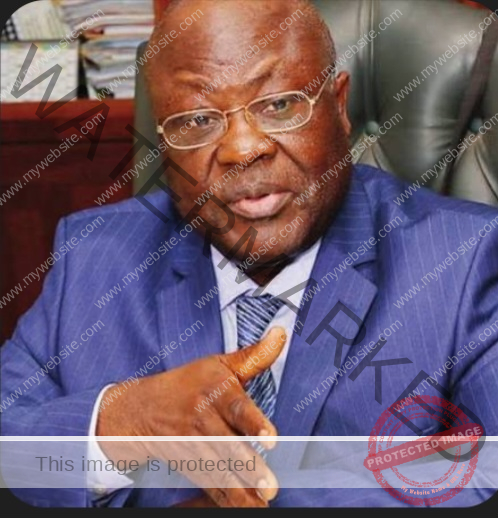
Most people learn about the Anglophone Crisis in Cameroon through shocking stories of shootings, burned homes, kidnappings, and grieving families. But behind the physical violence lies another kind of war that is less visible but equally destructive. It is a financial war. It is operated by powerful technocrats who never appear in the bush, who wear suits instead of uniforms, and who make decisions that can destroy futures without firing a shot. One of those technocrats is Sylvester Moh Tangongho.
He was born in Ngoketunjia, right in the heart of Southern Cameroons, the land today known across the world as Ambazonia. Yet his life’s work has strengthened the same central power in Yaoundé that now uses violence and oppression against the communities he came from.
The ENAM System: Loyalty First, Justice Last
Moh’s journey began at ENAM, the National School of Administration and Magistracy. ENAM is famous not just for producing skilled administrators, but for shaping a class of elite officials whose loyalty is expected to belong to the regime above anything else. Ambazonians who pass through ENAM often gain positions, but only if they never challenge the unfairness built into the political structure. Moh followed that script perfectly.
A Treasury Career with Consequences
After graduating in 1989, Moh worked for decades in the treasury, managing state accounting systems, financial cooperation programs, and national payment reforms. His rise was steady and safe, rewarded for never shaking the system. Today, as Director-General of Treasury, Financial and Monetary Cooperation, he holds real influence over the movement of national resources and public money. This financial power is not used to uplift the communities of where he was born. It is used to keep wealth flowing into Yaoundé and out of Ambazonia.
Taxes collected in Ambazonia, Oil revenue from Ambazonian land Customs revenue from Ambazonian ports. These resources do not come back as development. Instead, they are channeled into a centralized system that funds the security forces responsible for destruction in the Anglophone regions. A gun ends a life. A budget ends hope.
War Financed with Ambazonian Resources
Since 2016, the suffering in Southern Cameroons has multiplied. Thousands of civilians have been killed. Schools have been damaged or shut down. Children grow up hiding from soldiers instead of learning in classrooms. Hospitals operate under fear and shortage. Families flee their homes or bury loved ones.
Yet through all this, the treasury continues to collect revenue from those same communities under occupation. Moh and the system he upholds make sure the money keeps flowing, even while the region itself bleeds.
CEMAC and French Economic Influence
Cameroon’s finances are deeply tied to regional agreements within the Central African Economic and Monetary Community. Its currency was built to serve French interests. The system has always been designed to move resources upward and outward, not toward local people.
International institutions like the International Monetary Fund have publicly pointed out corruption, lack of transparency, and poor public-financial management in Cameroon. But they still provide loans and credit which help the regime stay strong and continue the war. The financial war is funded globally, while the people suffering remain voiceless.
Modern Colonialism: Now Done Through Paperwork
Ambazonia has a long history of exploitation. First under German rule. Then British and French rule. Then under a forced union that has never respected equality. Today, the domination is more sophisticated. Instead of chains, there are bank regulations. Instead of slave masters, there are suits and official stamps. Instead of open plunder, there is centralized accounting. People like Moh do not need to set fire to villages. They simply approve the budgets that fund it.
Why His Story Must Be Told
This is not about attacking a single individual. Moh is a product of a powerful design. His career represents a system where: Loyalty is rewarded instead of fairness. Anglophones are used as revenue sources instead of citizens. Money from Ambazonia finances Ambazonia’s destruction. The violence on the ground and the violence in the treasury are part of the same war. One kills the body. The other destroys a nation’s ability to stand again.
What Ambazonians Must Demand
If there is to be real peace and justice, the financial structure must change. Ambazonian negotiators and advocates must insist on control over their resources, public revenue, and development priorities. Reconstruction must focus on the people who suffered. The international community must treat the economic design as a human rights issue and hold the regime accountable. True liberation requires economic freedom. Without it, even independence would be empty.
Conclusion: Exposing the Financial War
The world sees the conflict as a matter of security. It is more than that. It is a battle over who controls money, land, education, and the future. As long as the financial system remains unchanged, the war against Ambazonia continues silently, every day.
As long as people like Sylvester Moh Tangongho control the purse of the state, the suffering of Ambazonia will not end. The violence may become less visible, but the oppression will remain strong.
To build a future where Ambazonians live with dignity, we must expose this silent war and dismantle the financial machinery behind it. A free people must have control over their own wealth. Without that, peace is only an illusion.
Ali Dan Ismael and Jennifer McChriston
Share This Post:
THE CELEBRATED SILENCE: How Dr Asheri Kilo’s Cultural Brilliance Became a Mask for a Genocidal Regime
Representation Without Accountability Is Collaboration, Why the World Must Stop Treating Mbah Acha Rose as a “Reform Figure”
Related Post
A “Natural Death” After Ten Years? How Dion Ngute’s
The Illusion of a ‘Natural Death’: Why Yaoundé’s Playbook
AN AMBAZONIAN RESPONSE TO, Navy Captain Cyrille Serge Atonfack
IS THE WORLD LISTENING: THREE DAYS FOUR FRONTLINES, ASA
SEPTEMBER 24, 1965, THIS DAY IN HISTORY: From Equal
AMBAZONIA’S WAR- IS BIGGER THAN YAOUNDÉ: BRITAIN, FRANCE AND