

Captain Effoudou’s accusations remain allegations until independently substantiated. Yet the institutional questions they raise cannot be dismissed merely because they originate from exile or from a former insider in conflict with the regime.
By Timothy Enongene, Associate Editor-in-chief. The Independentist News
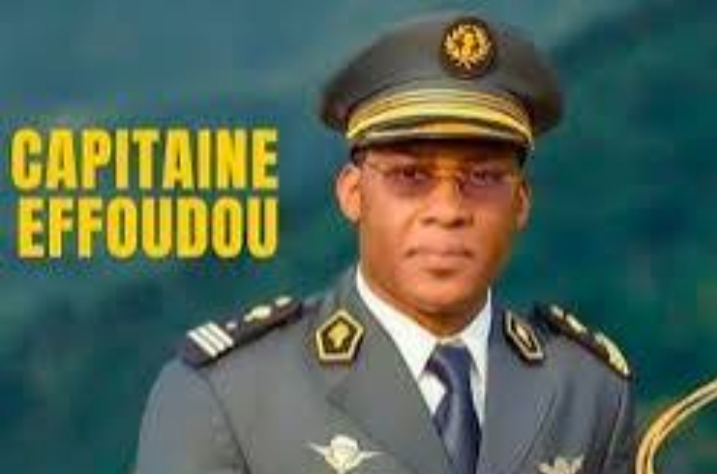
EUROPE – 24 July 2026 – The bitter and increasingly public succession struggle surrounding Cameroon’s presidential palace has taken a dramatic new turn. Video testimonies attributed to exiled military intelligence officer Captain Effoudou Awussi Romuald, recorded from an undisclosed location in Europe, allege that President Paul Biya’s authority has been severely weakened by an unelected network operating from within the presidency.
The captain’s accusations, which have circulated widely across dissident and social-media platforms, portray a government fractured by mistrust, competing security factions, and an escalating struggle to control the post-Biya transition. If substantiated, the allegations would raise profound questions about the authenticity of presidential decisions, the constitutional chain of command, and the extent to which state institutions remain under the control of the head of state.
The Purge of an Intelligence Chief
The institutional controversy intensified on 13 March 2024, when Captain Effoudou Awussi Romuald, reportedly the former head of the Intelligence Bureau within the Special Military Staff of the Presidency, was dismissed from the Cameroon Armed Forces.
According to reports publicized by whistleblowers N’Zui Manto and Boris Bertolt, the captain’s removal was not simply a routine disciplinary action. They allege that he was targeted after intercepting sensitive communications and warning the head of state about an internal conspiracy involving individuals operating within or around the presidency.
These claims have not been independently verified. Nevertheless, the circumstances surrounding the dismissal have fueled speculation that the officer may have become a threat to powerful interests after acquiring information about the internal succession struggle.
According to the accounts circulating online, Captain Effoudou subsequently faced threats to his life and was forced to flee Cameroon for Europe. From exile, he has increasingly presented himself as a former insider prepared to disclose what he describes as the covert machinery operating behind the official presidency.
The decree removing him from the military has also generated questions about the decision-making process at Etoudi. Critics have advanced two competing explanations. The first is that President Biya personally approved the dismissal despite the captain’s alleged warning. The second, more explosive allegation, is that individuals surrounding the presidency may have exercised authority in the president’s name, possibly without his informed consent.
No publicly available evidence presented in the captain’s testimony conclusively establishes that the presidential signature on the decree was forged. That claim should therefore be treated as an allegation requiring documentary and forensic verification.
The Video Testimony and the Accusation Against Ferdinand Ngoh Ngoh
In one of his most consequential public statements, Captain Effoudou directly accused Ferdinand Ngoh Ngoh, the Secretary General of the Presidency, of conduct amounting, in his view, to high treason.
The captain alleges that Ngoh Ngoh made disparaging remarks about President Biya during a private exchange with a former French ambassador to Cameroon. According to Effoudou’s account, Ngoh Ngoh allegedly stated:
“President Paul Biya is tired, lazy, does nothing, and it is I who does all the work at the Presidency of the Republic.”
The alleged statement has not been independently authenticated, and no recording, official diplomatic account, or direct confirmation from the former ambassador has been publicly produced. It therefore remains an accusation made by the exiled officer rather than an established fact.
Even so, the allegation is politically explosive because it touches the central question surrounding the final phase of the Biya presidency: who is actually exercising executive authority?
Ngoh Ngoh’s extensive delegated powers have long made him one of the most influential officials in the Cameroonian state. Critics argue that the broad delegation of presidential signature granted to him has allowed the Secretary General of the Presidency to exercise extraordinary authority over appointments, administrative decisions, public finances, and the machinery of government.
The captain’s testimony goes further. It alleges that delegated authority has evolved into the practical usurpation of presidential power by a network of senior officials and private interests operating without constitutional accountability.
Under this interpretation, President Biya remains the formal source of authority while others exercise power through decrees, administrative instructions, security structures, and access to the presidential signature.
That distinction is critical. Delegated authority exercised within constitutional limits is a recognized instrument of government. Authority exercised without the president’s knowledge, consent, or capacity would represent an entirely different and far more serious institutional crisis.
The Alleged Palace Cartel
Captain Effoudou describes the presidency not as a unified administration but as a contested political arena dominated by rival networks seeking to shape the succession.
His allegations suggest that an inner circle has sought to control access to President Biya, manage the flow of information reaching him, influence official appointments, and neutralize individuals considered obstacles to its political ambitions.
The expression “palace cartel” has increasingly been used by critics to describe this alleged network. It refers not necessarily to a formally constituted organization, but to an informal alliance of political officials, security actors, business interests, and administrative intermediaries said to benefit from the opacity surrounding presidential decision-making.
Such a system would depend upon control of several strategic instruments: Access to the head of state. Control of presidential correspondence and decrees. Influence over security and intelligence appointments. Command of state budgets and public contracts. Management of information concerning the president’s health and activities. The ability to marginalize or remove officials considered disloyal. Whether this network operates with President Biya’s authorization, in anticipation of his departure, or independently of his effective control remains the central unresolved question.
Geopolitical Fallout and Institutional Fracture
The public confrontation between an exiled intelligence officer and one of Cameroon’s most powerful state officials marks a serious escalation in the struggle surrounding Etoudi. Captain Effoudou claims to possess classified information, internal communications, and intelligence material concerning the presidency. If such documents exist and are eventually authenticated, they could expose internal decision-making processes that have remained hidden from the Cameroonian public.
His exile also creates an international dimension. From Europe, he may be beyond the immediate reach of Cameroonian security structures and potentially able to engage foreign governments, human-rights organizations, media institutions, and intelligence services.
However, possession of classified information does not automatically establish the accuracy of every public allegation. Each claim must be assessed independently through documentary evidence, corroborating testimony, metadata, official records, and, where necessary, forensic examination.
The broader significance lies in what the dispute reveals about the fragility of the state. A functioning constitutional system should not depend upon speculation over who signs decrees, who controls access to the president, or whether senior officials are governing in his name without transparent authorization. When such questions dominate public discourse, confidence in the presidency, the military chain of command, and the civil administration begins to erode.
A Succession Battle With Ethnopolitical Dimensions
The struggle is unfolding within an increasingly tense and ethnopolitically charged succession environment. Rival political, bureaucratic, security, and regional networks are believed to be positioning themselves for influence in the event of President Biya’s death, resignation, or incapacity.
The alleged Ngoh Ngoh faction is viewed by its opponents as one of the principal centers of power seeking to shape the transition. Other networks within the government, military, intelligence services, ruling party, and business establishment are equally determined to protect their interests.
This competition increases the danger that state institutions may be used as instruments in an internal power struggle. Security appointments, administrative dismissals, judicial proceedings, media campaigns, and presidential decrees may increasingly be interpreted through the logic of succession rather than ordinary governance.
Captain Effoudou’s dismissal and subsequent allegations must therefore be understood within this wider contest. Whether he is a persecuted whistleblower, a participant in an internal factional struggle, or some combination of both can only be determined through credible investigation.
The Question Cameroon Can No Longer Avoid
The most consequential issue raised by the captain’s testimony is not simply whether Ferdinand Ngoh Ngoh made the alleged remarks. Nor is it limited to the circumstances of one military officer’s dismissal.
The fundamental question is whether Cameroon is still being governed through its constitutional institutions or through an opaque system in which unelected actors exercise power behind the authority of an aging president.
If President Biya remains fully in command, the government must explain the legal and constitutional boundaries of delegated authority and address allegations that officials are acting beyond them. If he is no longer exercising effective control, then Cameroon faces a concealed vacancy of power with potentially grave consequences for national stability.
The government has a responsibility to provide verifiable answers. This should include clarification of the president’s decision-making capacity, the procedures used to authenticate presidential decrees, the limits of delegated signature, and the chain of command governing national security.
Captain Effoudou’s accusations remain allegations until independently substantiated. Yet the institutional questions they raise cannot be dismissed merely because they originate from exile or from a former insider in conflict with the regime.
The danger for Cameroon is that the struggle for succession may already be weakening the state before any formal transition has begun. As rival factions compete for control of Etoudi, the presidency risks becoming a symbol behind which unelected networks exercise power, settle scores, and prepare for the political battle to come.
Cameroon may therefore be approaching not merely a change of leadership, but a confrontation over whether the state itself will remain intact when the long Biya era finally ends.
Timothy Enongene, Associate Editor-in-chief. The Independentist News