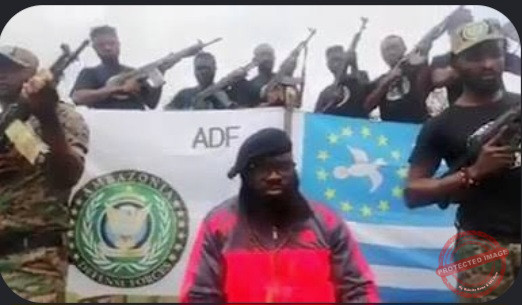


For Ambazonians, the challenge moving forward is not simply resisting external pressures. It is building a disciplined political and military culture capable of commanding the confidence of its people, attracting international respect, and sustaining the long struggle for self-determination
By Timothy Enongene
Associate Editor-in-Chief, The Independentist News
History teaches a consistent lesson across liberation movements: no struggle can sustain itself indefinitely when internal division, indiscipline, and predatory behavior are allowed to flourish. From anti-colonial movements in Africa to independence campaigns elsewhere in the world, the greatest threats have often emerged not only from external adversaries but also from actors within the movement whose actions undermine public confidence and strategic coherence.
The Ambazonian struggle has not been immune to this reality. Over the years, differing visions, competing leadership structures, and allegations of misconduct have contributed to internal tensions that have complicated the pursuit of self-determination. The experiences associated with the late General Effang, widely known as “Big Number,” and the legal troubles confronting Lucas Cho Ayaba have become focal points in ongoing debates about leadership, accountability, and the future direction of the independence movement.
The Historical Pattern of Internal Fragmentation
Liberation struggles rarely fail solely because of the strength of the opposing state. More often, they are weakened by internal fragmentation, rival command structures, and the erosion of discipline. History is filled with examples of movements that lost momentum because personal ambition, factional competition, or the abuse of civilian populations diverted attention from the primary objective.
The Ambazonian resistance has repeatedly confronted these challenges. As the war evolved, disagreements emerged regarding strategy, command authority, diplomatic engagement, and the treatment of civilians. While such debates are not unusual in revolutionary movements, they become dangerous when they result in actions that alienate the very population whose support is essential for success.
The Effang Experience and the Question of Civilian Protection
The case of General Effang remains one of the most controversial episodes of the war. Critics accused his faction of engaging in kidnappings, extortion, and actions that brought suffering to local communities in parts of Momo County and Mezam County. Supporters, meanwhile, often argued that conditions on the ground were far more complex than portrayed by opponents.
Regardless of where one stands in that debate, one reality remains difficult to dispute: liberation movements derive their legitimacy from the people they claim to defend. When civilians become victims of fear, coercion, or arbitrary violence, public trust begins to erode. Once that trust is lost, military strength alone cannot sustain a national liberation movement.
The events surrounding the public execution of two civilians at Guzang Market Square in 2023 generated widespread controversy and intensified concerns about accountability within armed groups operating in the territory. For many observers, the incident became a symbol of the dangers that emerge when local commanders operate without effective oversight or institutional discipline.
Lucas Cho Ayaba and the Debate Over Strategic Direction
The role of Ayaba has likewise generated intense discussion within Ambazonian circles. His supporters viewed him as a determined advocate of resistance and self-defense. His critics argued that some of the tactics associated with his movement—including prolonged lockdowns, school disruptions, and uncompromising political positions—contributed to public fatigue and international skepticism.
The arrest of Ayaba by Norwegian authorities in September 2024 marked a significant turning point. Whatever the eventual outcome of legal proceedings, his detention substantially reduced his ability to influence events directly and forced many supporters to reassess the long-term viability of leadership structures dependent on a single personality.
The broader lesson extends beyond any individual. Sustainable liberation movements require durable institutions rather than reliance on charismatic figures alone. When organizations become overly dependent on one leader, they often struggle to adapt when circumstances change.
The Central Importance of Unity
One of the most persistent criticisms leveled against the Ambazonian independence movement has been the existence of multiple centers of authority competing for legitimacy. Such fragmentation has often benefited the occupying state while confusing supporters, international observers, and potential diplomatic partners.
Unity does not require uniformity of opinion. Healthy movements accommodate debate, criticism, and strategic disagreement. However, they also require mechanisms for resolving disputes and establishing clear chains of command. Without those mechanisms, internal rivalries can consume resources and energy that would otherwise be directed toward achieving national objectives.
The Population as the Center of Gravity
Perhaps the most important lesson emerging from the past decade is that the civilian population remains the true center of gravity of the struggle. Governments derive legitimacy from citizens. Liberation movements derive legitimacy from communities. Any strategy that weakens public support ultimately weakens the movement itself.
The protection of civilians is therefore not merely a moral obligation; it is a strategic necessity. Communities that feel protected are more likely to cooperate, support, and sustain a liberation effort. Communities that feel victimized inevitably become disillusioned and disengaged.
For this reason, the future success of the Ambazonian cause will depend less on rhetoric and more on discipline, accountability, and the consistent demonstration that the interests of ordinary people come first.
Looking Forward
The stories of Effang and Ayaba are ultimately not only about two individuals. They are reflections of larger questions confronting every liberation movement: How should power be exercised? How should leaders be held accountable? How can unity be preserved without suppressing legitimate debate?
These questions remain unresolved, but history suggests that movements capable of learning from their mistakes are far more likely to achieve their objectives than those that refuse self-examination.
For Ambazonians, the challenge moving forward is not simply resisting external pressures. It is building a disciplined political and military culture capable of commanding the confidence of its people, attracting international respect, and sustaining the long struggle for self-determination.
The future will belong not to the loudest voices or the most powerful personalities, but to those who demonstrate integrity, accountability, and an unwavering commitment to the people in whose name the struggle is being waged.
Timothy Enongene
Timothy Enongene is Associate Editor-in-Chief of The Independentist News and writes on governance, liberation movements, political strategy, and self-determination in Southern Cameroons (Ambazonia).