

As the visit draws to a close, one question remains: Will these words lead to meaningful change, or will they fade into the long history of unheeded appeals?
By Timothy Enongene
Guest Editor-in-Chief, The Independentistnews
On Special Assignment, Bamenda
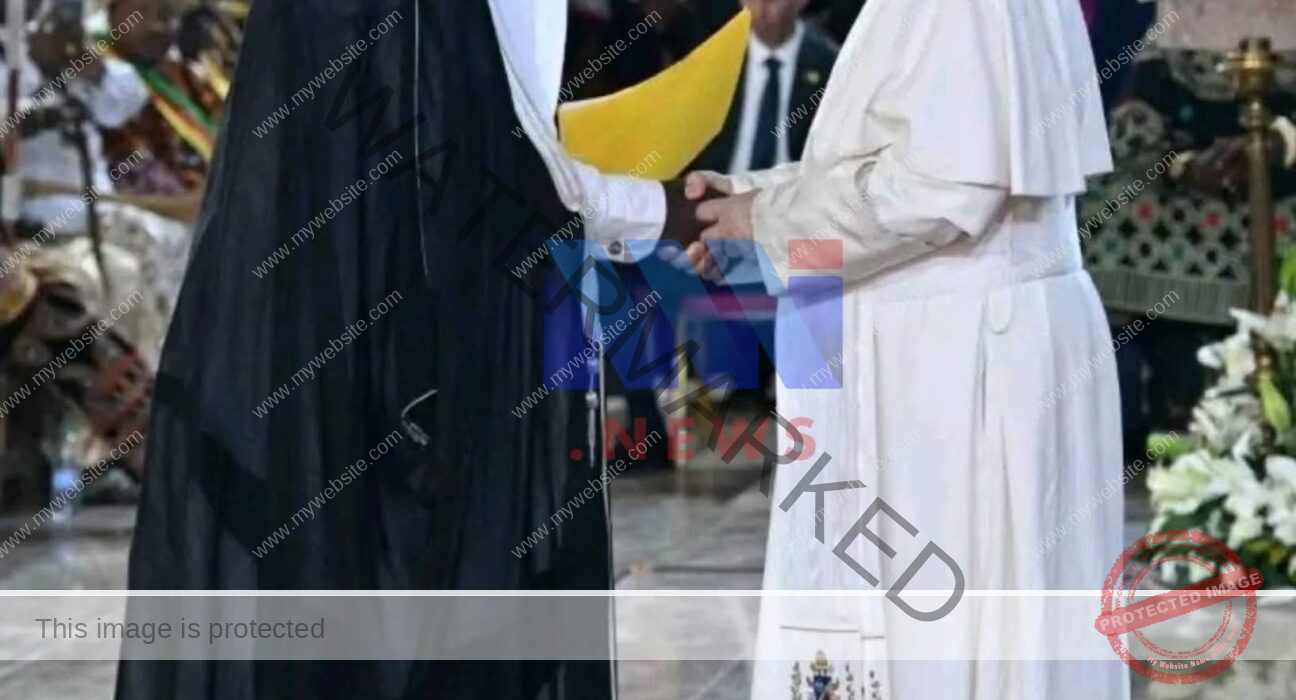
BAMENDA (April 16, 2026) – Today, Bamenda did more than gather in prayer; it revealed the depth of a people’s pain and the urgency of their demand for justice. From the runway of the newly reopened airport to the solemn arches of St. Joseph’s Cathedral in Big Mankon, Pope Leo XIV delivered two addresses that carried both moral weight and political consequence—messages that will be interpreted very differently in Bamenda and in Yaoundé.
Act I: The Airport Homily — Bearing Witness
Under a relentless sun, before tens of thousands—many dressed in black—the Holy Father spoke directly to suffering that could not be ignored. He acknowledged the violence that still shadows daily life, including reports of gunfire in nearby Bafut earlier that morning. Setting aside prepared remarks, he spoke with unusual immediacy:
“I see the black you wear… it is not just a garment; it is your history.”
It was a moment of recognition. Not endorsement, not accusation—but acknowledgment. He framed injustice not as an abstract issue, but as a lived reality, insisting that peace cannot take root where fear and bloodshed persist.
Act II: St. Joseph’s Cathedral — A Moral Challenge to Power
Later, inside St. Joseph’s Cathedral, the tone shifted from empathy to principle. Addressing an audience that included state officials, traditional leaders, and clergy, the Pope delivered a broader reflection on power and legitimacy:
“Power that sustains itself by silencing its own people has already begun to fail.”
Without naming actors, the message was clear: authority must be grounded in justice, not coercion. His words challenged not only those who govern, but anyone who believes force can substitute for legitimacy.
Dialogue and Doubt: Who Speaks for the People?
A closed-door meeting with civil society groups and local representatives introduced a more complicated layer to the visit. While presented as a step toward dialogue, some attendees were viewed by segments of the population with skepticism—seen as too closely aligned with official structures. Others, including faith leaders and grassroots organizations, were regarded as more authentic voices of the community.
The Pope, for his part, emphasized a simple but powerful principle: “Peace is not built behind closed doors alone; it must be rooted in the trust of the people.”
Key Voices Present
Civil society groups and NGOs – with varying degrees of public trust, Traditional authorities, including the Mankon Fon – navigating cultural leadership amid political pressure, Faith-based organizations, notably the Catholic Women’s Association – representing strong grassroots engagement, Interfaith leaders – working quietly to bridge divides across communities.
A Moment That Reshapes the Conversation
The significance of this visit lies not in dramatic declarations, but in what was acknowledged—and what can no longer be easily dismissed. By recognizing suffering, calling for justice, and urging genuine dialogue, the Pope reframed the narrative. The conflict was not reduced to labels or simplified explanations; it was presented as a human crisis requiring moral clarity and political courage.
As the visit draws to a close, one question remains: Will these words lead to meaningful change, or will they fade into the long history of unheeded appeals?
Timothy Enongene
Guest Editor-in-Chief, The Independentistnews
On Special Assignment, Bamenda