










News commentary

We are home to news on Cameroon and the CEMAC region. We are dedicated to honest and reliable reporting. We are the voice of the Cameroonian people and their fight for freedom and democracy at a time when the Yaoundé government is silencing dissent and suppressing democratic voices.

And in conflicts of this nature, validation is the first fracture in the wall of denial. Because once suffering is acknowledged as real, the questions that follow cannot be contained: Why is this happening? Who benefits from its continuation? And who will be held accountable?
By Ali Dan Ismael
Editor-in-Chief, The Independentistnews
A MOMENT THAT CANNOT BE UNDONE
There are moments when history does not whisper. It speaks—clearly, unmistakably, and with a moral authority that no regime can dilute. This is one of those moments.
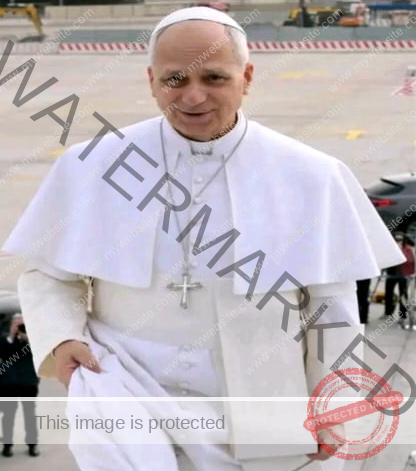
When Pope Leo XIV stood in Bamenda and described the land as “bloodstained,” he did more than deliver a sermon. He shattered a carefully constructed lie. For nearly a decade, the authorities in Cameroon have insisted that what is unfolding in the English-speaking regions is a “crisis,” a “disturbance,” a “misunderstanding.” Words chosen not to describe reality—but to escape it. But reality does not bend to language.
Six thousand dead is not a misunderstanding. Burned villages are not a disturbance. Mass displacement is not administrative friction. And now, the world has heard it from a voice that cannot be dismissed.
THE COLLAPSE OF THE OFFICIAL NARRATIVE
The significance of the Pope’s words lies not only in what he said—but in what his words destroy. “An endless cycle of destabilisation and death.” That is not the language of counterterrorism. That is the language of systemic failure.
When he warned that those who “rob your land of its resources” reinvest in weapons, he did not speak in abstractions. He identified a structure—a machine in which exploitation feeds violence, and violence protects exploitation.
This is no longer a conflict described only by those who suffer it. It is now a reality acknowledged by one of the most powerful moral institutions on earth: the Catholic Church. And that changes everything.
MORAL EXPOSURE: THE REGIME’S GREATEST FEAR
Authoritarian systems do not collapse first under military pressure. They collapse under moral exposure. Because once the truth is spoken in a language the world understands, the system loses its greatest weapon: plausible deniability.
The visit to Bamenda was not symbolic. It was surgical. Under military escort, behind bulletproof glass, the Pope entered a territory that the state itself has turned into a theatre of war. And in doing so, he confirmed what the regime has spent years denying: this is not a localized disturbance—it is a sustained condition of violence.
Even more devastating was his condemnation of those who manipulate religion and power for “military, economic and political gain.” This was not a call for calm. It was an indictment of leadership.
SILENCE IS NO LONGER NEUTRAL
Before this moment, the international community could claim uncertainty. They could say they were monitoring, concerned, encouraging dialogue. That era is over.
Because when a Pope describes a region as bloodstained, neutrality becomes a choice—not a position. Every government that continues to treat this crisis as peripheral now stands exposed. Every institution that avoids naming the reality is no longer cautious—it is complicit. Silence, after Bamenda, is no longer diplomacy. It is endorsement.
THE MESSAGE BENEATH THE MESSAGE
Let us be clear. The Pope did not endorse independence. He did not draw borders or draft constitutions. That is not his role. But he did something far more consequential. He validated the condition.
And in conflicts of this nature, validation is the first fracture in the wall of denial. Because once suffering is acknowledged as real, the questions that follow cannot be contained: Why is this happening? Who benefits from its continuation? And who will be held accountable?
THE ILLUSION IS OVER
For years, the fiction has been maintained that control still exists—that authority is intact, that legitimacy is unquestioned, that the narrative can still be managed. But systems begin to unravel when they are forced to hear their own indictment echoed back to them from outside. That moment has arrived.
Not from activists. Not from opposition figures. But from the Vatican itself. The language may be measured. The tone may be pastoral. But the implication is unmistakable. A land has been named “bloodstained.” A cycle of death has been acknowledged. A structure of exploitation has been exposed. And once such truths enter the global record, they do not disappear. They accumulate. They amplify. And eventually—they act.
HISTORY HAS TAKEN NOTE
The visit to Bamenda will not end the conflict. But it has altered its trajectory. Because from this point forward, the crisis in the English-speaking regions of Cameroon is no longer a story told only by those who live it. It is a reality affirmed by a global moral authority. And that is how history begins to shift. Not always with force. Not always with fire. But with a sentence that cannot be taken back.
Ali Dan Ismael
Editor-in-Chief, The Independentistnews
Share This Post:
From Bamenda to the United Nations: Documentation, Accountability, and Rising Tension in Bafut
Shadow Dialogues and Sacred Dossiers: The Battle for the Pope’s Ear
Related Post
IS THE WORLD LISTENING: THREE DAYS FOUR FRONTLINES, ASA
SEPTEMBER 24, 1965, THIS DAY IN HISTORY: From Equal
AMBAZONIA’S WAR- IS BIGGER THAN YAOUNDÉ: BRITAIN, FRANCE AND
THE DAY SEPTEMBER 22 1961: — WHAT AMBAZONIA CAN
TRUMP’S “SUPER INTELLIGENCE” ERA: WHAT IT REALLY MEANS —
Why Is Ambazonia More Powerful Than many Imagine.