



The most important lesson for Ambazonia is not whether France is right or wrong. The real lesson is that all major powers pursue their interests. France pursues French interests. America pursues American interests. China pursues Chinese interests. Russia pursues Russian interests. Britain pursues British interests.Successful nations understand this reality and structure their diplomacy accordingly. No foreign government will ever pursue Ambazonian interests more vigorously than Ambazonians themselves.
By Ali Dan Ismael
Editor-in-Chief, The Independentist News
France’s Search for a New African Identity
As France attempts to redefine its place in Africa, President Emmanuel Macron has become the principal architect of a new French narrative. The language of empire has largely disappeared, replaced by the language of partnership, cooperation, and mutual respect. French leaders increasingly speak about African youth, African entrepreneurship, African innovation, and African sovereignty. France presents itself as a committed partner in Africa’s future and a supporter of African development in an emerging multipolar world.
Yet despite these efforts, France faces growing skepticism across much of the continent. Military withdrawals from several African countries, rising anti-French sentiment throughout the Sahel, and increasing competition from emerging global powers have exposed a fundamental contradiction between France’s messaging and the way many Africans perceive French policy.
For Ambazonians, this contradiction deserves careful examination because it offers valuable lessons about how major powers pursue strategic interests and how emerging nations must navigate an increasingly complex international environment.
The Weight of History
The greatest challenge confronting France’s African rebranding is not its present policy but its historical legacy. For many Africans, France is not viewed merely as a former colonial power. It is viewed as a state that continued to exercise significant political, military, economic, and diplomatic influence long after formal decolonization. The system commonly referred to as Françafrique has become synonymous with a network of relationships through which Paris maintained influence across much of Francophone Africa.
Supporters often describe these relationships as mutually beneficial partnerships that promoted stability and development. Critics argue that they preserved dependency, protected preferred political elites, and constrained the development of genuine democratic alternatives. Whether one fully accepts either interpretation is secondary. The reality is that historical memory continues to shape contemporary perceptions. Throughout Africa, France’s current actions are often judged through the prism of its past conduct.
The Forgotten Legacy of French Cameroon
One of the least discussed chapters of African decolonization remains the violent conflict that accompanied the transition to independence in French Cameroon. The suppression of nationalist movements during the 1950s and early 1960s left political scars that continue to shape the country’s political culture.
Many historians argue that the destruction of organized opposition movements significantly weakened the foundations of democratic pluralism during the formative years of the state. Critics contend that the centralized political culture that emerged in post-independence Cameroon did not arise by accident but evolved from structures established during the colonial and immediate post-colonial periods when political control and strategic stability were prioritized over democratic competition.
For many Southern Cameroonians, the roots of today’s governance crisis cannot be separated from this historical legacy. They argue that the political architecture created during that era laid the foundations for the centralized state that continues to dominate Cameroon today.
The 1992 Election and the Crisis of Democratic Confidence
For many Southern Cameroonians, the presidential election of 1992 remains a defining moment in the political history of Cameroon. The election generated enormous expectations among citizens who believed democratic change was possible through the ballot box.
When the official results were announced, controversy quickly followed. Opposition supporters and many observers questioned the outcome and argued that the election exposed the limits of democratic competition within the existing political system. Whether one accepts or rejects those claims, the political consequences were profound.
For many Southern Cameroonians, 1992 represented a turning point in public confidence. It reinforced a growing perception that meaningful political transformation through existing institutions faced significant obstacles. The disappointment that followed contributed to wider frustrations concerning constitutional reform, decentralization, political representation, and democratic accountability.
The years that followed witnessed the gradual weakening of opposition momentum. Internal divisions, institutional constraints, and changing political realities reduced the ability of opposition movements to challenge the centralized state effectively. For many Ambazonians, this period confirmed a belief that the fundamental questions facing Southern Cameroons would not be resolved through conventional political processes alone.
Aujoulat, Françafrique, and the Architecture of Power
Within these historical debates, the name Louis-Paul Aujoulat frequently emerges. To many critics of French policy, Aujoulat symbolizes a broader colonial strategy through which political transitions were carefully managed to ensure that post-independence leadership structures remained compatible with French strategic interests.
Whether every accusation leveled against colonial administrators is historically accurate remains a matter for scholars. However, what is beyond dispute is that many Africans continue to question the extent to which political sovereignty truly replaced colonial influence.
The broader Françafrique system reinforced this perception by creating the impression that leadership succession, military cooperation, economic policy, and political outcomes across Africa were influenced not only by domestic actors but also by powerful networks extending into Paris.
As France loses influence across parts of Africa, many observers are asking whether the old mechanisms of influence have disappeared, evolved, or merely become less visible. The question remains relevant because it touches on a deeper issue: whether African states have ever exercised complete sovereignty over their political destinies or whether external influence has remained a persistent feature of post-colonial governance.
The Economic Marginalization of Southern Cameroons
For many Ambazonians, the political question cannot be separated from the economic question. Before unification, Southern Cameroons possessed many of the essential foundations of a viable economy. Its Atlantic coastline, commercial links with Nigeria, thriving agricultural sector, maritime facilities in Victoria, transportation infrastructure, and vibrant regional markets positioned the territory for significant economic growth and long-term prosperity.
Many Southern Cameroonian scholars argue that these foundations were gradually weakened following unification. They point to the concentration of strategic investment, administrative authority, and economic decision-making within the Douala-Yaoundé axis as evidence of a broader process of economic centralization.
The decline of regional institutions, the weakening of transportation networks, the reduced strategic significance of Tiko Airport, the deterioration of Victoria’s historic economic role, and the concentration of major state investments elsewhere are frequently cited as examples of policies that disproportionately affected Southern Cameroons.
Whether these developments resulted from deliberate political decisions or broader national priorities remains a matter of debate. What cannot be ignored is that many Southern Cameroonians perceive them as part of a long-term pattern of economic marginalization. This perception has become one of the central drivers of the contemporary Ambazonian movement.
Assimilation or National Integration?
Perhaps no issue generates greater resentment among many Ambazonians than the belief that the post-1961 political arrangement evolved into a systematic project of assimilation rather than a genuine partnership between two peoples.
From the Southern Cameroons perspective, the promises made at the time of unification envisioned a union between distinct peoples possessing different colonial histories, educational systems, legal traditions, and political cultures. Many Ambazonians argue that these distinctions were gradually eroded through policies that concentrated power within a centralized state structure largely inherited from French Cameroon.
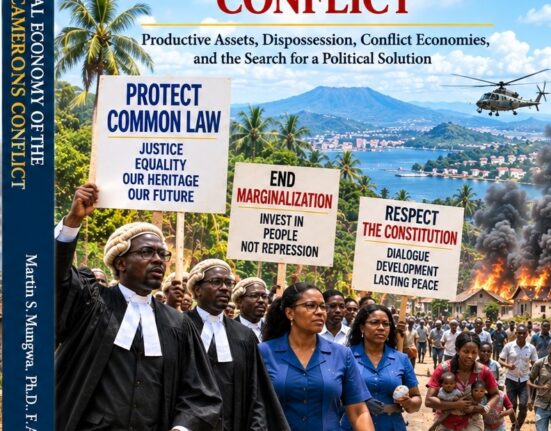
The Common Law system increasingly came under pressure from civil law traditions. Educational structures underwent significant transformation. Administrative institutions became increasingly centralized. English-speaking communities frequently complained of political marginalization, cultural erosion, and the weakening of institutions that once reflected their distinct historical experience.
Many Ambazonians therefore view the conflict not simply as a dispute over governance but as a struggle to preserve a distinct historical identity. Within this interpretation, France occupies a controversial position. Critics argue that Paris consistently supported a centralized state model in Cameroon because it reflected long-standing traditions inherited from French colonial administration. As a result, they contend that international support for successive governments in Yaoundé often reinforced structures that weakened the distinct political and cultural identity of Southern Cameroons.
The Grand National Dialogue and Historical Memory
The skepticism many Ambazonians express toward France’s African policy also shapes how they interpret international responses to the conflict in Southern Cameroons.
The Grand National Dialogue of 2019 serves as an important example. Presented by its organizers as a national reconciliation initiative, the dialogue was welcomed by many international actors as evidence of political engagement and reform. However, many Ambazonians viewed it differently.
Critics argued that the process avoided the central issues underlying the conflict, including self-determination, the historical status of Southern Cameroons, and the constitutional legitimacy of the post-1961 political order. Many also argued that the dialogue attempted to redefine the origins of the conflict by portraying it primarily as a governance crisis rather than a dispute rooted in competing interpretations of history, sovereignty, and political identity.
For many Ambazonians, the dialogue appeared less like a negotiation and more like a carefully managed political exercise designed to preserve existing structures while projecting an image of reform to international audiences.
Security Cooperation and the Ambazonian Question
Another source of distrust toward French policy among many Ambazonians concerns the issue of military and security cooperation between France and the government in Yaoundé.
For decades, France has maintained security relationships with numerous African states through military training programs, intelligence cooperation, defense agreements, technical assistance, and broader security partnerships. French officials generally describe such cooperation as necessary for combating terrorism, promoting regional stability, and strengthening state institutions.
Many Ambazonians, however, view these relationships through a different lens. Critics argue that military assistance, strategic advice, intelligence cooperation, and defense partnerships provided to the Cameroonian state cannot be separated from the realities of the conflict in Southern Cameroons. They question whether external support has indirectly strengthened the capacity of state forces engaged in military operations against communities that Yaoundé identifies as separatists but that many Ambazonians describe as self-defense forces.
Whether these concerns are fully justified or not, they remain an important component of how many Southern Cameroonians interpret France’s role in the conflict.
The Élysée and the Question of African Leadership
One of the most persistent criticisms directed toward French foreign policy concerns the perception that political leadership in parts of Africa has historically been influenced by networks connected to Paris.
For decades, critics of Françafrique argued that informal advisory circles, diplomatic channels, intelligence relationships, and political networks helped shape leadership transitions throughout former French territories. These criticisms often focused on institutions associated with the French presidency and the broader foreign policy establishment surrounding the Élysée Palace.
Whether such influence was decisive, exaggerated, or symbolic remains the subject of debate. Yet the perception itself has had enormous political consequences because it contributed to the belief that important political decisions affecting African nations were sometimes influenced beyond their borders.
As France’s influence declines in several parts of Africa, important questions emerge. Are the structures historically associated with Françafrique disappearing? Are they adapting to a new geopolitical environment? Or are they simply being replaced by new forms of external influence emerging from other global powers?
Macron’s Pan-African Contradiction
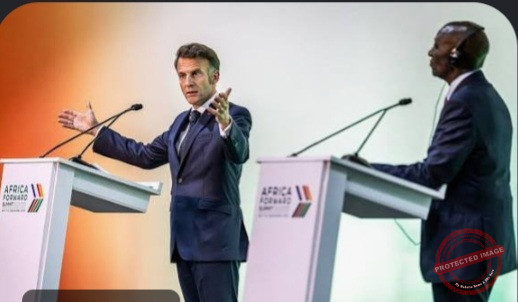
President Macron’s assertion that “we are the true Pan-Africanists” illustrates the challenge facing France’s African rebranding. To French policymakers, such statements may be intended as expressions of solidarity with Africa’s future. To many Africans, however, they appear disconnected from historical realities.
Pan-Africanism emerged from African intellectuals, anti-colonial movements, and liberation struggles seeking self-determination and freedom. Consequently, attempts by former colonial powers to define, reinterpret, or lead Pan-African aspirations inevitably generate skepticism.
The controversy surrounding Macron’s statement demonstrates that historical memory remains one of the most powerful forces shaping Africa’s international relationships.
What Ambazonia Must Learn
The most important lesson for Ambazonia is not whether France is right or wrong. The real lesson is that all major powers pursue their interests. France pursues French interests. America pursues American interests. China pursues Chinese interests. Russia pursues Russian interests. Britain pursues British interests.Successful nations understand this reality and structure their diplomacy accordingly. No foreign government will ever pursue Ambazonian interests more vigorously than Ambazonians themselves.
Future Ambazonian leaders must therefore avoid both naïve dependence and emotional hostility toward external actors. Instead, they must cultivate the capacity to evaluate every relationship through the lens of national interest.
Conclusion: Beyond France
France’s effort to redefine its relationship with Africa reveals an important truth about international politics. Great powers constantly adapt their narratives, strategies, and partnerships to protect their interests.
The historical legacy of French influence in Africa, the debates surrounding Françafrique, the unresolved questions of sovereignty, the memories of French Cameroon’s violent decolonization, the perceived economic marginalization of Southern Cameroons, the assimilation debate, the controversies surrounding the Grand National Dialogue, and concerns regarding security cooperation all demonstrate that perceptions matter as much as policies.
For Ambazonia, the lesson is not to focus exclusively on France. The lesson is to understand how power operates. Nations survive not because powerful friends protect them but because they develop the institutional, economic, diplomatic, and cultural capacity necessary to protect themselves and shape their own future.That is the deeper lesson hidden within France’s African rebranding, and it is one Ambazonia cannot afford to ignore.
Ali Dan Ismael
Editor-in-Chief, The Independentist News