










Political commentary

We are home to news on Cameroon and the CEMAC region. We are dedicated to honest and reliable reporting. We are the voice of the Cameroonian people and their fight for freedom and democracy at a time when the Yaoundé government is silencing dissent and suppressing democratic voices.

The questions raised by both allegations of financial inducement and the absence of transparent electoral documentation point to a larger issue confronting Cameroonian politics: public confidence.
By Lester Maddox, Guest Writer
Independentistnews, Oakland County, California
YAOUNDÉ 11 February 2026 – Cameroon’s political landscape remains unsettled months after the country’s most recent presidential election. Allegations, counter-allegations, and unresolved questions continue to shape public debate, particularly regarding the conduct and unity of opposition parties.
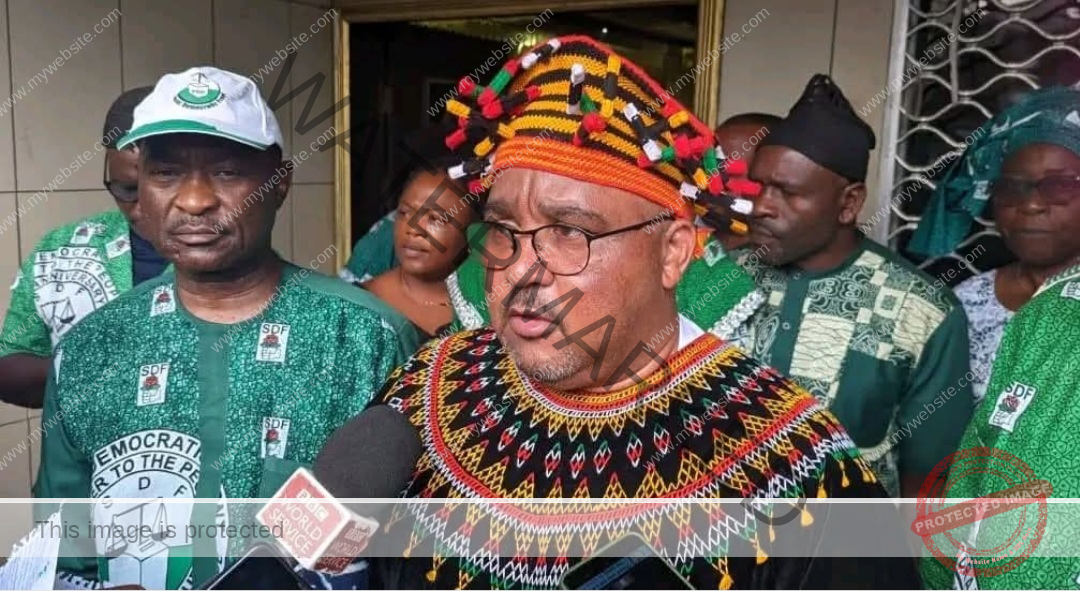
At the center of current controversy is Joshua Osih, Chairman of the Social Democratic Front (SDF), whose leadership is facing scrutiny following claims made by former CRTV journalist John Mbah Akuroh. The situation has reopened wider discussions about transparency, opposition strategy, and public trust in political institutions.
The allegations circulating
The controversy intensified when John Mbah Akuroh released a video alleging that large sums of money were transferred to several opposition figures prior to the election. According to his claims, senior figures from multiple political parties received financial inducements intended to weaken opposition unity.
Among those named were leaders from several opposition parties, including the SDF and other political formations. These allegations quickly spread online and became a major topic of political discussion.
However, it is important to note that these claims remain allegations. No court ruling or independent investigation has yet publicly confirmed the accusations, and those named have rejected wrongdoing.
Legal Responses and Public Perception
Joshua Osih responded strongly to the accusations, describing them as defamatory and announcing plans for legal action against Akuroh. Subsequent developments have included calls for clarification, public exchanges, and discussions about possible legal settlements or retractions.
The ongoing dispute has left many observers uncertain. Supporters of Osih argue that accusations without verified evidence risk damaging reputations and weakening opposition politics. Critics, meanwhile, believe the allegations deserve transparent investigation. The lack of clear resolution has allowed speculation to continue.
The Question of Polling Agents and Tally Sheets
Another issue fueling debate concerns the SDF’s claim during the election campaign that it had deployed tens of thousands of polling agents nationwide.
Critics now ask why the party has not publicly released comprehensive polling-station tally sheets or alternative vote counts to challenge official results. Supporters of the party argue that collecting and securing such data in contested political environments is complex and sometimes dangerous, making public disclosure difficult.
Nevertheless, many voters expected stronger documentation from opposition parties seeking to contest official results. The absence of publicly accessible data has created frustration among citizens hoping for clearer electoral accountability.
A Broader Opposition Challenge
Beyond individual allegations, the controversy highlights a deeper challenge facing Cameroon’s opposition: internal divisions and public distrust weaken efforts to present a unified alternative to the ruling establishment.
Some analysts argue that fragmentation, rivalry, and strategic disagreements among opposition figures have played as large a role in electoral outcomes as government influence itself.
For ordinary citizens, these disputes often translate into disappointment and confusion rather than political clarity.
Conclusion: Transparency Remains Essential
The questions raised by both allegations of financial inducement and the absence of transparent electoral documentation point to a larger issue confronting Cameroonian politics: public confidence.
Whether the accusations prove true or false, the demand from citizens remains the same—greater transparency, accountability, and unity among political actors who seek public trust.
Until clear answers emerge through credible investigation or evidence, debates surrounding leadership decisions, campaign strategies, and election conduct are likely to persist.
For many observers, the ultimate concern is not only who won or lost, but whether future political processes can inspire greater confidence among the people they are meant to serve.
Lester Maddox, Guest Writer
Independentistnews, Oakland County, California
Share This Post:
KNOW THE HERO AND PATRIOT CALLED ZACCHAEUS MUNGWE FORJINDAM
The Ghost of Liberty Square: How Joshua Osih and the SDF Reached a Crossroads
Related Post
QUEBEC VOTED FOR INDEPENDENCE AS AN OPTION, WHY WAS
PROPHECY, POLITICS, AND THE AMBAZONIAN QUESTION (PART III) Why
WHEN YAOUNDÉ’S ALLIES SUDDENLY ENDORSE AYUK TABE: SOLIDARITY OR
THE SECOND RETURN: FROM THE PAIN OF SEPARATION TO
WHEN THE REGULATOR BENDS: WHAT THE VISION 4 AFFAIR
PROPHECY, POLITICS, AND THE AMBAZONIAN QUESTION (PART II) :