

Cameroon now faces a defining choice: remain a nation where power is arranged, or become one where power is earned. Continue as spectators, or rise as participants. History has already been written once. It does not have to be written the same way again.
By a Patriot The Independentistnews contributor
THE MOMENT EVERYTHING CHANGED
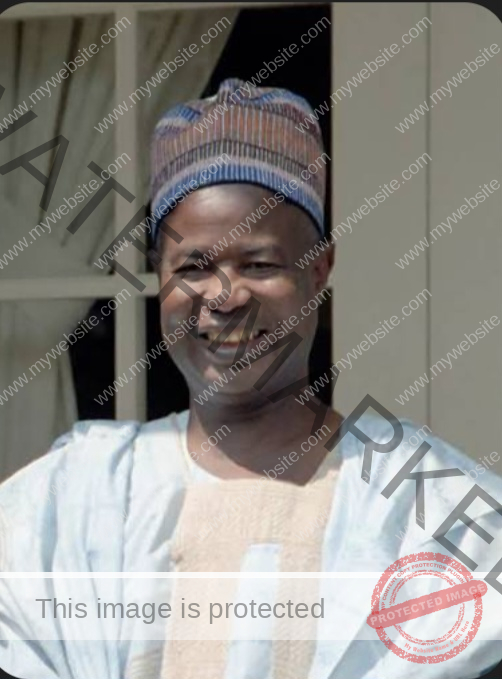
There are moments in a nation’s history that define everything that follows. For Cameroon, that moment came in 1982—when Ahmadou Ahidjo did not simply step down, but quietly decided that the people no longer mattered. There was no election. There was no mandate. There was no consent. Only a decision—handing power to Paul Biya, a man the people did not choose. That was not governance. That was confiscation. And Cameroon has been living inside that decision ever since.
WHEN THE PEOPLE WERE ERASED
Ahidjo’s act did more than install a successor—it rewrote the rules of power. It told every citizen: your role is not to choose, but to accept. And once that principle took root, it became the foundation of a system where elections became ritual, institutions became decorative, and participation became symbolic.
THE SYSTEM PERFECTED
If Ahidjo created the template, Paul Biya perfected it. For over four decades, the system has operated with one objective: continuity without accountability. The result is a political culture where leadership is insulated, not tested—where power circulates within a closed circle, not through the will of the people.
CORRECTION IS NOT OPTIONAL
But history is not destiny. Correction is possible—but it will not happen by accident. It requires deliberate, structural, and generational change. Not slogans. Not promises. Action.
EDUCATION: REBUILD THE CITIZEN
First, education must be rebuilt to form citizens, not subjects. Civic education must become a core discipline from the earliest levels, teaching not just rights, but responsibility, constitutional awareness, and critical thinking. Political literacy—not political obedience—must define the classroom. Universities must become spaces of debate and inquiry, not extensions of state narratives. A people who do not understand power will always be ruled by those who do.
CIVIL RESPONSIBILITY: FROM SILENCE TO PARTICIPATION
Second, civil responsibility must be restored. The system survives because citizens have been conditioned to observe rather than participate. That must end. Civic participation—voting, public engagement, community organization—must become the norm. The culture of fear must be broken through collective, disciplined action. Grassroots accountability must emerge, where communities track governance, demand transparency, and refuse silence. A nation is not changed from above; it is reclaimed from below.
INSTITUTIONAL REFORM: BREAK THE STRUCTURE OF CONTROL
Third, institutional reform is non-negotiable. No system designed to exclude can produce legitimacy. Elections must be managed by a truly independent body, free from executive control. Term limits must be binding and irreversible. The separation of powers must exist in practice, not theory, with a judiciary and legislature capable of acting independently. Without structural reform, elections remain outcomes, not processes.
DIPLOMACY: END THE ILLUSION OF LEGITIMACY
Fourth, diplomacy must shift from passive acceptance to principled engagement. Cameroon’s external relationships must reflect internal realities, not staged stability. International partners must be engaged with transparency, and global democratic standards must be invoked consistently. The culture of diplomatic silence must end. Longevity must no longer be mistaken for legitimacy.
NATIONAL REAWAKENING: RESTORE OWNERSHIP
Finally, a national reawakening is required. The core problem is not only political—it is philosophical. The belief that the state belongs to those in power must be dismantled. Power belongs to the people. Leadership is a responsibility, not a possession. The state is not an inheritance; it is a trust.
FINAL VERDICT: BREAK THE CYCLE
Let this be understood clearly: the problem did not begin with Biya. Biya is the continuation. The origin lies in Ahidjo’s decision to replace the will of millions with the judgment of one man. That decision created a system. That system created a culture. That culture now threatens to repeat itself once again. But this time, the outcome is not inevitable.
Cameroon now faces a defining choice: remain a nation where power is arranged, or become one where power is earned. Continue as spectators, or rise as participants. History has already been written once. It does not have to be written the same way again.
The Patriot