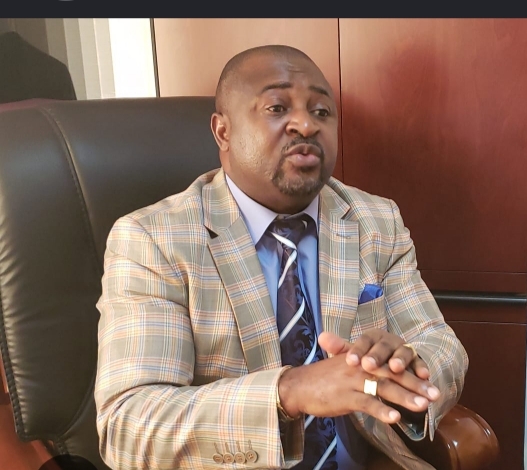


The central question cannot permanently be: How do we reconcile North West and South West? A more fundamental democratic question is: What political future do the people of the Former British Southern Cameroons choose for themselves? Different people may answer differently. That is precisely why a democratic and Internationally credible political process matters. The restoration movement has its answer. Federalists have theirs, and these two separate answers have no merging point.
By Timothy Enongene
Associate Editor-in-Chief, The Independentist News
As Amazon associate this site earns from qualifying purchases
Get your back to school needs from Amazon
BUEA – 26 August 2026 – There comes a point in every political struggle when a people must stop asking how to make an existing system more comfortable and begin asking what political future they actually seek. That is the question confronting the Southern Cameroons–Ambazonia restoration movement today.
The movement did not emerge because its supporters wanted a better seat in Yaoundé. It was not principally organized to obtain an Anglophone vice-presidency, another version of “special status,” another decentralization formula, or simply a more generous place within the existing political structure of La République du Cameroun.
Its central claim has been more fundamental: that the political relationship governing the Former British Southern Cameroons had broken down and that the people should recover the authority to determine their own political future. Whether one accepts or rejects that claim, it is the claim that must be confronted.
That is why David Makongo’s recent emphasis on “Anglophone unity,” as presented in the political debate surrounding him, deserves serious examination. Unity is valuable. Reconciliation is valuable. Economic cooperation is valuable. Healing divisions among our people is necessary. But unity is not a political destination by itself.
The question is: Unity for what? Unity to prepare Southern Cameroons–Ambazonia for responsible self-government? Or unity as a pathway back toward another constitutional settlement within La République du Cameroun? That distinction cannot be hidden beneath attractive words.
THE PROBLEM WITH MAKING “NORTH WEST–SOUTH WEST” THE CENTRAL QUESTION
We have heard variations of this argument before. The vocabulary sounds constructive: reconciliation, development, dialogue, cooperation, shared interests and unity. But when “North West” and “South West” become the organizing categories through which the Southern Cameroons political problem is explained, something important changes.
A dispute over political authority and constitutional destiny risks being transformed into an internal quarrel between two administrative regions. That is precisely where caution is necessary. The conflict did not begin because a farmer in Manyu had a quarrel with a teacher in Mezam. It did not begin because Fako and Bui declared war on one another. It did not arise because the people now described administratively as “North Westerners” and “South Westerners” discovered that they constituted two permanently antagonistic peoples.
The central dispute is political. It concerns authority. It concerns political consent. It concerns constitutional history. And for the restoration movement, it ultimately concerns sovereignty and the right to determine the future of the territory it calls Ambazonia. Reducing that question to “North West versus South West” changes the subject.
PEOPLE ARE NOT THEIR POLITICAL APPOINTEES
There is another distinction that deserves protection. Individuals from different communities have served governments, political parties and administrations in Yaoundé. Some defended central-government policies. Others resisted them. Some benefited from the system. Others suffered under it. But the actions of an individual political actor should not automatically become the collective guilt of an entire community.
If a politician from Fako supports a policy that harms citizens in Mezam, Fako should not thereby be declared responsible. If an official from Mezam participates in policies that disadvantage people in Manyu, Mezam does not become the enemy. Political responsibility belongs first to the person, institution and system exercising the authority. That principle matters enormously for the country Ambazonians say they want to build.
A national project that replaces individual accountability with collective regional blame will eventually reproduce the divisions it claims to overcome. Our communities have differences. Every country does. But social difference is not the same thing as the existence of two hostile nations.
ADMINISTRATIVE LABELS SHOULD NOT BECOME POLITICAL DESTINIES
“North West” and “South West” are familiar administrative and geographic labels within the contemporary Cameroonian state. People use them every day. There is no need to pretend that those identities have no social meaning. The mistake is to allow administrative geography to become permanent political destiny. A future Ambazonia worthy of the sacrifices made in its name should be larger than inherited administrative compartments.
Midland, Savannah and Atlantic should not become competing political camps. Counties should not become miniature ethnic states. Villages should not determine citizenship. Tribe should not determine opportunity. A citizen from Bachuo Ntai should be able to live and work in Mezam. A citizen from Essimbi should be able to establish a business in Fako. A citizen from Ikiliwindi should be able to study, work or own property in Bui. A citizen from Buea should be able to build a life in Bamenda. The law should recognize each first as a citizen. That is meaningful national unity.
REPAIRING WHICH HOUSE?
Supporters of reconciliation sometimes speak of “repairing the house.” It is a useful metaphor—but only after one answers a basic question: Which house? If the house means Southern Cameroons–Ambazonia, then there is much to repair.
We must confront tribalism. We must overcome regional prejudice. We must build transparent institutions. We must create accountable government. We must establish the rule of law. We must build productive economic networks. We must prevent political factions from becoming permanent states within the state. We must protect dissent. We must develop institutions capable of surviving leaders. That repair work is indispensable. But if “repairing the house” means preparing the population to return to another constitutional arrangement within La République du Cameroun, then that is a different political project.
It may be advocated. It may be debated. Citizens may support it. But intellectual honesty requires that different political projects be named as different political projects. Federation is not independence. Special status is not independence. Decentralization is not independence. Representation in Yaoundé is not independence. And restoration advocates should not be expected to treat those alternatives as synonymous with their own political objective.
DISAGREEMENT IS NOT BETRAYAL
There is an equally important principle on the other side. Anyone has the right to advocate federation. Anyone may argue for a negotiated constitutional arrangement. Anyone may believe independence is unrealistic. Anyone may change political positions. David Makongo has that right. So does every other Southern Cameroonian.
A future free society cannot claim freedom for a people while denying freedom of political opinion to individual citizens. We should therefore criticize ideas rather than criminalize disagreement. We can challenge Makongo. We can criticize Dr. Samuel Sako. We can criticize Sisiku Ayuk Tabe. We can criticize political organizations, intellectuals, activists, traditional authorities and public officials.
No leader should become politically sacred. That is what freedom is supposed to mean. The disagreement becomes problematic only when one political project is presented as though it were another. If someone advocates federation, say federation. If someone advocates special status, say special status. If someone advocates independence, say independence. Then let citizens compare the arguments.
YAOUNDÉ’S SUCCESSION POLITICS DO NOT SETTLE THE AMBAZONIAN QUESTION
The political ambitions of Maurice Kamto, Issa Tchiroma or any other politician seeking power in La République du Cameroun should also be distinguished from the Southern Cameroons question. They may oppose President Paul Biya. They may propose significant reforms. They may seek political change within Cameroon. Those are legitimate questions within Cameroonian politics. But replacing one president in Yaoundé with another does not, by itself, resolve the constitutional and political dispute concerning Southern Cameroons.
A new occupant of the Unity Palace does not automatically settle the question of political consent. A new governing party does not automatically resolve the historical dispute. A democratic transition in Cameroon, if it occurs, may create opportunities for dialogue. It may improve the political environment dramatically. But it is not itself an answer to the Southern Cameroons–Ambazonia question. Those are related but distinct political problems.
WHAT WOULD A SERIOUS NEGOTIATION LOOK LIKE?
If genuine negotiations eventually occur, they should address the actual dispute rather than a substitute dispute. They should not begin by assuming that the purpose of the process is simply to reconcile “North West” and “South West.” They should not begin by deciding that federation is the only permissible destination. They should not begin by declaring special status the maximum available option. And they should not begin by allowing one party to select the representatives it finds most convenient on the other side.
A serious process should allow the relevant parties to present their positions before a mutually acceptable third-party facilitator without the political outcome being predetermined in advance. The subjects requiring discussion may include political status, constitutional arrangements, territory, security, citizenship, displaced populations, resources, institutions, justice, borders, economic relationships, transitional administration, implementation guarantees and the future relationship between the populations concerned.
The restoration movement can enter such a process arguing for independence. La République du Cameroun can enter defending its own position. Other Southern Cameroonians may hold different views. The purpose of negotiation is not to pretend those disagreements do not exist. It is to create a credible process through which they can be confronted without endless war.
UNITY MUST SERVE A PURPOSE
The American independence experience offers a limited but useful comparison. The thirteen colonies did not lack rivalry, regional differences, economic disagreements or competing political personalities. Their unity was never perfect. What gave unity political meaning was a common question about the relationship with Britain. The analogy should not be carried too far. Southern Cameroons is not eighteenth-century America, and history does not repeat itself mechanically.
The relevant lesson is narrower: Unity becomes politically meaningful when people understand what they are uniting to accomplish. For restoration advocates, Ambazonian unity should therefore serve the construction of Ambazonian political capacity.
That means something far more demanding than slogans. It means building institutions. It means preparing credible public finance. It means developing economic production. It means protecting civilians. It means establishing lawful security. It means creating professional diplomacy. It means protecting political opponents. It means ensuring that leadership can change peacefully. It means building a country that does not collapse when one founder, one president, one faction or one foreign supporter disappears.
THE DESTINATION CANNOT BE ONLY A SLOGAN
“The destination is Buea” has become a powerful expression within the restoration movement. But Buea cannot mean merely arriving at a geographic location. Buea must symbolize a functioning government. If the destination is Buea, then the questions are practical. Who pays the teachers? Who keeps hospitals supplied? Who operates the electricity system? Who regulates banks? Who protects political opponents? Who administers ports? Who maintains roads? Who audits public money? Who controls weapons under civilian law? Who negotiates treaties? Who protects property rights? Who keeps government functioning after an election removes the founding leadership? Those questions do not weaken the sovereignty argument. They make sovereignty serious. Independence without institutions is a declaration. Sovereignty without administration is ceremonial. Political freedom without productive capacity is vulnerable. And national unity without equal citizenship eventually breaks apart.
FROM RESTORATION TO RESPONSIBLE SOVEREIGNTY
This is where the debate over Makongo should ultimately lead. Not to insults. Not to personality warfare. Not to another factional struggle. But to a clearer question about the political destination. If his proposal is reconciliation among Ambazonians so that they can build strong common institutions, that deserves engagement. If his proposal is a return to federalism or another constitutional arrangement within Cameroon, that too deserves debate—but it should be identified accurately.
The same standard should apply to every political actor. We must stop hiding political destinations behind ambiguous vocabulary. The people deserve clarity. They deserve alternatives stated in their strongest form. They deserve evidence. And ultimately, they deserve the decisive voice. That principle is larger than any leader.
THE PEOPLE MUST DECIDE
The central question cannot permanently be: How do we reconcile North West and South West? A more fundamental democratic question is: What political future do the people of the Former British Southern Cameroons choose for themselves? Different people may answer differently. That is precisely why a democratic and Internationally credible political process matters. The restoration movement has its answer. Federalists have theirs, and these two separate answers have no merging point.
Supporters of other constitutional arrangements have theirs. The task of serious politics is not to pretend that these differences do not exist. It is to ensure that the people’s political destiny is not reduced to administrative vocabulary, personalities, factional competition or decisions imposed without meaningful consent.
We have communities to reconcile. We have institutions to build. We have citizens to protect. We have an economy to reconstruct. We have political disagreements to resolve. And for those committed to restoration, we have sovereignty to make practical. The destination therefore cannot merely be a word. Buea must mean a functioning Republic.
As Amazon associate this site earns from qualifying purchases
Get your back to school needs from Amazon
Timothy Enongene
Associate Editor-in-Chief
The Independentist News